
White rot of grapevine
Coniella diplodiella
Description
Symptoms
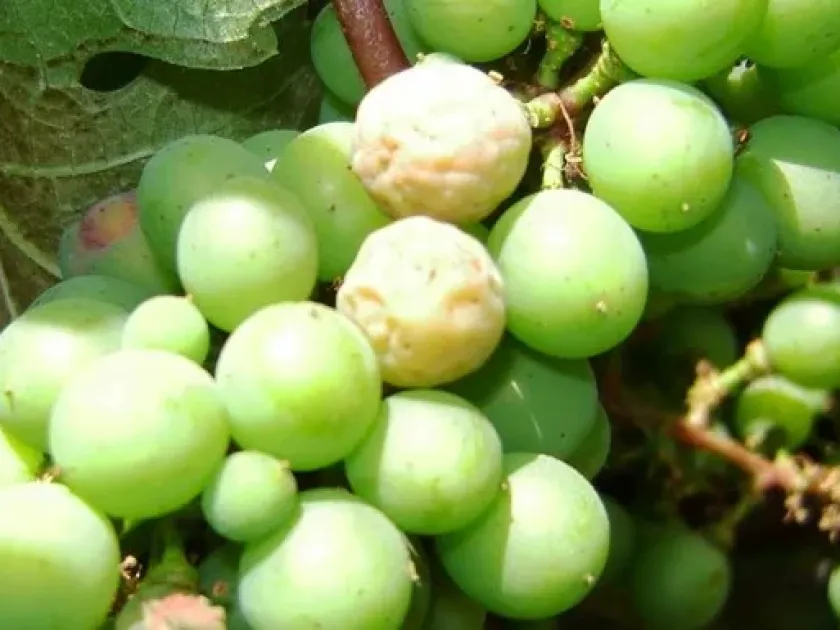
Initial symptoms are characterized by a blanching or graying of the berry skin. Over time, the affected berries lose their firmness, shrivel, and dehydrate, retaining a pale, "bleached" appearance compared to the dark decay of other rots.
Small, dark, pimple-like structures—the pycnidia—develop on the surface of the infected berries. These structures protrude through the epidermis, giving the berries a rough texture when touched.
The disease often spreads to the berry stems or rachis, causing them to turn brown and die. When the rachis is necrotic, the berries lose their nutrient supply, leading to rapid wilting or dropping from the cluster.
Shoot infections present as brownish, necrotic lesions that can girdle the stem. This interruption of the vascular system causes the parts of the shoot above the lesion to wilt and eventually die back.
Clusters can be affected at various growth stages, but the most significant impact occurs as berries approach maturity, when the cuticle becomes thinner and the sugar content rises, making the tissue more susceptible to colonization.
Pathogen
The causal agent of white rot is the fungus Coniella diplodiella (formerly Coniothyrium diplodiella). This pathogen is known for its ability to infect various organs of the grapevine, primarily through mechanical injuries.
The fungus survives in the soil and on infected plant debris through pycnidia — specialized fungal structures. Under humid conditions, these pycnidia release conidia, which are spread by rain splashes or wind onto the vine's green parts.
The pathogen is most active during the summer. It requires moisture on the plant surface to germinate and penetrate the tissue, making its life cycle highly dependent on weather conditions and local microclimate.
As a facultative parasite, the fungus maintains a saprotrophic phase, allowing it to persist for long periods on fallen leaves, mummified berries, and pruning remnants left in the vineyard.
Infection typically occurs only after the skin of the berries or the bark of the shoots has been compromised. Therefore, the presence of the pathogen is often associated with recent physical stress, such as hail, insect feeding, or viticultural pruning wounds.
Conditions for development
Hail damage is the primary trigger for white rot outbreaks. The physical trauma caused by hailstones provides entry points for spores, leading to rapid disease spread when followed by high humidity or rainfall.
High humidity and temperatures between 20°C and 25°C are ideal for the germination of conidia. Continuous leaf wetness or prolonged periods of rain create an environment that favors fungal development.
Poorly ventilated vineyard canopies prevent the rapid evaporation of water, leading to a moist microclimate within the fruit zone. This condition significantly increases the risk of infection and disease progression.
Excessive use of nitrogen fertilizers promotes lush, dense vegetative growth. This thick canopy acts as a reservoir for humidity and obscures the clusters from chemical spray coverage, facilitating the spread of the disease.
The disease development is heavily influenced by the presence of primary inoculum in the vineyard soil. Sites with a history of poor sanitation or uncollected mummified fruit from previous years face a higher risk of recurrence.
Why it matters
White rot can cause devastating yield losses, sometimes reaching up to 50% of the crop if conditions are favorable for the fungus. Infected berries lose their commercial value and quality for winemaking.
Affected grapes are unfit for consumption or processing. Even a small percentage of contaminated berries in a harvest batch can compromise the quality of the final wine product due to unpleasant off-flavors.
Shoot death caused by the fungus weakens the overall structure of the vine. This leads to reduced cold hardiness, making affected vines more susceptible to winter injury and reducing their long-term productivity.
The disease necessitates additional fungicide applications, which increases production costs. Repeated interventions may be required to manage outbreaks following weather-related damage, adding financial burden to the grower.
Persistent infections negatively affect the vine's vigor and photosynthetic capacity. Over time, recurring white rot cycles can lead to vine decline, reducing the overall lifespan and profitability of the vineyard block.
Protection
Sanitation is the cornerstone of control. Growers should remove and destroy mummified clusters and infected shoots to reduce the primary inoculum load in the vineyard.
Prompt fungicide applications, especially copper-based treatments, are critical following hail events to protect wounded berries from fungal colonization before the infection sets in.
Canopy management practices, such as shoot positioning and leaf removal, are essential to improve airflow, accelerate drying of the clusters, and ensure better coverage of protective sprays.
Effective insect control is necessary, as many pests act as vectors or inflict the physical damage required for Coniella diplodiella to enter the vine tissue.
- Deep burial of plant debris in the soil during autumn.
- Application of copper or triazole-based fungicides after physical injury.
- Regular inspection for necrotic shoot lesions and pruning them out.
- Balanced nutrient management to prevent excessive vegetative growth.
Discussion
No discussions yet — be the first.