
White rot of onion
Stromatinia cepivora
Description
Symptoms
The first symptoms often appear as leaf yellowing and wilting, which starts at the leaf tips and progresses downward. Infected plants exhibit stunted growth and may collapse prematurely.
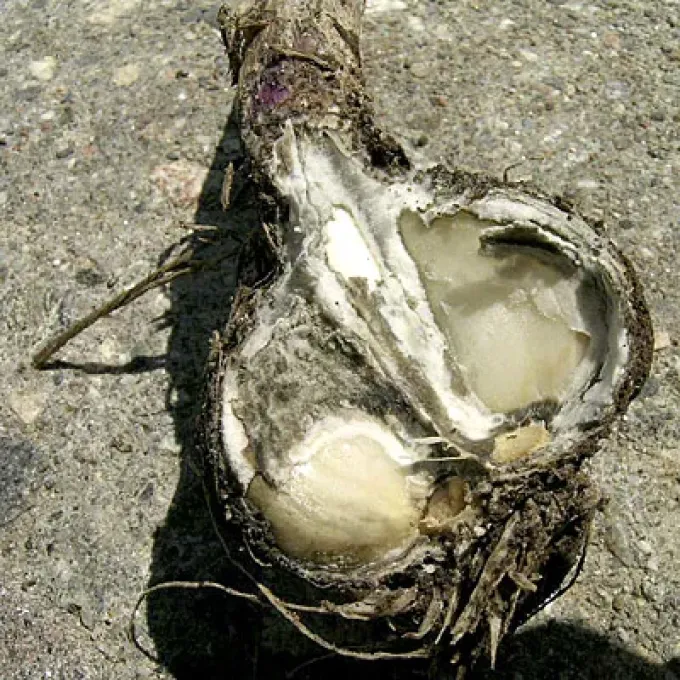
Upon closer inspection of the base of the plant, one can observe a fluffy, white mycelial growth on the bulb and the root plate. This fungal growth is the signature indicator of white rot.
As the disease progresses, the bulb tissue begins to decay and becomes soft and watery. In advanced stages, the internal bulb structure is entirely destroyed, leaving behind a semi-liquid mass.
Tiny, black sclerotia, roughly the size of poppy seeds, eventually form within the white mycelial mat. These structures become incorporated into the soil when the plant decomposes.
Infection can often go unnoticed until harvest. However, bulbs that appear healthy at harvest may harbor latent infection, which rapidly spreads to other bulbs during storage if conditions are favorable.
Pathogen
White rot is caused by the soil-borne fungus Stromatinia cepivora (formerly known as Sclerotium cepivorum). This pathogen is highly host-specific, exclusively affecting plants within the Allium genus, including onions, garlic, shallots, and leeks.
The fungus survives in the soil primarily through sclerotia — small, black, seed-like structures. These sclerotia are extremely resilient, capable of remaining dormant and viable in the soil for over a decade, waiting for host plant root exudates.
When roots grow near sclerotia, chemical cues trigger germination. Mycelium emerges from the sclerotia, colonizing the roots and advancing into the bulb, where it continues to spread through the plant tissue.
Transmission occurs through direct contact between the root systems of healthy and infected plants. Mycelial strands grow through the soil, creating expanding patches of infection within a field.
Long-distance dispersal is primarily driven by the movement of infested soil on farm machinery, tools, or by planting infected bulbs or sets, which introduce the pathogen to previously clean land.
Conditions for development
White rot thrives in cool to moderate soil temperatures, typically between 10°C and 20°C (50°F–68°F). The disease is most severe during cool, wet spring seasons.
Moisture is critical for the germination of sclerotia and the movement of mycelium through the soil. However, once established, the pathogen can tolerate a range of soil moisture conditions.
Soil pH levels play a significant role in disease development. While the fungus can infect at various levels, acidic soils generally promote faster disease spread and more aggressive colonization.
Frequent cultivation of Allium crops without adequate intervals between rotations allows for the rapid buildup of sclerotia populations in the field, making future production highly risky.
Poor soil drainage and low organic matter content can also contribute to plant stress, making crops more susceptible to the initial invasion of the fungal mycelium.
Why it matters
White rot is arguably the most destructive disease affecting Allium crops globally. In heavily infested fields, yield losses can reach 100%, leading to total crop failure.
The disease causes significant economic damage not only through field losses but also by rendering land unusable for Allium cultivation for many years due to the longevity of sclerotia.
Affected bulbs are non-marketable, and the presence of even a few infected bulbs in a storage lot can trigger a cascade of rot, destroying the entire inventory.
The pathogen is highly contagious and difficult to manage once it has permeated a field's soil profile, leading to increased costs for fungicides and intensive management practices.
Smallholder farmers and industrial growers alike face the threat of soil contamination, which disrupts long-term crop rotation plans and reduces the overall profitability of the farm.
Protection
The most effective strategy is a long-term crop rotation, avoiding Allium crops on infested land for at least 6 to 8 years, although some sclerotia may persist even longer.
Strict phytosanitary practices are essential, including the use of certified disease-free sets and the cleaning of machinery to prevent the transfer of infested soil between fields.
Fungicides can be applied at planting or during the growing season to suppress infection. However, they are most effective as a preventative measure and have limited impact once the disease is established.
Removing infected plants, including the surrounding soil, can help limit the spread of the fungus in small garden settings, provided the disposal is done away from agricultural areas.
Biological control agents, such as specific strains of Trichoderma fungi, have shown promise in reducing sclerotial populations in the soil when applied as part of an integrated pest management program.
Discussion
No discussions yet — be the first.