
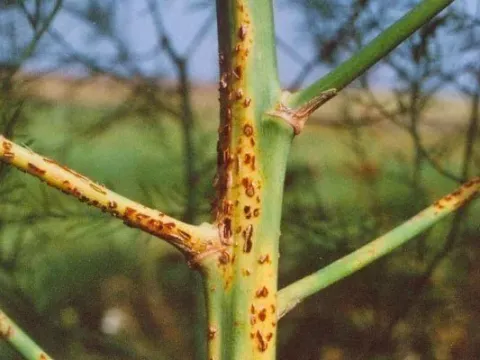
Cercospora blight of asparagus
Cercospora asparagi
The disease is caused by the fungus Cercospora asparagi. It is a pathogenic organism that specifically infects the foliage of asparagus plants throughout the growing season.
What the section contains
Cercospora blight of asparagus
The fungus reproduces by producing spores known as conidia, which are easily dispersed by wind, splashing water, or agricultural equipment moving through the field.
The pathogen overwinters primarily in infected plant debris remaining in the field. As temperatures rise in the spring, the fungus reactivates and begins a new infection cycle.
This species is highly host-specific, primarily targeting Asparagus officinalis. Its lifecycle is tightly coupled with the development of the asparagus fern.
The fungus penetrates the plant tissues through stomata or directly through the epidermis, establishing a mycelial network that drains nutrients from the host.
Initial symptoms manifest as small, gray-to-brown lesions on the ferns and stems. These spots are often surrounded by a darker, more defined border.
As the infection progresses, these spots enlarge and coalesce, eventually covering large portions of the stems, leading to severe chlorosis and necrosis.
Under conditions of high humidity, a grayish or olive-colored fungal growth, consisting of conidiophores and conidia, appears on the surface of the lesions.
Infected stems eventually turn yellow and brittle, leading to premature defoliation. This often gives the appearance that the plant has been scorched or scorched by heat.
In the late season, the symptoms can become widespread, weakening the plant crown and preparing the fungus for survival through the dormant period.
The development of Cercospora blight is heavily favored by long periods of high relative humidity, frequent rainfall, or heavy dew accumulation.
Moderate temperatures ranging from 20°C to 28°C provide the optimal environment for spore germination and rapid mycelial colonization of the host tissues.
Poor air circulation within the field, often caused by overly dense planting patterns, creates stagnant, humid microclimates that promote the disease.
Water management plays a crucial role; overhead irrigation acts as a major driver for the spread of spores from the lower canopy to the upper parts of the plant.
Fields with poor drainage or those kept in continuous monoculture without proper cleanup exhibit much higher infection rates than well-managed sites.
The primary damage caused by this disease is the destruction of the photosynthetic surface area, which hinders the plant's ability to store energy in its root system.
Since asparagus is a perennial crop, the loss of foliage late in the season directly impacts the vigor and yield of the following year's marketable spears.
Severe infestations can lead to early senescence, causing the entire fern to die back prematurely, which significantly stresses the plant crown.
Reduced plant vigor makes the crop more susceptible to secondary pathogens and environmental stressors, leading to a shortened economic life of the asparagus plantation.
Commercial losses can be substantial, as the cumulative impact of reduced photosynthesis results in thinner, lower-quality spears during the next harvesting cycle.
The most important control measure is strict sanitation; all plant debris must be removed and destroyed at the end of each season to eliminate the primary inoculum source.
Implementing a proper crop rotation and maintaining spacing between rows ensures better aeration, which dries the foliage faster and reduces infection risk.
Chemical control involving fungicides can be effective, especially when applied as a preventative measure or at the first sight of lesions during the peak growing season.
- Strict removal of crop residues
- Adequate row spacing for airflow
- Drip irrigation to keep foliage dry
- Timely fungicide applications
Continuous monitoring of the field is essential to detect early outbreaks, allowing for localized treatments before the disease spreads across the entire production area.