
Cercospora leaf spot
Cercospora brassicicola
Description
Symptoms
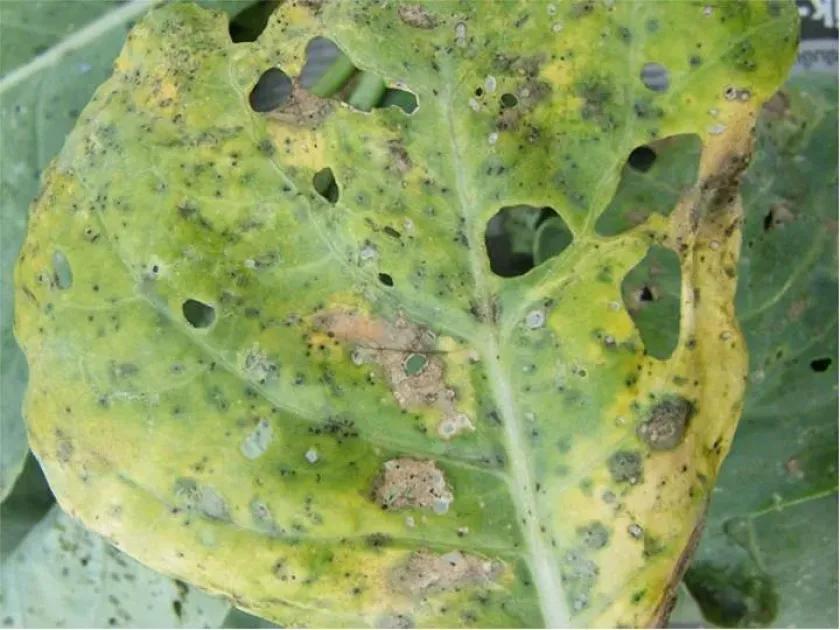
Initial symptoms include the appearance of small, circular or irregular spots on the lower, older leaves of the cabbage plant.
These spots gradually transition from grey to light brown, often featuring a distinct darker or purplish margin that separates healthy tissue from the necrosis.
Under humid conditions, the centers of these spots develop a characteristic greyish-olive fungal growth, representing the conidiophores and conidia.
As the disease progresses, necrotic areas may dry out and crack, giving the leaves a ragged, shot-hole appearance that significantly weakens the plant.
- Circular necrotic spots with dark borders.
- Development of greyish-olive mold on spot undersides.
- Chlorosis (yellowing) of surrounding leaf areas.
- Premature leaf drop and decreased photosynthetic capacity.
Pathogen
Cercospora leaf spot is caused by the fungus Cercospora brassicicola, a pathogen that specifically targets plants within the Brassicaceae family.
The fungus overwinters as mycelium or conidia on infected plant debris, soil, and sometimes on contaminated seeds, serving as a primary inoculum source.
Once conditions are favorable, conidia are produced and disseminated by wind, rain splashes, or contaminated equipment to healthy leaf surfaces.
Upon infection, the fungus penetrates the host tissues through stomata or wounds, establishing an internal mycelial network that draws nutrients from the plant.
The life cycle of the pathogen is closely synchronized with the growth of host crops, allowing it to complete multiple cycles within a single season.
Conditions for development
The development of Cercospora brassicicola is highly dependent on periods of high relative humidity and prolonged leaf wetness.
Optimal temperatures for fungal growth and sporulation range between 18°C and 25°C, making warm, rainy weather particularly conducive to epidemics.
Poor air circulation within dense plant populations creates microclimates with increased humidity, which significantly speeds up the infection process.
Frequent fog or heavy dew creates ideal conditions for conidia to germinate and penetrate the cabbage foliage during the night.
The presence of volunteer brassica weeds provides a continuous bridge for the pathogen to survive and spread to newly planted vegetable fields.
Why it matters
Cercospora leaf spot reduces the marketable quality of cabbage, as the unsightly necrotic spots make the heads unacceptable for commercial sale.
Heavy infection restricts the plant's ability to produce sufficient energy through photosynthesis, leading to reduced head size and lower total yield.
Infected leaves become brittle and susceptible to secondary colonizers, including opportunistic bacteria that cause soft rot during storage.
When the disease impacts early-stage seedlings, it can result in poor stand establishment, necessitating replanting and increasing labor costs.
The overall vigor of the crop is compromised, making it less resilient to environmental stressors and other potential pathogenic pressures.
Protection
Effective management begins with strict crop rotation, ensuring that brassicas are not planted on the same land for at least three consecutive years.
Sanitation is critical; all crop residues must be removed and destroyed or deeply plowed under to reduce the amount of primary inoculum.
If the disease pressure is high, chemical control using approved fungicides should be initiated at the first sign of symptoms to halt disease spread.
Weed management, particularly focusing on wild cruciferous plants, helps eliminate alternative hosts that harbor the pathogen throughout the year.
Promoting good field hygiene and providing adequate spacing between plants improves airflow, thereby decreasing the duration of leaf wetness required for infection.
Discussion
No discussions yet — be the first.