
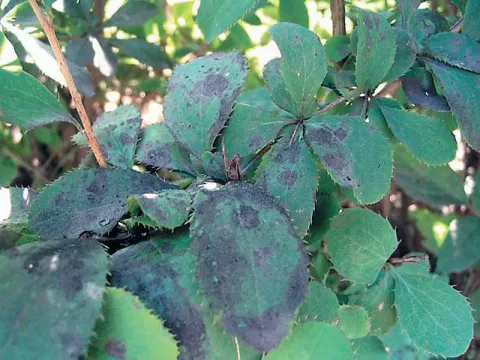
Sooty mold
Capnodiaceae
The primary symptom of sooty mold is the appearance of a dark, almost black, soot-like coating on the surface of leaves, stems, and shoots. While this layer can be easily wiped away, it will quickly reappear if the underlying cause is not addressed.
What the section contains
Sooty mold
This fungal growth typically colonizes the upper surfaces of leaves. In severe cases, the black layer can cover the entire foliage, giving the plant a distressed and unhealthy appearance, often blocking its natural aesthetics.
Sooty mold is visually associated with sticky secretions known as honeydew. These sugar-rich excretions, produced by sap-sucking insects, serve as the perfect substrate for the fungus to colonize and form a dense, velvet-like layer.
Affected leaves may curl, yellow, and drop prematurely. The plant loses its vigor, and any fruits covered in this mold become unappealing and may require thorough cleaning before they can be consumed.
Under a microscope, the mold is revealed to be a mass of mycelium and spores. These fungi do not penetrate the plant tissues directly; they live superficially on the surface, feeding on the honeydew deposits left behind by pests.
The disease is caused by fungi in the family Capnodiaceae, which are saprotrophic in nature. These organisms are not true plant parasites, as they do not feed on the internal juices of living plants.
Their life cycle is directly linked to the presence of sap-sucking insects, such as aphids, scale insects, whiteflies, and mealybugs. These pests excrete honeydew—a sweet, carbohydrate-rich liquid—during their feeding process.
Sooty mold fungi thrive on this honeydew, utilizing it as a food source to germinate and grow. Therefore, the presence of the mold is a clear indicator of a secondary infestation caused by insect colonies.
The fungal mycelium contains high amounts of melanin, which gives the mold its characteristic deep black color. Spores are easily dispersed by wind, rain splashes, and insect movement between plants.
The biological development of the fungus depends entirely on environmental conditions and pest population density. If no honeydew is available, the fungal growth will naturally cease, as it cannot survive on the plant alone.
High humidity and warm weather are ideal conditions for the development of sooty mold. These conditions often occur in dense plantings where airflow is restricted, allowing moisture to linger on plant surfaces.
Overwatering, lack of pruning, and poor greenhouse ventilation are major risk factors. In such environments, the mold spreads rapidly, quickly colonizing healthy plant parts and adjacent vegetation.
The abundance of sap-sucking pests plays a critical role. The more active the infestation of aphids or scale insects, the higher the volume of honeydew produced, creating a favorable environment for extensive mold colonization.
Weakened plants, or those suffering from nutrient deficiencies and insufficient sunlight, are more prone to pest attacks, which indirectly creates a high-risk scenario for sooty mold outbreaks.
In greenhouses, the spread of the pathogen is often accelerated due to stable microclimates and the absence of temperature fluctuations that might otherwise inhibit fungal growth.
The primary damage caused by sooty mold is the interference with photosynthesis. The black layer blocks sunlight from reaching the chlorophyll, causing the plant to suffer from chronic energy deficits.
Gas exchange is also obstructed as the spores clog the plant's stomata. This restricts transpiration, leading to metabolic suppression, stunted growth, and a significantly weakened immune system in the affected culture.
Plants lose their commercial value, which is particularly devastating for fruit trees and ornamental crops. Fruits affected by the mold often grow poorly, and their shelf life and flavor are noticeably diminished.
Damage is twofold: it includes both the presence of the mold and the activity of the insects that caused it. Sap-sucking pests drain vital plant nutrients and can transmit dangerous viral diseases.
If left untreated, prolonged exposure to sooty mold leads to wood degradation, premature defoliation, and potentially the death of the plant, especially in the case of young or already stressed specimens.
The most important step in controlling sooty mold is to eliminate the primary cause: the sap-sucking insect infestation. Without managing the pest population with insecticides, the mold will inevitably return.
Use systemic and contact insecticides, such as miticides or broad-spectrum pest control products, to clear the plant of aphids, scale, or whiteflies. Regular monitoring is essential to catch pest outbreaks early.
Mechanical cleaning can help remove existing mold. Carefully washing leaves with soapy water or a gentle fungicide solution can improve light penetration and air access to the leaf surface.
Proper agricultural practices are vital for prevention: maintain appropriate plant spacing, prune regularly to ensure airflow, and monitor greenhouse humidity and watering schedules.
- Apply copper-based fungicides as a preventive measure.
- Ensure proper ventilation and air circulation in greenhouses.
- Promptly prune and remove heavily infected plant parts.
- Keep tools disinfected after handling diseased plant material.