
Canavirgella
Canavirgella
The causal agent of this disease is the fungus Canavirgella banckii, a member of the Ascomycota phylum. This pathogen acts as a specialized parasite that targets pine species.
What the section contains
Canavirgella
The life cycle of the fungus is closely tied to the needle maturity of the host. Apothecia form on fallen needles, serving as the primary structures for spore dispersal.
Spores are dispersed through wind currents during humid conditions. Once they land on healthy needles, they germinate and penetrate the epidermal tissues of the host.
The fungal mycelium colonizes the needle tissues, disrupting metabolic processes and chlorophyll production. This results in the characteristic symptoms observed on the affected foliage.
The pathogen persists in forest litter, where it survives in infected needles. This provides a continuous reservoir of inoculum that can trigger infections in subsequent growing seasons.
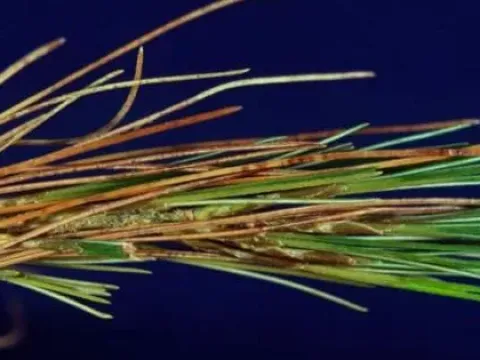
The primary symptom is the chlorosis of needles, which eventually transition into a yellow and then a distinct reddish-brown color as the season progresses.
Needle shedding is a common sign of advanced infection. This leads to sparse crowns and visible needle loss, particularly on the inner and lower branches of the pine trees.
Small, dark, linear fruiting bodies (apothecia) appear on the surface of the infected needles. These structures are often arranged in rows along the axis of the needle.
In cases of severe infestation, entire sections of the tree crown may turn prematurely brown. This contrasts sharply with the healthy, green growth of uninfected neighbors.
Laboratory diagnosis is recommended to distinguish Canavirgella from other needle blight pathogens, as the visual symptoms share similarities with various pine diseases.
The development of the disease is heavily influenced by humidity levels. Stagnant air and high moisture within dense canopy structures are ideal for fungal growth.
Prolonged wet weather in spring and early summer facilitates the germination of spores. Moist conditions on the needle surface allow for rapid colonization by the fungus.
Pines under environmental stress, such as drought, nutrient deficiency, or overcrowding, are significantly more susceptible to infection by Canavirgella.
The accumulation of infected forest litter provides a stable environment for the fungus to persist. Proper site management is critical to reducing these infection sources.
Lack of proper pruning and thinning in pine stands contributes to microclimates that favor the accumulation and spread of fungal spores among healthy trees.
The economic impact of Canavirgella is significant, primarily through the reduction of tree growth and loss of timber volume. Affected trees struggle to maintain normal vigor.
Repeated needle loss weakens the tree's overall defense systems. This makes the pines highly vulnerable to secondary attacks by bark beetles and other wood-boring insects.
In commercial nurseries, the disease can cause major losses by reducing the quality and viability of seedlings, making them unsuitable for sale or reforestation purposes.
For ornamental pines, the aesthetic damage is severe. The thinning of the canopy and persistent browning of needles destroy the visual appeal of these landscape trees.
On a large scale, persistent outbreaks can alter the forest ecosystem by causing decline in specific pine stands, potentially leading to long-term changes in forest composition.
Sanitation is the most effective management strategy. Removing and destroying fallen needles from the base of trees significantly reduces the amount of inoculum available.
Silvicultural practices, such as thinning and pruning, improve airflow through the canopy. This reduces humidity levels around the needles and inhibits fungal spore germination.
Fungicide applications, particularly those containing copper or systemic compounds, can be used to protect high-value trees during periods of high infection risk.
Promoting tree health through proper fertilization and watering helps build resilience. Strong, healthy trees are better equipped to withstand and recover from fungal infections.
The use of resistant pine genotypes in forest management is the preferred long-term solution. Selecting appropriate species helps prevent the establishment of the disease.