
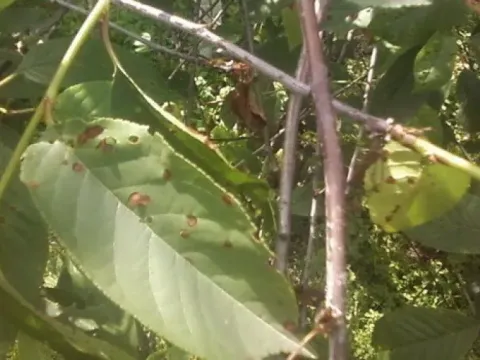
Prunus necrotic ringspot
Prunus necrotic
The disease is caused by the Prunus necrotic ringspot virus (PNRSV), which is a significant member of the Ilarvirus genus. It is a widespread plant pathogen that affects a large number of perennial species.
What the section contains
Prunus necrotic ringspot
The virus has a broad host range, primarily infecting stone fruit species such as peaches, almonds, cherries, apricots, and plums. It is also known to affect celery and various ornamental plants.
Transmission occurs through vegetative propagation, infected pollen, and occasionally through contaminated grafting tools. Because pollen can be wind-dispersed, the virus spreads easily throughout orchards during the flowering period.
Once inside the plant, the virus moves systemically via the vascular system, establishing chronic infections. It integrates into the plant's metabolic processes, continuously replicating within the living cells of the host.
The virus persists in woody tissues and roots, ensuring its survival from one growing season to the next, often remaining undetected for extended periods.
Symptoms are highly variable and often depend on the specific host and environmental conditions. Common signs include chlorotic rings, necrotic spots, and mosaic patterns on the leaves.
In many cases, leaves exhibit deformation, puckering, or premature senescence. Severe infections can lead to significant leaf drop, reducing the tree's photosynthetic capacity.
Fruit symptoms include ring patterns, pitting, or surface deformities, which severely compromise the marketability of the harvest. Some fruits may remain small or drop prematurely.
Latent infection is very common, where the tree shows no visible symptoms but still harbors the virus. These asymptomatic carriers act as invisible reservoirs for infection within an orchard.
In crops like celery, the virus induces yellowing of the veins, stunted growth, and a significant reduction in biomass, directly affecting yield quality.
The development of the disease is favored by physiological stress on the tree, including nutrient deficiencies, poor soil management, or adverse climate conditions that weaken the host.
The most critical window for spread is during bloom, as the virus is transmitted efficiently through infected pollen dispersed by wind and pollinators.
Environmental temperature significantly influences symptom expression. Symptoms are often most visible during cool spring weather, whereas high summer temperatures may mask them.
Proximity to infected trees or alternate host plants (weeds) creates a high risk of transmission. Maintaining a clean orchard environment is essential for disease containment.
The use of unsterilized pruning tools is a major factor in artificial transmission, where the virus is transferred from an infected branch to a healthy tree during maintenance.
The primary damage is a gradual decline in tree vigor and productivity. Over time, trees become significantly less productive and more susceptible to environmental stress.
Chronic infection leads to reduced fruit quality, making it unfit for fresh market consumption. This results in substantial financial losses for orchardists.
The weakened state of the tree makes it highly vulnerable to secondary infections from fungi and bacteria, which often finish off the compromised plant.
The virus causes serious economic disruption in the nursery industry, where entire blocks of nursery stock must be destroyed if found to be infected.
There is no chemical cure for viral infections in plants, meaning that the only long-term management strategy involves removal of diseased trees to prevent spread.
The most effective strategy is the use of certified virus-indexed planting material. Starting with a healthy orchard is the only way to avoid the establishment of the virus.
Sanitation practices, such as disinfecting pruning shears with alcohol or bleach between trees, are crucial to prevent mechanical transmission during routine orchard tasks.
Regular monitoring and diagnostic testing (such as ELISA or PCR) are recommended to identify and rogue out asymptomatic or symptomatic infected trees early.
Implementing spatial isolation between newly planted blocks and older, potentially infected orchards can help reduce the rate of new infections.
- Plant certified virus-free nursery stock.
- Disinfect pruning tools between trees.
- Rogue out and destroy symptomatic trees.
- Control weeds that might act as virus reservoirs.
- Use diagnostic testing to monitor orchard health.