
Brevicellicium olivascens
Brevicellicium olivascens
Description
Symptoms
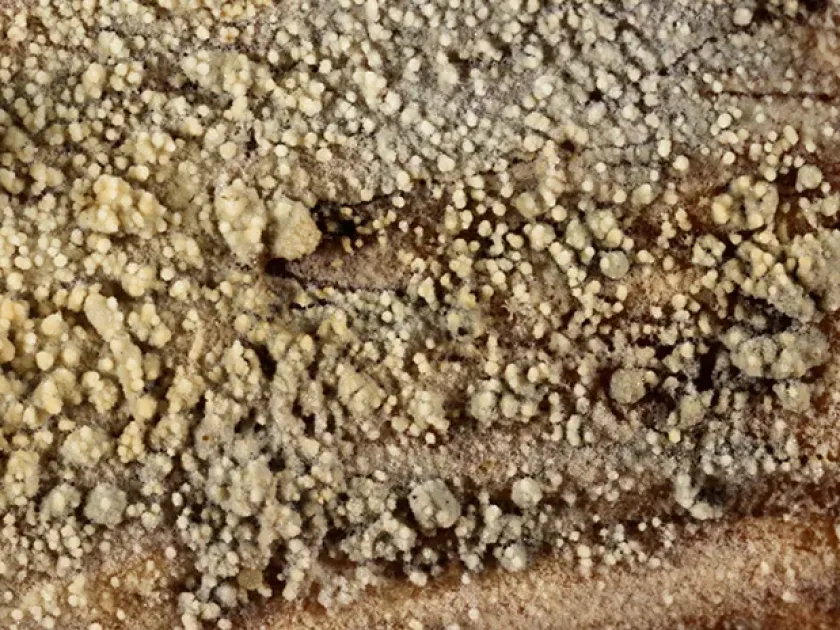
The most visible symptom is the formation of a characteristic olive-colored or greenish-grey fungal coating on the bark or exposed wood of the trunk and branches.
The infected wood loses its structural integrity, gradually becoming soft, fibrous, and brittle, which is the classic diagnostic sign of white rot infection.
Under the bark, one may observe a layer of white or grayish fungal mycelium, which slowly colonizes the cambium and the sapwood areas.
General symptoms of the host plant include yellowing of foliage, stunted growth of annual shoots, and the gradual wilting of the affected branch sections.
Over time, the bark in the infected area may crack, peel away, or fall off, exposing the rotting wood and creating entry points for other decay-causing organisms.
Pathogen
The causal agent is the fungus Brevicellicium olivascens, a member of the basidiomycetes group. It is primarily a wood-decaying organism that specializes in breaking down lignin and cellulose components in trees.
Mycologically, it is characterized by thin, resupinate fruiting bodies with a distinct olive or yellowish-green hue. The hyphae contain characteristic clamp connections, which are essential for its reproductive cycles.
As a saprotroph or opportunistic pathogen, it colonizes wood that has been weakened or damaged. Its biological activity is significant in ecosystems for the decomposition of organic matter.
In managed landscapes, this fungus exploits existing vulnerabilities in the bark or xylem, effectively initiating or accelerating the process of white rot in the woody tissue.
Scientific interest in this species focuses on its role in forest pathology and its potential impact on woody plants subjected to abiotic or biotic stress factors.
Conditions for development
The growth of Brevicellicium olivascens is favored by high relative humidity and mild temperatures, conditions typically found in early spring or late autumn.
Mechanical damage to the tree, such as frost cracks, pruning wounds, or pest-induced openings, acts as a primary entry point for the fungus to establish its mycelium.
Areas with poor air circulation, such as dense, unpruned tree crowns or shaded gardens, provide a microclimate that promotes fungal sporulation and spread.
Trees that are under stress—whether due to drought, nutritional deficiencies, or infestation—exhibit significantly higher susceptibility to colonization by this fungus.
The presence of fallen woody debris and dead branches in the garden serves as a continuous reservoir for spores, increasing the risk of transmission to healthy trees.
Why it matters
The primary harm is the structural deterioration of the trunk and main branches, which compromises the stability of the entire tree over the long term.
The infection disrupts water and nutrient transport, leading to a decline in plant vitality, reduced crop yields, and, in severe cases, the eventual death of the tree.
By weakening the host, the fungus facilitates the entry of other secondary pathogens, creating a complex disease scenario that is difficult to manage effectively.
Economic losses arise from the need for restorative maintenance or the complete removal of infected specimens, which can be devastating for high-value orchards.
The fungus can spread rapidly during damp seasons, potentially affecting large numbers of trees if sanitary measures are not implemented promptly.
Protection
The primary control strategy involves maintaining tree health through balanced fertilization, adequate irrigation, and protecting trees from mechanical injury.
Regular sanitation pruning is crucial; all dead, dying, or diseased branches must be removed and disposed of away from the garden to minimize spore dispersal.
All pruning wounds and mechanical injuries should be treated immediately with copper-based fungicides and sealed with appropriate wound dressing materials.
- Apply white wash to trunks to protect against sunburn and frost.
- Implement rigorous pest control to prevent bark damage.
- Prune trees to ensure optimal airflow and light penetration.
In cases of confirmed infection, systemic fungicide applications during the dormant period can help reduce the fungal load and protect the healthy wood tissues.
Discussion
No discussions yet — be the first.