
Brefeldiellaceae
Brefeldiellaceae
Description
Symptoms
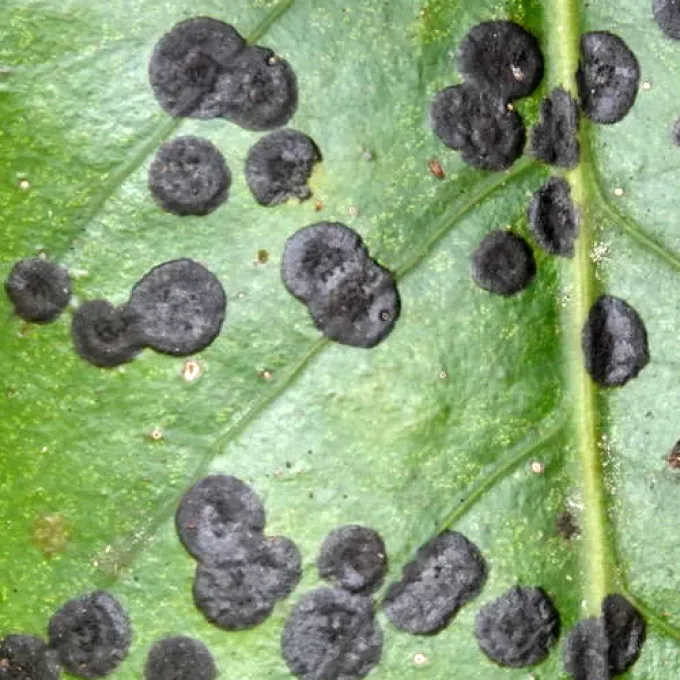
Signs of infection by Brefeldiellaceae fungi typically manifest as the formation of dark, hardened fruiting bodies directly on the surface of leaves and stems.
Affected areas often appear as circular or irregular black crust-like spots that adhere firmly to the plant epidermis.
In the early stages, surrounding leaf tissue may exhibit chlorosis or yellowing due to the disruption of normal photosynthetic processes within the infected area.
As the disease progresses, the fungal structures may release spores, which can be easily observed as a fine powder on the surface of the plant tissue.
Severe infections often lead to premature leaf senescence, withering, and eventual leaf drop, which can severely impact the overall health of the plant.
Pathogen
The causative agents of this condition are fungi belonging to the Brefeldiellaceae family, within the order Capnodiales and class Dothideomycetes.
These fungi are often characterized as epiphytic, living on the surface of plants, but they can act as parasites by penetrating the upper epidermal layers.
The lifecycle of the pathogen involves the production of ascospores, which are capable of surviving harsh environmental conditions for extended periods.
Dissemination of the infection occurs primarily through wind-borne spores, water splashes, and physical contact between infected and healthy plant parts.
These fungi thrive by utilizing surface moisture and organic compounds secreted by the host plant to support their metabolic requirements.
Conditions for development
The development of Brefeldiellaceae is highly dependent on humidity levels, as the presence of free water on leaf surfaces is essential for spore germination.
Optimal conditions for disease outbreaks include periods of frequent rainfall, high morning dew, and mild temperatures ranging between 18 and 25 degrees Celsius.
Dense planting patterns that restrict airflow create a stagnant microclimate, which significantly promotes the rapid colonization and spread of the fungus.
Improper fertilization, particularly excessive nitrogen, leads to rapid vegetative growth and softer tissues, making the plants more susceptible to fungal entry.
Crop residues left in the field serve as a primary reservoir for the pathogen to overwinter and re-infect new growth in the following season.
Why it matters
The economic harm caused by Brefeldiellaceae includes the inhibition of plant growth and a significant reduction in overall photosynthetic efficiency.
By blocking light access to the leaf cells, the pathogen reduces the plant's ability to produce energy, which negatively affects yield and fruit quality.
In ornamental crops, the visual damage caused by these fungal crusts can render products unsaleable or significantly reduce their aesthetic market value.
Chronic infections weaken the plant's natural immune response, making it more susceptible to secondary attacks by other pests and pathogens.
- Reduced yield potential in affected crops.
- Increased costs associated with fungicide applications.
- Lower aesthetic value for ornamental and nursery plants.
Protection
Effective management begins with proper cultural practices designed to improve airflow and reduce moisture accumulation around the plant foliage.
Strict sanitation measures, including the pruning and destruction of infected materials, are vital to reducing the initial inoculum levels in the garden.
Applying fungicides with copper or triazole-based active ingredients can be highly effective in controlling spread when applied during the early infection stage.
Adopting regular monitoring programs allows for the early detection of disease focal points, preventing the pathogen from reaching epidemic levels.
Maintaining balanced nutrient programs helps build natural plant resistance, making host tissues less attractive and penetrable for the fungal hyphae.
Discussion
No discussions yet — be the first.