
Borch truffle
Tuber borchii
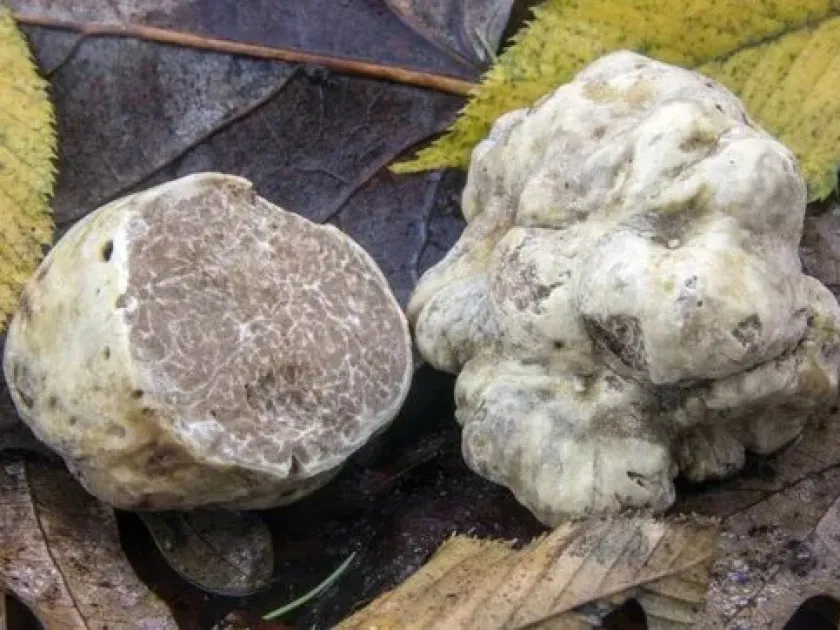
Description
Symptoms
Visible signs of infestation include stunted growth of seedlings and reduced vigor. Affected plants often display signs of nutrient deficiency, such as chlorosis of leaves, even when fertilization is adequate.
Root system examination usually reveals a characteristic white or creamy-white fungal mantle covering the root tips. The root architecture may appear less developed, with a significant lack of secondary root hairs.
In the soil surrounding the tree, one might observe a distinct change in the fungal composition and the presence of small, firm, subterranean fruit bodies. A strong, earthy, and pungent odor is often associated with these fungal clusters.
During drought conditions, infected plants show signs of extreme water stress much faster than healthy individuals. This is due to the decreased efficiency of the root system in absorbing soil moisture.
In mature stands, circular patches of inhibited ground vegetation may develop. This phenomenon indicates the presence of a well-established mycelial network beneath the tree canopy.
Pathogen
Tuber borchii, commonly known as the Borch truffle, is a species of ectomycorrhizal fungi that can exhibit aggressive tendencies in managed forest environments. While often beneficial in natural settings, it can act as a competitor to desirable symbiotic fungi in tree nurseries.
The pathogen is an Ascomycete that colonizes the root systems of various host trees. It forms a dense network of hyphae that covers the fine roots, often altering the natural microbial balance of the rhizosphere.
Its biological cycle is driven by the rapid growth of mycelium which extracts essential nutrients and water from the host plant. Unlike typical parasites, it does not kill the host instantly but competes for vital resources.
The fungus produces underground fruit bodies which can persist in the soil for years. Spores are highly resistant to adverse environmental conditions and can be spread through soil movement, machinery, and water runoff.
Metabolic secretions from the fungal mycelium can inhibit the growth of surrounding plants and beneficial soil microbes. This creates an environment where the fungus can dominate the root zone exclusively.
Conditions for development
Tuber borchii thrives in well-drained, calcareous soils with a neutral to slightly alkaline pH. High soil porosity and good aeration are essential for its rapid colonization of new areas.
Optimal development occurs in temperatures ranging from 15°C to 25°C. High moisture levels following spring and autumn rains are critical for the formation of fruit bodies and the expansion of the mycelium.
The fungus is highly resilient and can withstand low-nutrient conditions by forming symbiotic relationships, but it prefers environments with high organic matter content. It is most active during periods of moderate warmth.
Human activities, such as intensive cultivation and the movement of contaminated soil, play a major role in the spread of the fungus. Nurseries that use organic-rich media are particularly prone to outbreaks.
Monoculture planting regimes create ideal conditions for the fungus to dominate the ecosystem. The absence of diverse competing fungal species allows it to thrive unchecked in the root zone.
Why it matters
The primary harm involves significant economic losses in forest nurseries due to the rejection of substandard seedlings. Poorly developed roots make young trees unsuitable for transplantation.
In established forests, the fungus reduces the growth rate of trees by diverting energy resources from the host. This lead to a decrease in timber quality and volume over a standard production cycle.
Increased susceptibility to secondary pathogens is a major risk, as the fungus disrupts the natural protective barrier formed by native mycorrhizal fungi. This makes the forest vulnerable to diseases and pests.
Soil degradation occurs when the fungus creates a localized environment that excludes beneficial soil biota. Over time, this makes it difficult for native tree species to establish without costly soil treatment.
Increased mortality of young plantations is a common consequence when infected seedlings are planted in unfavorable environmental conditions. The loss of investment in planting stock and labor is substantial.
Protection
Controlling Tuber borchii primarily involves soil acidification. Applying sulfur-based products to lower the soil pH to below 6.0 effectively suppresses the mycelial growth of the fungus.
Strict quarantine measures should be implemented when sourcing nursery stock. Visual inspections and laboratory testing of roots can prevent the introduction of the pathogen into new areas.
Biological control using competitive fungal and bacterial strains, such as Bacillus species, can help manage the population density of the fungus in the rhizosphere. This is a sustainable long-term solution.
Mechanical cultivation of the soil, such as regular weeding and loosening, helps increase aeration and disrupts the fungal mats near the surface. This creates a less hospitable environment for the development of fruit bodies.
Crop rotation in nursery settings is essential. Alternating sensitive tree species with non-host plants can break the lifecycle of the fungus and reduce the inoculum pressure in the soil.
Discussion
No discussions yet — be the first.