
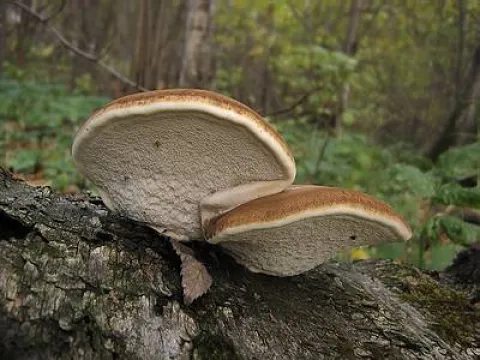
Birch polypore
Piptoporus
The primary symptom of a Birch polypore infection is the appearance of fruiting bodies on the trunk or branches of the tree. These fungi are typically kidney-shaped or hoof-like, with a smooth, light-colored surface that darkens and cracks with age.
What the section contains
Birch polypore
The flesh of the fruiting body is initially soft and white, turning into a corky, tough texture as it matures. The underside features a tubular pore surface through which millions of spores are released into the surrounding environment.
Internally, the tree experiences severe brown cubical rot. The wood loses its structural integrity and becomes brittle, often resulting in sudden branch breakage or whole-tree failure during high winds.
Visual decline in the tree crown, including yellowing leaves and canopy dieback, often indicates that the internal decay has reached an advanced stage. The fungal mycelium spreads extensively throughout the wood tissues.
Visible fruiting bodies can persist on the bark for several years, even after the tree has reached a state of terminal decline. This persistence ensures a continuous source of inoculum for other susceptible trees nearby.
The disease is caused by the fungus Piptoporus betulinus, a specialized basidiomycete. It is a common pathogen specifically associated with birch trees, acting as both a parasite and a wood-decay fungus.
The mycelium colonizes the woody tissue by entering through wounds, broken limbs, or fissures in the bark. It secretes specialized enzymes that break down cellulose, causing the characteristic browning and fragmentation of the wood.
Fungal development is favored by high humidity and moderate temperatures, which are common in dense or poorly ventilated woodlands. Spore dispersal is most efficient during moist conditions, allowing for rapid colonization of host trees.
Trees weakened by environmental stress, competition for light, or other diseases are significantly more susceptible to infection. Healthy trees are usually able to compartmentalize infections, but severe stress compromises these defensive barriers.
The Birch polypore causes significant damage by degrading the structural wood of the birch tree. This leads to the loss of both the biological health of the tree and its economic value in forestry applications.
Beyond tree mortality, the greatest risk is public safety. Infected trees become unpredictable and can drop heavy limbs or collapse without warning, posing a hazard in parks, recreational areas, and private gardens.
Sanitation is the primary control strategy; infected trees should be identified and removed promptly. Eliminating the fruiting bodies before they release spores can help reduce the local infection pressure.
Preventative care involves minimizing damage to tree bark, as wounds serve as primary entry points for spores. If pruning is necessary, ensure that clean, sharp tools are used to avoid creating unnecessary pathways for fungi.
Maintaining tree vigor through proper site management and forest health practices is essential. Removing deadwood and thinning overcrowded stands can improve air circulation and reduce the overall incidence of fungal disease.