
Birch polypore
Piptoporus betulinus
Description
Symptoms
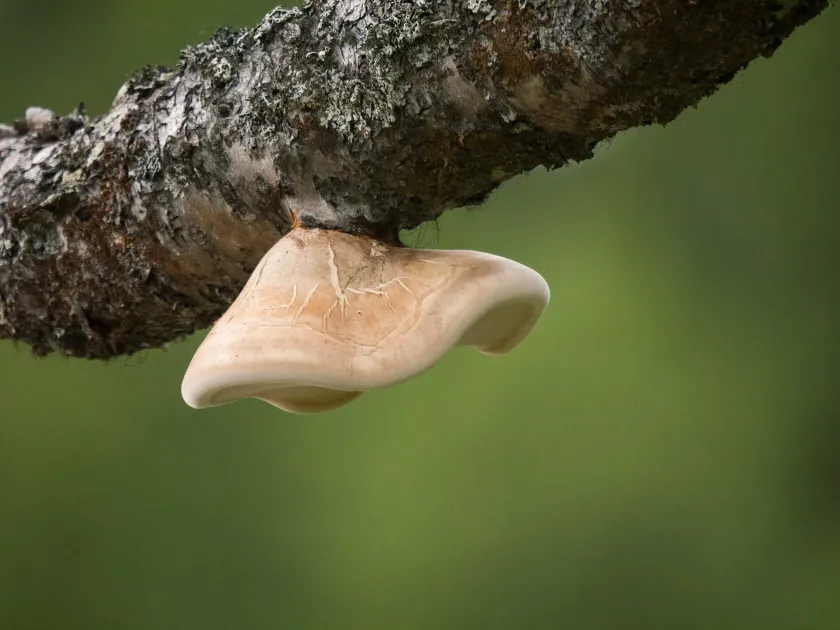
The most visible symptom is the presence of the fungus's fruiting bodies on the trunk. These structures are leathery, white to brownish, and often persist on the tree for a long time.
Internally, the wood undergoes a transformation into brown cubical rot. The timber becomes brittle, crumbly, and breaks into characteristic square-shaped chunks.
Foliage symptoms include premature yellowing, thinning of the crown, and the death of individual branches as the fungus compromises the tree's vascular system.
The bark in the affected areas may crack or show signs of depression, indicating that the wood beneath is being hollowed out by the fungal mycelium.
Because the decay progresses from the inside out, trees often show no outward signs of distress until the fungal fruiting bodies appear, which is often a sign of advanced infection.
Pathogen
The causative agent of this disease is the basidiomycete fungus Piptoporus betulinus, now frequently classified as Fomitopsis betulina. It is a highly specialized parasite that exclusively targets birch trees.
The fungus colonizes the tree through wounds in the bark, broken branches, or frost cracks. Once inside, the mycelium begins to decompose the wood by secreting enzymes that break down the plant cell walls.
The fruiting bodies are typically kidney-shaped or hoof-like, featuring a smooth, light-colored surface. They emerge from the bark once the internal mycelial network is well-established.
The life cycle involves the release of spores from the underside of the fruiting body. These spores are wind-dispersed and can settle on any exposed wood of a susceptible birch host.
While primarily a parasite, the fungus often continues to act as a saprotroph after the tree dies, completely recycling the wood back into the soil ecosystem.
Conditions for development
Humid and moderate climatic conditions are ideal for the spore germination and growth of the fungus. Dense stands with poor air circulation are particularly vulnerable to infestation.
Stress factors, such as drought, waterlogging, or pollution, weaken the natural defenses of the birch tree, making it significantly more susceptible to pathogen entry.
Mechanical injuries are the primary entry point for the fungus. Any damage caused by wildlife, machinery, or extreme weather creates an opening for spores to infect the tree.
The fungus is more active during the active growth season of the birch, utilizing the nutrients provided by the tree to expand its mycelial network throughout the heartwood.
In forest environments, the presence of neighboring infected trees dramatically increases the spore load, leading to higher infection rates across the entire birch population.
Why it matters
The fungus causes severe heart rot, which significantly reduces the mechanical strength of the trunk, leading to hazardous trees that are prone to sudden failure.
Economically, the infection renders the timber worthless for commercial use, as the wood becomes too structurally unsound for construction or furniture production.
The pathogen poses a high risk to forest and park safety, as infested trees often appear green while being structurally compromised from the inside, creating unpredictable falling hazards.
It can lead to the rapid decline and death of birch stands if allowed to spread, especially in neglected woodlands or landscapes where sanitation is not practiced.
- Significant loss of structural wood integrity.
- High risk of falling trees in populated areas.
- Total loss of commercial timber value.
Protection
The most effective management strategy is the timely removal and destruction of infected trees. Removing the source of spores is crucial to protecting nearby healthy trees.
All cut material or fallen branches containing fungal growth should be burned to prevent the ongoing release of spores into the environment.
Minimize damage to the bark during maintenance activities. When wounds occur, applying appropriate wound dressing or antifungal treatments can help reduce infection risks.
Promote tree vigor through proper site selection and environmental care, as healthy trees possess better natural mechanisms to compartmentalize and resist fungal decay.
Regular monitoring of birch stands is essential, particularly for detecting the early appearance of fruiting bodies, allowing for swift containment of the infection.
Discussion
No discussions yet — be the first.