
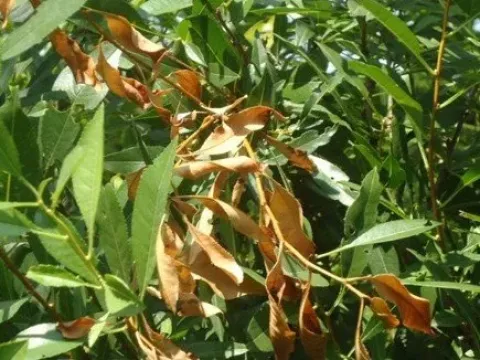
Bird cherry monilinia
Monilinia demissa
The causal agent of this disease is the ascomycete fungus Monilinia demissa, which belongs to the Sclerotiniaceae family. This microorganism is a specialized pathogen affecting mainly species of the genus Padus (bird cherry).
What the section contains
Bird cherry monilinia
The fungus's life cycle includes the production of conidial spores, which serve as the primary source of infection in the spring. These spores are capable of surviving in plant debris and infected twigs throughout the winter season.
During the vegetation period, the fungus invades plant tissues through mechanical wounds or natural openings. The mycelium proliferates in the intercellular spaces, disrupting the plant's physiological processes.
The biology of Monilinia demissa is closely linked to the phenological stages of the host. The pathogen's aggressiveness peaks during flowering and fruit set when tissues are most susceptible to fungal invasion.
Dissemination is facilitated by wind, raindrops, and pollinating insects. Outbreaks are often correlated with atypical weather conditions during the fruit formation stage.
The primary symptom is the sudden wilting and browning of young shoots and blossoms. This visual effect resembles fire damage, often referred to as "blossom wilt" or "brown rot".
Under high humidity, characteristic gray or whitish spore cushions appear on the affected bark and leaves. These structures are a key diagnostic feature of the active disease stage.
When fruit is affected, premature rotting, shriveling, and mummification occur. The berries turn black, become covered in fungal spores, and often remain attached to the branches until the next season.
Infection of the branches leads to cracking and the formation of cankers, through which gumming may occur. The wood beneath the bark turns brown due to tissue decay.
Severe infestations result in loss of aesthetic value, premature leaf drop, and overall plant weakening, making the tree susceptible to secondary pests.
Disease development is highly dependent on meteorological factors, particularly air humidity. High humidity (above 80%) during the flowering period is critical for mass infection.
A temperature range of 15–20 degrees Celsius is optimal for conidia germination and rapid colonization of host tissues by the fungal mycelium.
Dense plantings, which restrict airflow and maintain high local humidity, create an ideal environment for the accumulation and spread of the pathogen.
Stressed trees, whether from nutrient deficiency or mechanical bark damage, are significantly more vulnerable to pathogen attacks than healthy specimens.
Frequent rainfall during the second half of spring facilitates spore dispersal to healthy parts of the canopy, leading to epiphytotic disease development in the area.
The primary danger of monilinia is the loss of annual shoot growth. Repeated infections lead to the dieback of skeletal branches and a significant decrease in the tree's overall vitality.
The disease causes total destruction of blossoms, preventing fruit production, which is a major concern for both forestry and nursery cultivation.
Extensive damage results in premature leaf drop, which impairs the storage of essential nutrients required for successful winter survival.
Harm also manifests in the reduction of ornamental qualities, which is critical when bird cherries are used in landscaping and park management.
Without control, the infectious background increases, turning the bird cherry into a constant reservoir of spores for other Rosaceae family crops.
The foundation of protection is timely sanitary pruning and the removal of infected shoots. It is crucial to cut 10–15 cm into healthy tissue to remove latent mycelium.
Application of copper-based fungicides or modern systemic products effective against Monilinia species is recommended in early spring and autumn.
Adherence to agricultural practices, such as thinning the canopy to improve aeration and removing mummified fruit where the fungus overwinters, is essential.
Fertilizing trees with potassium-phosphorus fertilizers boosts plant immunity and resistance to infection penetration through young tissues.
- Regular disinfection of pruning tools after working with infected plants.
- Whitewashing trunks to prevent sunscald and bark cracking.
- Collecting and destroying all fallen leaves and rotten fruit in autumn.