
Bipolaris leaf spot
Bipolaris gigantea
Description
Symptoms
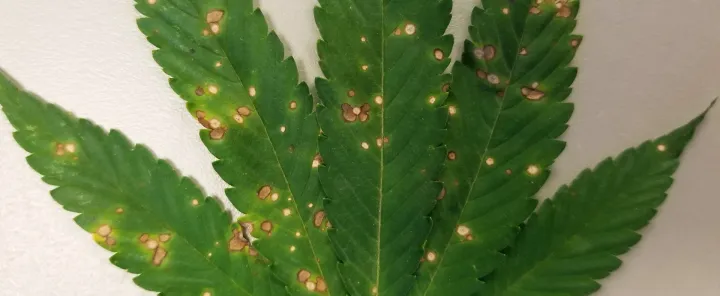
Symptoms typically manifest as small, oval, or elongated spots on the leaves, which are surrounded by a distinct dark-brown or greyish necrotic margin.
Under humid conditions, the center of the lesions may become covered with a characteristic olive-grey velvety growth, representing the massive production of fungal conidia.
As the disease progresses, individual spots often coalesce, covering large areas of the leaf surface, leading to extensive chlorosis, necrosis, and eventual leaf death.
When the stem and leaf sheaths are affected, the plant may show signs of wilting or lodging, which significantly disrupts the normal physiological processes of the crop.
Severe infestations result in the rapid senescence of lower leaves, which eventually leads to a reduction in the overall photosynthetic capacity of the plant during the critical grain-filling phase.
Pathogen
The causative agent of the disease is the fungus Bipolaris gigantea, which belongs to the order Pleosporales. It is a necrotrophic pathogen capable of surviving as mycelium or conidia in crop debris, soil, and on seeds.
The life cycle involves the production of large, multi-celled conidia that are easily dispersed by wind, rain splashes, and movement of farm equipment throughout the agricultural fields.
This pathogen possesses high virulence, allowing it to infect various parts of the host plant, including leaves, stems, and sometimes even the root system, depending on the environmental conditions.
The ability of Bipolaris gigantea to adapt to various hosts makes it a persistent threat in many agricultural ecosystems, requiring constant monitoring of crop health.
The fungus is genetically diverse, which can lead to the development of new, more aggressive strains that may overcome the resistance of some currently grown crop varieties.
Conditions for development
The development of Bipolaris gigantea is highly dependent on high relative humidity (above 85%) and warm temperatures, typically ranging from 20°C to 28°C.
Periods of frequent rainfall, high morning dew, and fog provide the optimal moisture levels required for the germination of spores and subsequent colonization of host tissues.
Dense planting patterns, which restrict air movement within the crop canopy, create a microclimate that traps humidity and promotes the spread of the fungal infection.
Plants under physiological stress, such as those grown in nutrient-deficient soils or impacted by adverse weather, are significantly more susceptible to successful pathogen entry.
Lack of proper crop rotation often leads to the build-up of the pathogen's inoculum in the field, as the fungus can persist for long periods in crop residues left on the soil surface.
Why it matters
The primary economic impact of the disease is the substantial reduction in the photosynthetic area, which directly translates to lower grain weight, reduced yield, and poor grain quality.
Infected crops often produce shriveled seeds with low germination rates, making them unsuitable for use as high-quality seed material in subsequent planting cycles.
Premature leaf death curtails the duration of grain filling, preventing the plant from reaching its full yield potential and leading to a significant loss in harvest volume.
In cases of severe epidemics, the disease can cause total failure of the crop or make the harvest process significantly more difficult due to reduced plant vigor and lodging.
By compromising the integrity of the plant tissues, the infection also makes the crops more vulnerable to secondary opportunistic pathogens and environmental stresses.
Protection
Integrated disease management is essential, starting with the use of certified, disease-free seed that has been properly treated with effective fungicides.
Implementing a diverse crop rotation strategy, where susceptible crops are not grown in the same field for several years, is crucial to reducing the fungal inoculum load in the soil.
Improving field sanitation by deep plowing or removing crop residues helps bury the fungus, where it will be subjected to the degradation process by soil microorganisms.
Foliar fungicide applications should be timed based on scouting and environmental risk assessments to prevent the establishment of the disease in the early stages of development.
- Selection of resistant or tolerant crop cultivars.
- Application of balanced fertilization to support plant vigor.
- Effective weed control to eliminate potential alternative hosts.
Discussion
No discussions yet — be the first.