
Aspicilia calcarea
Aspicicilia calcarea
Description
Symptoms
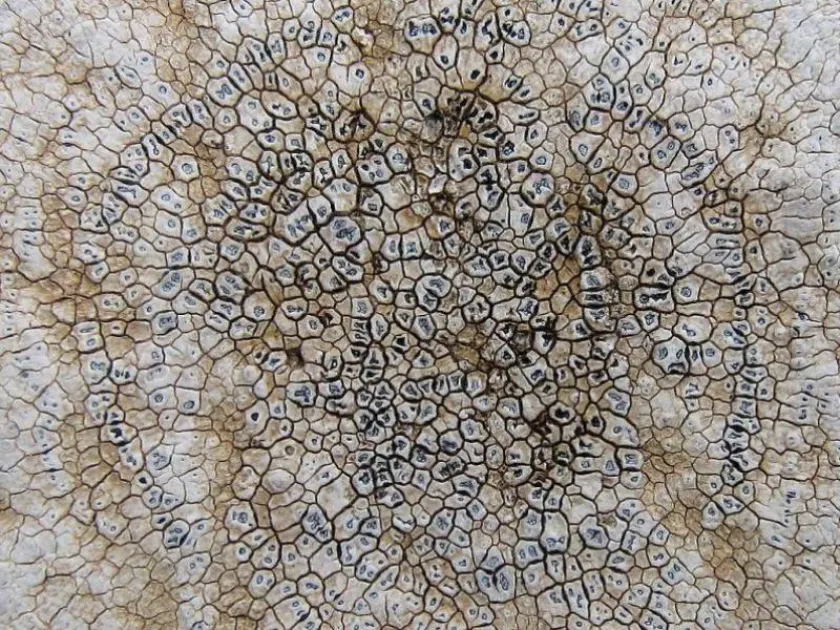
Aspicilia calcarea is a crustose lichen characterized by a flat, often cracked or areolated thallus that adheres tightly to the substrate.
The appearance of this lichen is usually ash-gray, white, or off-white, forming irregular patches on stone or tree surfaces.
Upon closer inspection, the surface appears granular, and in mature specimens, one can observe black, point-like apothecia embedded within the crust.
The lichen does not cause visible damage to the host, as it remains entirely on the surface without penetrating the inner layers of the bark.
The cracked structure of the thallus is a result of the organism's growth pattern as it expands across the rocky or woody surface.
Pathogen
This organism is a lichenized fungus, which means it is a symbiotic association between a fungus and photosynthetic algae or cyanobacteria.
It is not a plant pathogen; it does not infect the tree, nor does it feed on the nutrients or sap of the host plant it colonizes.
The scientific classification places it within the Megasporaceae family, highlighting its role as a specialized colonizer of calcareous substrates.
As a biological entity, it thrives by fixing nutrients from atmospheric moisture and dust particles, maintaining independence from the host tree.
Unlike parasitic fungi, Aspicilia calcarea lacks haustoria and other structures designed for the penetration and digestion of plant tissues.
Conditions for development
Aspicilia calcarea is typically found in environments with high light intensity, as it requires significant sunlight for the algae component to thrive.
The presence of alkaline or calcareous surfaces is a primary requirement, which explains its common occurrence on limestones and specific bark types.
This species is a slow-growing organism and is known for its high sensitivity to air pollution, particularly sulphur dioxide levels.
While it prefers relatively stable environments, it can endure periodic desiccation, entering a dormant state during dry seasons.
Development is most pronounced in temperate climates where atmospheric humidity levels allow for periodic physiological activity.
Why it matters
Aspicilia calcarea does not pose a direct threat to the vigor, health, or productivity of fruit trees or ornamental crops.
The organism is strictly an epiphyte, meaning it simply uses the tree bark as a perch to access sunlight and atmospheric nutrients.
While heavy colonization might be perceived as unsightly in formal gardens, it does not impede the tree's vascular processes.
In some cases, lichen growth is mistakenly identified as a disease, leading to unnecessary application of chemicals on the bark.
The presence of such lichens is often an indicator of good local air quality, rather than a symptom of a diseased plant environment.
Protection
No specific disease control or fungicide application is necessary for Aspicilia calcarea because it is not a pathogenic organism.
If the visual appearance of the bark is of concern, physical cleaning with a brush or a mild detergent solution is the most effective method.
Routine horticultural maintenance, such as proper pruning and thinning of the canopy, naturally discourages lichen growth by increasing airflow.
Whitewashing the trunks of trees can create an inhospitable surface for colonization, providing a simple preventive measure for garden aesthetics.
Focusing on the general health and vitality of the tree remains the best way to ensure natural bark renewal and inhibit unwanted epiphyte accumulation.
Discussion
No discussions yet — be the first.