
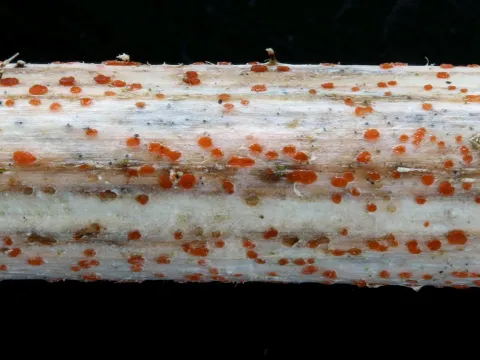
Chamaemyces
Chamaemyces
The genus Chamaemyces belongs to the family Agaricaceae. These fungi are primarily saprotrophic, meaning they derive nutrients from decaying organic matter rather than living plants.
What the section contains
Chamaemyces
As biological agents, they contribute to the decomposition of forest litter and humus, playing a key role in nutrient cycling within the soil ecosystem.
The fungus develops a widespread mycelial network that remains active in the soil, responding to moisture and temperature fluctuations.
Taxonomically, the genus is often distinguished by specific microscopic spore features and the morphology of the pileus surface.
These organisms are not considered pathogens of agricultural crops, meaning they do not cause tissue necrosis or wilting in healthy vegetation.
The most visible sign of Chamaemyces is the emergence of fruiting bodies with distinct scaly caps and delicate white gills.
The pileus (cap) often displays a finely squamulose or scaly texture, which is a diagnostic trait for identifying species within this group.
A persistent or evanescent ring is often present on the stipe, which helps distinguish Chamaemyces from similar mushroom species.
Spores are typically produced in large numbers and are white in mass, which can sometimes be seen as a dusty deposit on neighboring surfaces.
Mycelial strands might be visible if the soil is carefully disturbed, appearing as fine white threads permeating the organic substrate.
Chamaemyces thrives in moist environments with abundant decaying organic material, such as leaf litter or garden compost.
Optimal development occurs in temperate climates where temperatures remain between 15°C and 22°C with high ambient humidity.
Shaded areas with poor light penetration often provide the necessary conditions for these fungi to flourish without competition from light-dependent organisms.
Soil pH levels that are neutral to slightly acidic generally favor the mycelial growth of this fungal genus.
Excessive soil moisture, caused by poor drainage or over-irrigation, is a primary trigger for the formation of fruiting bodies.
Chamaemyces is not harmful to commercial crops, as it lacks the specialized structures required to penetrate living plant cuticles.
The primary concern is aesthetic, as their sudden appearance on lawns or managed garden beds can be perceived as untidy.
There is a risk of confusion with toxic mushroom species, posing a safety issue if accidentally ingested by humans or pets.
In very rare instances, intense mycelial activity might alter soil texture, but this does not result in significant yield loss.
Because they are not parasitic, they do not require systemic fungicides or complex disease management programs.
Management is largely focused on cultural practices that reduce the buildup of organic debris on the soil surface.
Improving soil aeration and drainage is the most effective way to limit the environmental niches available for these fungi.
Manual removal of fruiting bodies is the recommended method if they appear in areas where they are considered undesirable.
Maintaining a balanced nutrient program helps promote healthy competition among soil microorganisms, naturally suppressing fungal growth.
Fungicides are not recommended, as they could disrupt beneficial soil life without providing any real benefit against these harmless saprotrophs.