
Ascochyta blight of vetch
Ascochyta viciae-villosae
Description
Symptoms
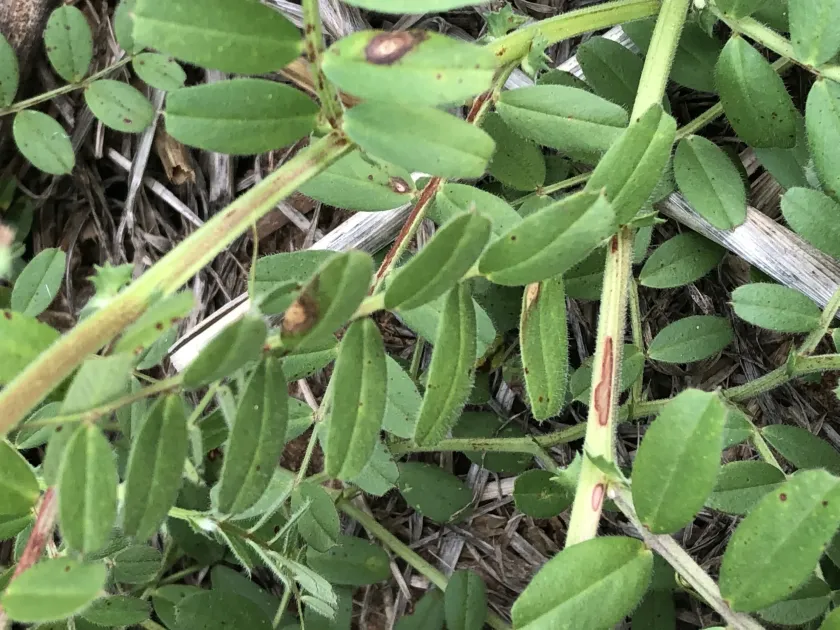
The symptoms appear as localized spots on leaves, stems, and pods. These spots are typically circular or irregular in shape, characterized by grayish-brown centers and darker, prominent margins.
Stem lesions often develop into elongated, sunken ulcers. These can eventually girdle the stem, leading to stem breakage and the death of the upper portions of the plant.
Under humid conditions, small black pycnidia become visible in the center of the necrotic spots, often arranged in concentric rings, which is a hallmark of this fungal infection.
Pods show sunken, brownish lesions. If the infection penetrates deeper, it damages the developing seeds, resulting in shriveled, discolored, or non-viable seeds.
Severe infestation causes premature leaf yellowing and defoliation, which severely limits the plant's capacity for photosynthesis during critical growth stages.
Pathogen
The disease is caused by the fungus Ascochyta viciae-villosae, an imperfect fungus belonging to the Coelomycetes class. This pathogen is a specific parasite that affects various species of the Vicia genus.
The fungus survives the winter primarily in plant debris, both in the soil and on seeds, in the form of mycelium and pycnidia. Primary infection starts in spring when conidia are spread by wind or water splashes.
The pathogen forms pycnidia, which are small, dark, flask-shaped reproductive structures embedded in the host plant tissues. These structures act as diagnostic signs of the infection.
Seeds are a significant vector for the transmission of the fungus. The pathogen can remain dormant within the seed coat or embryo until the conditions for germination are met, facilitating long-distance transport.
Wild vetch species growing in adjacent areas can also serve as reservoirs for the pathogen, ensuring the survival of the fungus even when vetch is not grown in the field.
Conditions for development
The development of the disease is highly dependent on environmental factors, particularly cool and wet conditions. Temperatures ranging from +18°C to +22°C are optimal for fungal growth.
Rainy weather, high humidity, and frequent dew promote the dispersal of conidia. Splash-dispersal is the primary mechanism for the movement of the pathogen between plants in the field.
High-density plantings create a favorable microclimate with high humidity, which significantly accelerates the spread and severity of Ascochyta blight.
Inadequate crop rotation, where vetch is planted on the same field too frequently, leads to a significant build-up of the fungal inoculum in the soil.
Failure to use clean, certified, and treated seeds is a primary reason for the early occurrence of the disease in agricultural fields.
Why it matters
Ascochyta blight significantly reduces the yield of both green forage and seeds. Early outbreaks can lead to plant loss and poor stand establishment.
Damage to reproductive organs impairs pod filling and seed quality, resulting in reduced weight and poor seed viability for subsequent planting cycles.
The nutritional value of forage is compromised, as the fungus affects the protein content and overall digestibility of the green mass for livestock.
Fungal toxins produced during the infection process may potentially impact the palatability and safety of the forage for farm animals.
Economic losses are cumulative, arising from reduced biomass production, loss of seed quality, and the costs associated with fungicide applications.
Protection
Implementing a proper crop rotation system with a 3–4 year interval between vetch crops is essential to minimize soil-borne inoculum levels.
Using high-quality seeds that have been properly treated with fungicides is the most effective way to prevent the introduction of the disease into new fields.
Deep plowing or incorporating crop residues into the soil helps accelerate the decomposition of infected material, effectively reducing the fungal survival rate.
Foliar fungicide applications during the growing season may be necessary if weather conditions favor an epidemic, particularly during the flowering and pod-filling stages.
Maintaining optimal plant density and controlling weeds that may act as alternative hosts helps manage the humidity levels and disease spread within the field.
Discussion
No discussions yet — be the first.