
Amyloflagellula
Amyloflagellula
Amyloflagellula is a genus of fungi within the Marasmiaceae family. In agronomy, this pathogen is recognized as a causal agent of specific fungal diseases, particularly affecting woody plants in tropical and subtropical regions where humidity is consistently high.
What the section contains
Amyloflagellula
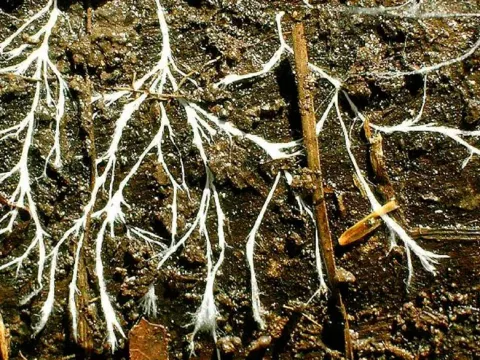
The biological nature of this fungus is defined by its characteristic growth pattern, forming thin, thread-like mycelial strands. These structures extend across the surface of branches and leaves, effectively colonizing the host plant to derive nutrients.
As a specialized parasite, Amyloflagellula targets the epidermal tissues of the host. Its life cycle is heavily dependent on environmental conditions, utilizing spore dispersal to migrate from infected tissues to healthy areas of the same plant or neighboring ones.
The fungal mycelium penetrates the intercellular spaces of the plant tissue. Over time, it secretes enzymes that degrade cellular components, disrupting the vital physiological processes such as water transport and nutrient assimilation necessary for healthy growth.
Classified as a Basidiomycete, this fungus produces resilient rhizomorphs that allow it to thrive even under fluctuating environmental stressors. Its ability to create a dense network of hyphae makes it a difficult pathogen to eradicate once it has established itself on the bark and foliage.
The primary visual indicator of an Amyloflagellula infection is the presence of white to off-white, thread-like mycelial strands wrapping around young shoots and leaves. These strands are distinct and often look like spiderwebs or fine threads of lace.
Infected leaves exhibit signs of stress, including premature yellowing (chlorosis) followed by browning and eventual necrosis. The leaves often curl and drop prematurely, leading to significant defoliation of the canopy.
Branches that come into contact with the fungal network often show signs of tissue decay. The bark may change color, showing dark or sunken necrotic patches, which eventually impede the plant's ability to maintain structural integrity.
Progressive infection often results in the dieback of terminal shoots. When observing the plant closely, one can see the fungal mesh extending from the main branches toward the leaf petioles, effectively choking off the supply of vital nutrients.
- Appearance of white thread-like mycelial strands
- Premature yellowing and curling of leaves
- Nekrotic patches forming on the bark of branches
- Defoliation due to leaf death
- Terminal shoot dieback
Amyloflagellula development is strictly regulated by ambient environmental conditions. The fungus thrives in environments with relative humidity levels consistently above 80-85%, making it highly prevalent during the peak rainy seasons in tropical climates.
Temperature plays a supporting role in the pathogen's growth cycle. Stable, warm temperatures are ideal for the rapid proliferation of mycelium, allowing the disease to progress quickly during the transition from dry to wet seasons.
Poor airflow within the crop canopy acts as a major catalyst for disease spread. High-density plantings that prevent the circulation of air trap moisture against the plant surfaces, creating a perfect microclimate for spore germination and colonization.
The presence of free moisture, such as dew or rainwater, on foliage is crucial for the pathogen. It serves as a medium for spore movement and subsequent penetration into the plant's epidermis, especially when humidity stays high throughout the night.
Plants that are physiologically weakened due to nutrient deficiencies or prior mechanical injury are significantly more susceptible to infection. Maintaining optimal crop vigor is essential to preventing widespread outbreaks within a plantation.
The significant harm caused by Amyloflagellula is primarily attributed to the reduction in the total photosynthetic surface area. As the plant loses foliage, its ability to produce carbohydrates decreases, leading to stunted growth and lower overall vigor.
By causing bark necrosis and blocking nutrient transport pathways, the fungus negatively impacts the development of fruits and flowers. This results in reduced yield, lower quality of produce, and, in severe cases, a total loss of commercial harvest.
The infection creates entry points for opportunistic secondary pathogens, including various bacteria and other fungi. This dual or multi-pathogen attack significantly complicates the recovery process and increases the severity of the damage to the trees.
Economically, Amyloflagellula imposes a heavy burden on growers through increased maintenance costs. Frequent sanitation, regular pruning, and recurring fungicide applications reduce the overall profitability of the agricultural venture.
Prolonged exposure to the fungus often leads to the death of the tree. Even if intervention occurs, trees frequently remain chronically infected, necessitating their removal and replacement, which delays the return on investment for years.
Effective management begins with rigorous monitoring and early detection. Identifying the first signs of mycelial strands allows growers to take targeted actions, which is far more efficient than attempting to treat a systemic infection.
Pruning is the most essential agrotechnical control measure. Regularly removing infected branches and disposing of them away from the plantation helps lower the inoculum pressure. All pruning tools should be sanitized regularly to prevent cross-contamination.
Chemical control involving copper-based fungicides is highly recommended when conditions favor disease spread. Systematic applications should be timed to cover vulnerable periods of the plant's growth, ensuring thorough coverage of the canopy.
Balanced fertilization and good soil health are key components of a robust resistance strategy. Providing the plant with adequate potassium and phosphorus ensures that its defense mechanisms are primed to resist minor fungal challenges.
Adhering to proper planting spacing is a vital preventative measure. Ensuring adequate sunlight and air circulation within the canopy minimizes the moisture levels that Amyloflagellula requires, effectively preventing the initial colonization of the host plant.