
Amylostereum
Amylostereum
Description
Symptoms
The most visible sign of infection is the presence of basidiocarps, which appear as thin, leather-like, effused fruiting bodies attached to the bark of the wood.
Infected wood exhibits signs of white rot. The wood tissue undergoes a color change, becoming significantly lighter and paler as the fungus decomposes lignin and cellulose.
Structural integrity is severely compromised as the wood loses its mechanical strength, turning soft, brittle, and fibrous over time.
Invasion points often show small drill holes created by the wood wasp larvae, accompanied by localized discoloration of the wood around these channels.
The general health of the tree declines, often characterized by crown thinning or premature needle drop, which may indicate systemic internal rot.
Pathogen
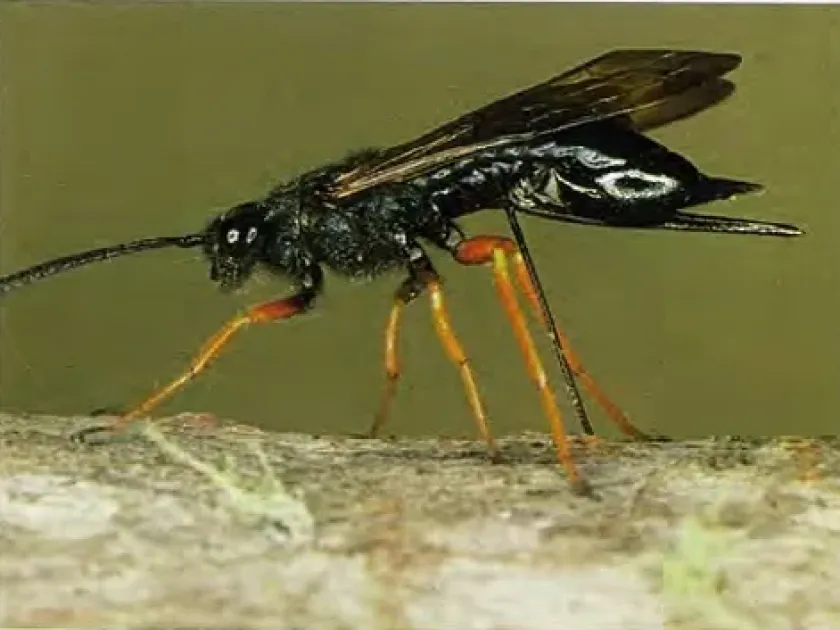
Amylostereum is a genus of crust fungi in the order Russulales. It is well-known for being a symbiont with wood wasps (Siricidae), specifically the Amylostereum areolatum species.
The fungus is introduced into the tree by female wood wasps during the oviposition process. The wasp deposits fungal spores into the wood along with its eggs, allowing the fungus to establish itself.
Once inside the tree, the mycelium spreads through the xylem, causing white rot. It functions as a facultative parasite, capable of thriving in weakened living trees and deadwood.
The biological cycle involves the growth of hyphae within the wood tissue to extract nutrients, followed by the development of fruiting bodies on the surface.
These fungi are particularly adapted to colonize softwood species, including various types of spruce, fir, and pine, affecting their internal structure.
Conditions for development
Amylostereum thrives in damp, wood-rich environments. Moist conditions within the tree are essential for the rapid growth of the mycelium.
The presence of wood wasps is a primary condition for its spread. Without these insect vectors, the fungus has limited ability to reach the healthy internal parts of the tree.
Stressed trees, such as those damaged by fire, drought, or mechanical injuries, are far more susceptible to successful fungal colonization.
High relative humidity and stagnant air in dense forest stands create an ideal microclimate for the fungus to develop its reproductive structures.
Improper storage of harvested timber, especially keeping it in piles with high moisture content, provides a breeding ground for the pathogen.
Why it matters
The primary economic impact is the degradation of timber quality. Wood affected by white rot loses its commercial value for construction and high-grade carpentry.
The fungus can cause significant loss in coniferous plantations, leading to the death of trees and disruption of forest ecosystem health.
Trees affected by advanced decay pose a safety hazard, as they are prone to windthrow and stem breakage, which can endanger forest workers and the public.
It facilitates secondary attacks by other pests and decay agents, leading to rapid biomass decomposition in the forest environment.
International trade restrictions are often imposed on timber originating from regions where Amylostereum and its vector are present to prevent global spread.
Protection
Sanitation cutting is the primary method of control. Removing infested, dying, or wind-fallen trees helps limit the reservoir of the fungus in the forest.
Effective management of wood wasp populations, using pheromone traps and biological controls, can significantly decrease the transmission of the disease.
Timber drying is crucial; processing wood to reduce moisture content below the threshold required for fungal growth prevents further decay in stored products.
Chemical treatments or kiln drying of lumber are necessary procedures for exports to ensure that the material is free from active fungal infection.
Regular forest pathology monitoring and surveillance allow for early detection, enabling landowners to implement targeted management before widespread damage occurs.
Discussion
No discussions yet — be the first.