
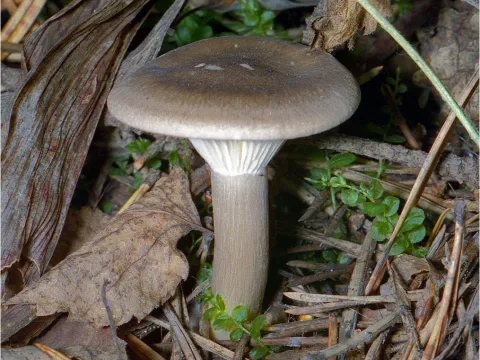
Ampulloclitocybe
Ampulloclitocybe
The genus Ampulloclitocybe belongs to the family Hygrophoraceae (or formerly Tricholomataceae). It is crucial to clarify that these fungi are not plant pathogens and do not cause diseases in agricultural crops.
What the section contains
Ampulloclitocybe
These organisms are classified as saprotrophs. They obtain nutrients by decomposing dead organic matter, such as leaf litter and plant debris, rather than infecting living plant tissues.
There is no evidence in agricultural science linking Ampulloclitocybe to crop damage. They do not pose a threat to plant health, roots, or fruit development, and they should not be managed as pests.
Their ecological function is beneficial rather than harmful. By breaking down complex carbon sources in the soil, they contribute to the nutrient cycle and soil health.
In a professional agronomic context, identifying these fungi confirms a high content of organic matter and good soil moisture levels, which are generally positive for agricultural land.
The development of Ampulloclitocybe is strictly linked to environmental conditions. They thrive in damp areas where a thick layer of organic matter is present, such as forest edges or wooded plots.
High humidity and cool temperatures are the primary drivers for the growth of their fruiting bodies. They are typically observed during the autumn season when environmental conditions become stable.
These fungi require specific carbon sources found in decaying wood or humus to complete their reproductive cycle. They are rarely found in intensively cultivated fields lacking organic mulching.
Spore dispersal occurs via wind currents. The tiny spores land on moist substrates, where they germinate to form new mycelial networks if the ecological conditions allow for colonization.
Maintaining soil balance and moisture is key to the occurrence of these fungi. They are essentially indicators of a stable ecosystem with active biological decay processes.