
Amphiporthe
Amphiporthe
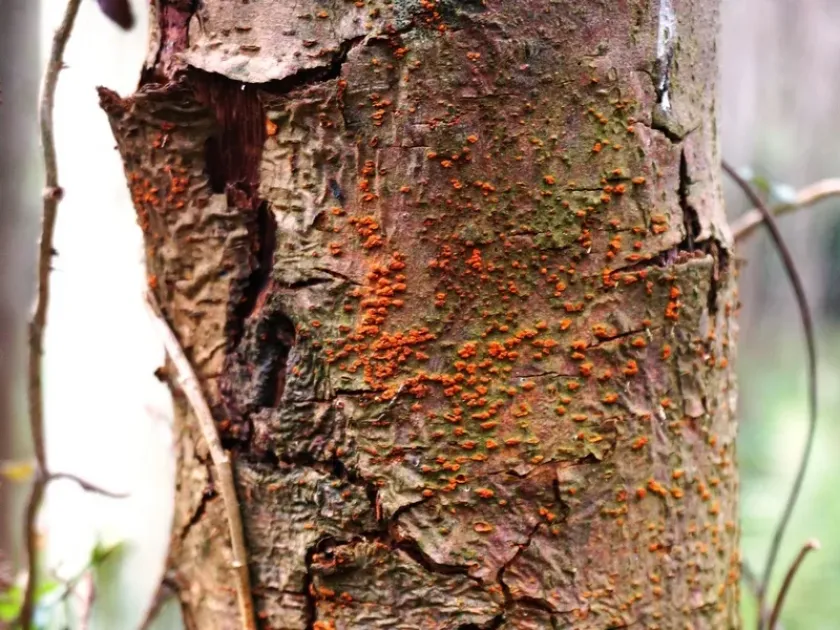
Description
Symptoms
The first external symptom of Amphiporthe infection is the discoloration of the bark, which turns brown or reddish-brown. The affected areas often appear sunken, indicating the underlying necrosis of the tissue.
As the infection progresses, small, raised pustules or fruiting bodies break through the bark's surface. This gives the bark a rough, cracked appearance, which is a hallmark of the advanced stage of the disease.
Affected trees often show premature wilting of the foliage on infected branches. While leaves may change color to yellow or brown, they frequently remain attached to the dying branches for a considerable time.
When cutting into the affected wood, dark staining and tissue degradation are visible. A sharp boundary often exists between the healthy and diseased tissue, sometimes accompanied by a protective callous layer trying to wall off the infection.
Long-term infection leads to the death of major scaffold branches, causing severe crown dieback. Without management, the structural integrity of the tree is compromised, eventually leading to the death of the entire host.
Pathogen
The causal agent of this disease is the fungus from the Amphiporthe genus, classified within the Ascomycota phylum. The most studied species, Amphiporthe leiphaemia, is a well-known pathogen affecting various oak species and other deciduous trees.
This microscopic fungus acts as a necrotrophic pathogen, invading the plant tissue through bark wounds, pruning cuts, or frost cracks. Once inside, the mycelium colonizes the phloem and cambium, eventually spreading to the xylem.
The life cycle involves the production of perithecia within stroma located under the host's epidermis. These fruiting bodies release spores that are easily disseminated by wind, rainwater splash, and insect vectors, facilitating the spread across the canopy.
The fungus secretes specialized enzymes and toxins that break down plant cell walls. This digestive process disrupts the nutrient transport system, leading to the localized death of branches and stems.
Amphiporthe can persist as a saprophyte on deadwood for extended periods. This ability to survive in decaying branches makes old lesions constant sources of infection for the remaining healthy parts of the tree.
Conditions for development
Amphiporthe thrives in environments with high humidity and moderate temperatures, which are typical during late spring and early autumn. Moist conditions are essential for the germination of fungal spores on the bark surface.
Mechanical damage is the primary facilitator of infection. Wounds caused by storms, ice, or improper pruning practices serve as entry points where the fungus can easily establish itself.
Overcrowded plantings and poor site drainage increase local humidity, creating a microclimate favorable for fungal proliferation. Such conditions prevent the bark from drying out, allowing spores to successfully colonize the tree.
Trees that are nutritionally stressed or affected by poor soil conditions are significantly more susceptible to attack. Healthy trees possess natural barriers that the fungus struggles to overcome, unlike weakened specimens.
Post-winter periods are particularly risky if the tree has suffered from frost damage. These stress points act as primary infection centers where the fungus can start its cycle of destruction at the beginning of the growth season.
Why it matters
The primary harm caused by Amphiporthe is the gradual decline and eventual death of the tree. Necrosis of the bark and cambium interrupts nutrient flow, leading to the systematic dieback of branches.
Infected trees suffer from reduced vigor and impaired metabolic functions. This makes them highly susceptible to secondary infestations by wood-boring insects and other opportunistic plant pathogens.
For fruit and ornamental trees, the economic impact is substantial due to loss of yield, reduced aesthetic value, and the high cost of corrective pruning or removal of dead specimens.
In nursery settings, an outbreak of Amphiporthe can lead to the total loss of young saplings. This requires strict quarantine and destruction of diseased stock to prevent the spread of the pathogen.
In forest ecosystems, the disease negatively impacts biodiversity by decimating specific host populations. It also degrades the quality of timber, making the affected wood commercially useless.
Protection
The most effective strategy for managing Amphiporthe is rigorous sanitation. All infected branches must be pruned well into the healthy tissue, and the debris must be burned to eliminate the inoculum source.
All tools used during pruning must be sterilized with alcohol or disinfectant solutions between cuts to prevent mechanical transmission of fungal spores from diseased to healthy limbs.
After pruning, large cuts should be treated with wound paint or specialized horticultural sealants. This physical barrier prevents spores from settling and germinating on the exposed inner tissues.
Cultural practices, such as providing proper fertilization and irrigation, help maintain tree vigor. A healthy, well-nourished tree can better compartmentalize infections and resist pathogen spread.
If the infection is widespread, preventative fungicide sprays applied during the early growth season can help protect healthy trees by inhibiting spore germination on the bark surface.
Discussion
No discussions yet — be the first.