
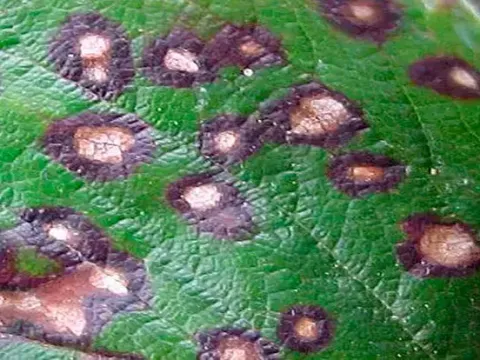
Alternaria leaf spot of Datura
Alternaria crassa
The causative agent of the disease is the imperfect fungus Alternaria crassa (Sacc.) Rands. This pathogen is highly specialized in attacking plants within the Solanaceae family, including various Datura species.
What the section contains
Alternaria leaf spot of Datura
The fungus overwinters in soil and on infected crop debris in the form of mycelium and conidia. The pathogen can also be transmitted via seeds, which serves as a primary source of infection in new seasons.
The life cycle involves the formation of chains of conidia, which are disseminated by wind, rain splashes, and insects to healthy plant tissues. Multiple generations can occur within a single growing season.
While Datura is the primary host, the fungus exhibits sufficient ecological plasticity to infect other wild and cultivated solanaceous species under favorable environmental conditions.
Morphologically, the fungus produces dark, multicellular conidia with transverse and longitudinal septa, providing high resistance to environmental stress and ensuring long-term viability.
The first symptoms appear on leaves as small, dark brown spots that are initially circular or angular. As the disease progresses, these spots expand and may coalesce, covering large areas of the leaf blade.
A diagnostic feature of this disease is the presence of concentric zoning within the spots. Under conditions of high humidity, an olive-gray mold, representing the fungal sporulation, forms on the affected spots.
When the infection spreads to stems, elongated dark lesions appear. These can result in stem girdling, which often leads to the wilting and eventual death of the affected plant sections.
On Datura seed capsules, the infection manifests as sunken dark spots with fungal growth. This can lead to seed decay and a significant decrease in the viability of the harvested seed material.
In severe cases, the plant turns yellow, the leaves wither and drop off, and the entire plant becomes stunted. This significantly reduces the accumulation of biomass and total plant health.
Favorable conditions for the development of Alternaria leaf spot include temperatures ranging from +20°C to +28°C. This temperature range is optimal for spore germination and colonization of plant tissues.
High relative humidity, frequent rainfall, or heavy dew is critical for the spread of the disease. Prolonged leaf wetness is essential for the pathogen to successfully penetrate the plant surface.
Dense planting configurations reduce air circulation within the canopy, creating a microclimate that promotes high humidity and facilitates the rapid spread of the fungus between adjacent plants.
Plants subjected to environmental stress, such as drought or nutrient deficiencies, show increased susceptibility to infection by Alternaria crassa compared to healthy, vigorous plants.
Epidemic spread of the pathogen usually occurs during the latter half of the growing season, characterized by alternating day/night temperatures that favor the accumulation of moisture on plant foliage.
The main harm caused by Alternaria crassa is the drastic reduction in the photosynthetic capacity of the plant due to the loss of functional leaf tissue, impacting overall vigor.
Damage to stems interrupts the normal transport of water and nutrients, leading to the deformation and premature death of stems, which is particularly detrimental for medicinal Datura crops.
The disease negatively influences the chemical profile of the plant, often decreasing alkaloid content, which is a vital economic parameter for pharmaceutical raw material production.
Infected seeds often exhibit poor germination energy, and seedlings emerging from contaminated sources are prone to pre-emergence or post-emergence damping-off caused by the pathogen.
In years with warm, wet weather, the disease can lead to total crop loss if protective measures are not implemented in a timely manner.
The fundamental strategy for control is the implementation of a strict crop rotation, ensuring that Datura is not planted in the same field for at least 3 to 4 years to reduce the inoculum load.
Using certified, pathogen-free, and treated seed material is essential to prevent the introduction of the fungus into new fields and to ensure vigorous early plant growth.
Sanitation practices are critical, including the thorough removal and destruction of all crop residues after harvest to eliminate overwintering sites for the fungus.
Prophylactic and curative fungicide applications are recommended during the growing season to suppress fungal development and protect healthy tissues from infection.
Continuous monitoring of fields allows for the early detection of disease hotspots, enabling targeted control measures to be taken before the infection becomes widespread throughout the crop.