
Bacterial wilt of pea
Xanthomonas pisi
The causal agent of this disease is the bacterium Xanthomonas pisi. It is a Gram-negative, rod-shaped pathogen that primarily invades the vascular system of the host plant, disrupting the transport of nutrients and water.
What the section contains
Bacterial wilt of pea
The bacteria overwinter in infected seeds, crop residues left in the soil, and on perennial weeds that serve as alternative hosts. The pathogen's ability to survive in various forms makes it a persistent challenge for farmers.
While primarily affecting field peas (Pisum sativum), the bacteria can also infect other leguminous plants. The systemic nature of the infection allows the pathogen to colonize the entire plant body, leading to severe physiological decline.
Dissemination within a field occurs mainly through splashing rain, irrigation water, and the movement of contaminated agricultural equipment. Insects and wind-driven debris also facilitate the spread of the bacteria to healthy plant tissues.
The biology of the pathogen is centered on its ability to produce biofilms and enzymes that degrade plant cell walls, allowing the bacteria to thrive within the xylem vessels and eventually block the vascular flow entirely.
Early symptoms include water-soaked, translucent spots on the leaves. As the disease progresses, these lesions turn brown or black and may develop a chlorotic yellow halo, which is a classic symptom of bacterial blight or wilt.
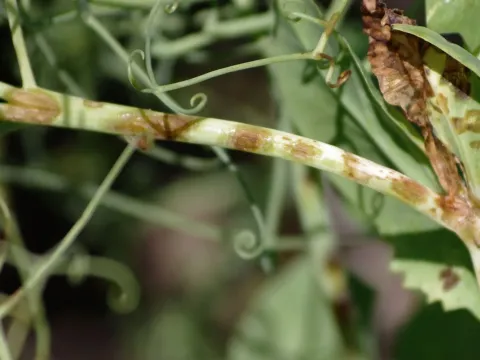
Stems often exhibit dark, elongated streaks or cankers. Under conditions of high humidity, a bacterial ooze may be visible on the surface of these lesions, which later dries into a crusty, shiny layer.
The most distinctive sign is the wilting of the plant. It typically begins with the lower leaves turning yellow and curling, followed by a systemic wilt that causes the entire plant to collapse and dry out prematurely.
Infected pods display dark, sunken lesions and may become deformed. If the seeds within the pods are infected, they often appear shriveled, discolored, or covered with a thin film of dried bacterial exudate.
Cross-sections of the lower stem will reveal a reddish-brown discoloration of the vascular tissues, confirming the presence of the infection within the plant's internal transport system.
Bacterial wilt flourishes in warm and humid environments. Optimal conditions for disease development involve temperatures between 20°C and 28°C accompanied by high atmospheric moisture or frequent rainfall.
Prolonged leaf wetness, often caused by dew or heavy mist, is essential for the bacteria to enter the stomata of the pea leaves. Once inside, the pathogen quickly proliferates if the humidity remains high.
Agricultural practices that promote high plant density often exacerbate the disease by limiting airflow and keeping the leaf canopy damp for longer periods throughout the day.
Physical trauma to the plants, such as wind damage, hail, or mechanical cultivation, provides entry points for the bacteria. Wounded tissues are significantly more susceptible to successful colonization by Xanthomonas pisi.
Poor soil drainage or waterlogged conditions can weaken the plant's root system, making it easier for the pathogen to establish a systemic infection that eventually reaches the stems and leaves.
The disease causes significant economic loss by reducing the total yield. Premature death of the plants prevents the proper development of pods, leading to stunted growth and lower seed counts.
Seed quality is severely compromised; seeds become shriveled and may carry the bacteria internally, which ensures the pathogen is introduced into new fields in the following season.
Yield losses can range from 15% to 40% in highly susceptible varieties or under ideal disease conditions, significantly reducing the profitability of the pea crop.
The uneven maturity of an infected field complicates the harvesting process, leading to increased grain losses during combine operation and higher post-harvest handling costs.
Secondary infections by fungi and other opportunistic pathogens often occur on plants already weakened by bacterial wilt, compounding the damage and accelerating the destruction of the crop.
The primary control measure is the use of disease-free, certified seeds. Seed treatment with appropriate bactericides is recommended to eliminate surface-borne pathogens before planting.
- Crop rotation with non-leguminous crops for at least 4-5 years to starve the bacteria in the soil.
- Deep plowing of crop residues to encourage rapid decomposition and break the infection cycle.
- Implementing integrated pest management (IPM) to reduce insect vectors that spread the bacteria.
- Planting resistant or tolerant cultivars that have been bred for resistance to bacterial pathogens.
- Ensuring adequate spacing between plants to maximize airflow and minimize leaf wetness.
Preventative applications of copper-based fungicides can act as a protective barrier, though they must be applied early in the season to be effective against the initial stages of infection.
Field monitoring is crucial for early detection. If small clusters of diseased plants are identified, they should be isolated and managed to prevent further spread throughout the rest of the field.
Combining cultural practices, such as proper field sanitation and balanced fertilization, with resistant seed genetics provides the most effective long-term strategy against bacterial wilt.