
Bacterial wilt of stone fruits
Xanthomonas prunicola
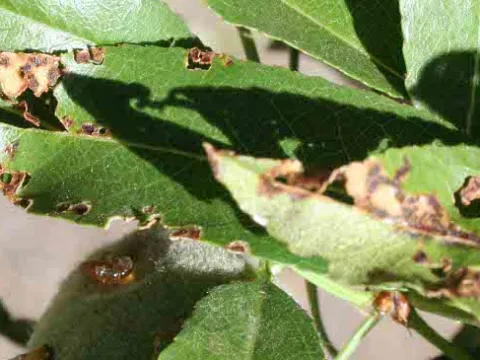
The primary symptom of the disease is the sudden wilting of shoot tips, which rapidly darken and dry out, taking on a characteristic scorched appearance.
What the section contains
Bacterial wilt of stone fruits
Leaves on the affected branches also turn brown but often remain attached to the tree for an extended period, which serves as a diagnostic feature.
Deep cankers and longitudinal cracks form on the bark of trunks and main branches, from which a bacterial exudate may ooze as drops or strands under high humidity.
Cross-sections of infected branches reveal distinct brown or reddish-brown discoloration of the wood, indicating systemic damage to the vascular system of the plant.
On fruits, the disease manifests as small necrotic spots with water-soaked margins that may coalesce, leading to deformation and rot.
The causative agent of the disease is the Gram-negative bacterium Xanthomonas prunicola, which specifically targets the vascular tissue of stone fruit trees.
This pathogen acts as an obligate parasite, capable of overwintering in infected plant debris, soil, and bark tissues of host trees.
Xanthomonas prunicola bacteria possess high motility and are spread efficiently by rain splashes, wind, agricultural tools, and various insect vectors.
The pathogen exploits natural openings like stomata and lenticels, as well as mechanical wounds from pruning or weather damage, to enter the host plant.
The biological specialization of this bacterium involves the rapid degradation of plant cell walls and vascular obstruction, leading to the rapid decline of the tree's health.
The development of the disease is highly favored by prolonged spring rains, which provide the necessary moisture for bacterial dissemination and infection.
Optimal conditions include moderate temperatures between +18°C and +25°C, combined with high relative humidity, which triggers mass colonization of tissues.
Mechanical damage to the bark caused by hail, frost, or improper pruning practices creates entry points that significantly increase infection rates.
Poor orchard management, such as overcrowding and lack of air circulation, leads to microclimates with stagnant humidity, which are ideal for bacterial multiplication.
Excessive nitrogen fertilization promotes soft, succulent growth that is much more susceptible to invasion by Xanthomonas prunicola.
The main danger of this disease lies in the rapid loss of orchard productivity, as the systemic infection often leads to the death of the entire tree.
Significant yield losses occur early due to the disruption of physiological processes, resulting in premature fruit drop and poor fruit quality.
The infection has a high epidemic potential, capable of spreading rapidly through an entire orchard if proper containment strategies are not strictly followed.
Fruits harvested from infected trees are of poor quality, often showing necrotic lesions that render them unsuitable for both fresh markets and storage.
Economic damage is substantial, encompassing the loss of established trees, costs of tree removal, and the long-term investment required to replant the orchard.
The foundation of effective protection is the use of disease-free, certified nursery stock to prevent the introduction of the pathogen into the orchard.
Strict sanitation protocols, including the disinfection of pruning tools with alcohol or chlorine-based solutions between trees, are critical to prevent cross-contamination.
Sanitary pruning should be performed during dry weather, ensuring that all infected wood is removed along with a buffer zone of healthy tissue.
Copper-based protective sprays, applied during dormancy and the early growing season, are essential for reducing the bacterial population on the bark surface.
Improving orchard health through balanced fertilization, proper soil drainage, and effective pest control enhances the tree's natural defense mechanisms.