
Bacterial wilt of hydrangea
Xanthomonas hydrangeae
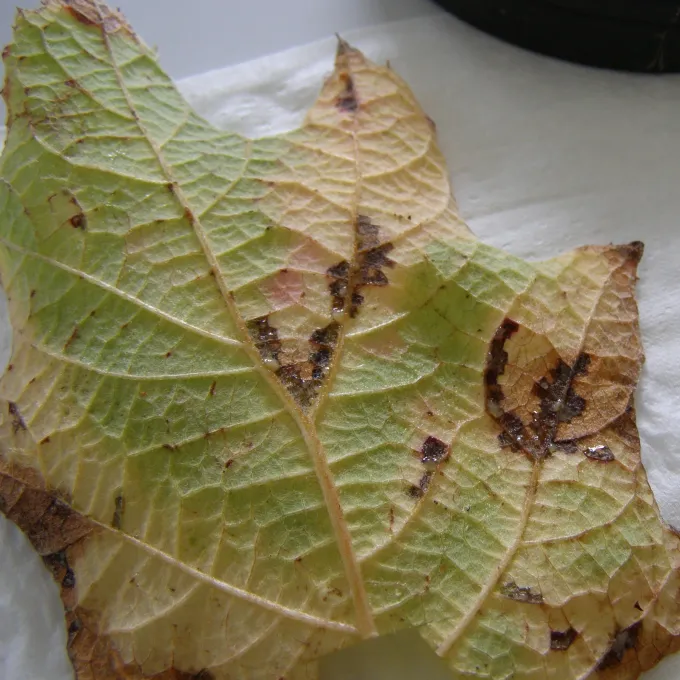
Description
Symptoms
The primary symptom of bacterial wilt in hydrangeas is the appearance of angular, vein-delimited leaf spots. Initially, these spots are translucent or watery, but they quickly darken into brown or necrotic black patches.
Under conditions of high humidity, bacterial ooze may be visible on the underside of the leaves or along the leaf margins. As the infection progresses, these spots coalesce, causing significant portions of the foliage to wither and die.
Infected hydrangeas often exhibit wilting during the hottest parts of the day, even when the soil moisture is adequate. Over time, this daily wilting becomes permanent as the vascular system becomes clogged with bacterial colonies.
Necrosis can spread from the leaves to the petioles and stems, leading to stunted growth, yellowing of the leaves, and eventually the death of entire branches or the whole plant.
Early diagnosis is critical. If the leaf symptoms are accompanied by a general lack of vigor and dieback, it is likely that the vascular tissues have been compromised by the bacterial infection.
Pathogen
The causative agent of this disease is Xanthomonas hydrangeae, a gram-negative phytopathogenic bacterium. It specifically targets the internal transport systems of the hydrangea plant to thrive and multiply.
This pathogen utilizes specialized enzymes to break down plant cell walls, allowing it to colonize the host tissues efficiently. Once inside, the bacteria proliferate rapidly, impeding the flow of water and nutrients throughout the plant.
The pathogen can survive in soil, on infected plant debris, and within dormant hydrangea buds. It remains viable for extended periods, waiting for favorable conditions to reinfect the host.
Transmission of Xanthomonas hydrangeae occurs primarily through splashing water, such as rain or overhead irrigation, which spreads the bacteria from leaf to leaf or onto the soil surface.
The bacterium is known to be highly adaptable and can exist as an endophyte, colonizing plant tissues without showing immediate symptoms until the plant is stressed by heat or environmental moisture.
Conditions for development
Bacterial wilt thrives in warm and humid environments, with temperatures between 22°C and 28°C being optimal for the multiplication of the bacteria. Prolonged leaf wetness is the most significant factor in disease development.
Overcrowded plantings reduce airflow and increase the duration of surface moisture on foliage, creating a perfect microclimate for the pathogen to spread from one plant to another.
Physical injuries, whether caused by pruning, hailstorms, or insect feeding, act as entry points for the bacteria. Once the protective outer layer of the leaf or stem is breached, the bacteria enter the plant tissues rapidly.
Overhead irrigation is a primary driver of disease spread in commercial nurseries and home gardens. Splashing water moves the bacteria from the soil or infected foliage to healthy parts of the plant.
Poor sanitation, such as failing to remove infected plant debris or using contaminated tools, ensures that the pathogen remains present in the garden, increasing the risk of infection in subsequent growing seasons.
Why it matters
The primary harm caused by Xanthomonas hydrangeae is the severe loss of aesthetic value, making affected hydrangeas unsuitable for sale or display. The rapid development of leaf spots and wilt can ruin the appearance of a garden bed quickly.
Infected plants suffer from reduced vitality, leading to smaller, distorted blooms and a overall decrease in plant growth. If left untreated, the cumulative stress can lead to the death of the hydrangea bush.
In nursery settings, bacterial wilt can lead to substantial financial losses, as large batches of propagation material may need to be discarded to prevent a wider outbreak of the disease.
Weakened hydrangeas are significantly more susceptible to secondary infections and opportunistic pests, which further complicates recovery efforts and increases the need for intensive management.
The presence of this pathogen complicates soil management, requiring rigorous sterilization or long-term rotation of the planting site to ensure that future hydrangea crops remain healthy.
Protection
The cornerstone of managing bacterial wilt is strict sanitation. All infected plant parts must be promptly removed and disposed of away from the planting area. Pruning tools should be sterilized between cuts to avoid cross-contamination.
Prevention starts with sourcing healthy, disease-free stock from reputable growers. Implementing a quarantine period for new plants can help prevent the accidental introduction of the pathogen into your garden.
Transitioning from overhead irrigation to drip irrigation is essential to keep foliage dry. Ensuring adequate spacing between plants promotes airflow and speeds up the drying of leaves after rain.
- Disinfect pruning tools using isopropyl alcohol or 10% bleach solution
- Apply copper-based fungicides to protect healthy tissue
- Manage insect populations that may cause damage or act as vectors
- Remove and destroy fallen leaves and plant debris
- Practice crop rotation in garden beds to reduce soil pathogen load
While chemical control is limited, copper-based products can provide a protective barrier on the leaf surface. These should be applied preventively, especially during periods of high humidity or consistent rainfall, to reduce the risk of infection.
Discussion
No discussions yet — be the first.