
Spiroplasma
Spirochaeta
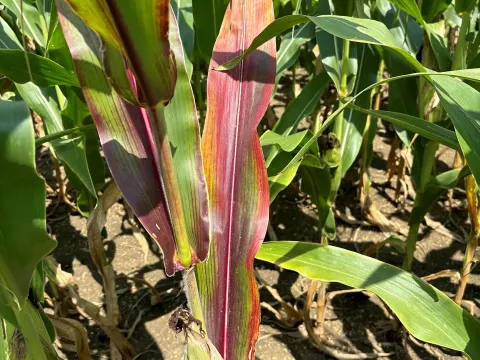
Spiroplasma infections often manifest as leaf yellowing, which typically begins at the margins or between the veins before spreading, eventually leading to necrosis.
What the section contains
Spiroplasma
Infected plants exhibit severe stunting and dwarfing, often failing to reach their normal height. Proliferation of shoots leads to a dense, bushy appearance known as witch's broom.
In cereal crops, the development of ears is frequently impaired, resulting in sterility or malformation, which significantly reduces the harvest potential.
Leaf tissue may become rigid and curled, showing signs of unnatural discolouration such as pale green or yellow shades, which contrast with healthy foliage.
Fruit and grain produced by affected plants are typically small, distorted, and lack the nutritional quality or commercial value required for market.
The causative agents are spiroplasmas, specialized microorganisms belonging to the class Mollicutes, characterized by the absence of a rigid cell wall.
These pathogens reside primarily in the phloem tissue of the host plant, where they multiply and obstruct the translocation of essential nutrients and photosynthates.
Unlike many other plant pathogens, spiroplasmas can be cultured on cell-free artificial media, which facilitates laboratory diagnosis and research into their biology.
Transmission occurs through insect vectors, mainly leafhoppers (Cicadellidae), which acquire the pathogen by feeding on infected plants and then carry it to healthy ones.
The persistence of the pathogen in the environment is supported by a cycle of infection between perennial weeds and agricultural crops mediated by these vectors.
Warm and dry weather conditions are generally conducive to the rapid population growth and migration of leafhoppers, thereby increasing the incidence of the disease.
The proximity of fields to wild vegetation and weedy areas acts as a significant reservoir, allowing the pathogens to survive and overwinter in hosts until the growing season.
The incubation period within the insect vector is temperature-dependent, with warmer temperatures accelerating the pathogen's development and infectivity.
Lack of adequate irrigation or stress during critical growth stages can exacerbate the damage caused by spiroplasma, making plants more susceptible to infection.
Agricultural practices such as late planting can sometimes align with peak insect activity periods, leading to higher rates of transmission across the crop area.
The primary economic impact is a massive reduction in marketable yield, as infected plants often fail to produce any viable fruit or grain.
Disruption of the plant's vascular system leads to reduced vigour and total physiological collapse, making the crop prone to opportunistic secondary infections.
Seed quality is severely compromised, which poses a long-term risk of spreading the pathogen to subsequent generations and new field locations.
The necessity for intensive insecticide spraying to control vectors increases production costs and may lead to environmental and ecological challenges.
Spiroplasma diseases are difficult to manage once the initial symptoms appear, often resulting in patchy field distribution that complicates harvesting and field management.
The most effective management strategy is the control of leafhopper populations through the timely application of systemic insecticides during peak migration periods.
Sanitation is crucial, including the elimination of weeds and alternative host plants in and around fields to remove reservoirs of the pathogen.
Only certified, disease-free seed or planting material should be used to prevent the introduction of the pathogen into clean areas of the farm.
Crop rotation and the use of resistant or tolerant varieties can help break the cycle of infection and minimize the reliance on chemical vector control.
Monitoring vector density using yellow sticky traps allows for early detection of potential outbreaks, enabling prompt action before the pathogen spreads further.