
Rickettsial diseases of plants
Rickettsia
Symptoms of rickettsial diseases in plants are diverse and often mimic viral or phytoplasma infections. A common indicator is leaf chlorosis, which may manifest as yellowing, mosaic patterns, or marginal necrosis of the leaf blades.
What the section contains
Rickettsial diseases of plants
Infected plants frequently exhibit stunting and reduced growth rates. Shoots become deformed, internodes shorten, and the plant may develop an unnaturally bushy appearance due to excessive, abnormal branching.
Specific signs also include anomalies in flowering and fruit development. Flowers may be distorted, and fruit sets often abort or fail to reach maturity, leading to significant yield losses in affected crops.
In some cases, internal vascular browning or discoloration is visible when cutting the stem, which indicates a systemic infection of the plant's transport system. This disruption severely affects water and nutrient flow.
Visual diagnosis is often challenging because symptoms can vary significantly based on the host plant, environmental conditions, and the stage of infection, thus requiring laboratory confirmation.
The causative agents are bacteria closely related to Rickettsia, commonly referred to as RLB (Rickettsia-like bacteria). These are gram-negative, obligate parasites that typically lack a standard cell wall structure.
These pathogens are restricted to the xylem, the tissue responsible for transporting water and minerals. Because they reside within these conduits, they are difficult to control with conventional systemic fungicides.
RLB cannot be cultured on standard artificial media used in microbiology, which complicates their study and identification. They rely entirely on their plant hosts or insect vectors for their life cycle.
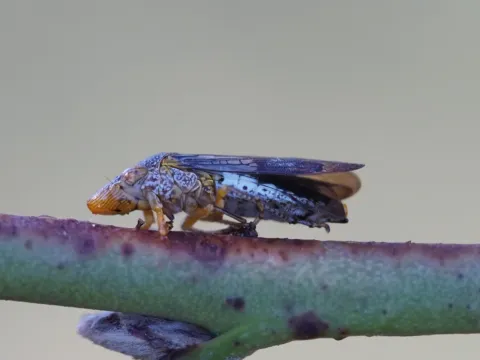
Transmission occurs exclusively through sap-sucking insect vectors, such as leafhoppers, planthoppers, and psyllids. These insects acquire the bacteria while feeding and transmit them to healthy plants.
The biology of these pathogens is deeply intertwined with the behavior and ecology of their vectors, which dictates the specific strategies required for crop protection and disease management.
The development of plant rickettsial diseases is directly linked to the population dynamics of insect vectors. Warm and dry weather conditions are most favorable for the migration and activity of leafhoppers.
The presence of alternative host plants or weed reservoirs surrounding agricultural fields is a critical factor, as these plants serve as refuges for the vectors and the bacteria during the off-season.
Agricultural practices, such as high-density planting and poor airflow, can create a microclimate that encourages the movement of vectors within a field, thereby accelerating the spread of the disease.
Temperature plays a vital role; higher temperatures generally increase the feeding frequency of vectors, which statistically increases the probability of healthy plant infection during each feeding event.
Long-distance migration of infected insects from neighboring infested areas can lead to sudden outbreaks, even in previously healthy fields, making constant monitoring essential for effective management.
The primary harm caused by these diseases is a sharp decline in crop yield and quality. Infected plants often produce undersized, deformed, or discolored fruit that is unsuitable for market.
Systemic xylem infection disrupts the overall metabolism of the plant, leading to a reduced accumulation of sugars and vitamins, which negatively impacts the flavor and shelf life of the final product.
Early-stage infection can result in the total death of young seedlings, requiring costly replanting and leading to significant gaps in the field crop coverage.
Economic losses are compounded by the constant need for monitoring and insecticide applications aimed at vectors, which often provide only partial protection and increase production costs.
Since these diseases are systemic and often incurable once established, growers are frequently forced to remove and destroy infected plants to prevent the further spread of the pathogen to neighboring crops.
The foundation of disease management is the use of strictly certified, disease-free planting material. Screening for latent infections in nursery stock is a critical preventive measure.
Regular insecticide applications are necessary to manage vector populations. Treatment timing should be based on monitoring the population levels and activity peaks of local leafhopper and psyllid species.
- Removal of weeds and crop residues that serve as pathogen reservoirs.
- Establishing spatial isolation between young, healthy plantings and older infected crops.
- Utilizing protective mesh covers in greenhouse and nursery environments.
- Systematic roguing and destruction of infected plants to limit further transmission.
Good agricultural practices, including balanced fertilization and proper water management, improve the plant's resilience to biotic stress, although they do not provide immunity to rickettsial infections.
Biological control, by introducing natural predators and parasitoids that target the insect vectors, is an increasingly promising area for long-term integrated pest and disease management programs.