
Root nodule bacteria
Rhizobium leguminosarum
Description
Symptoms
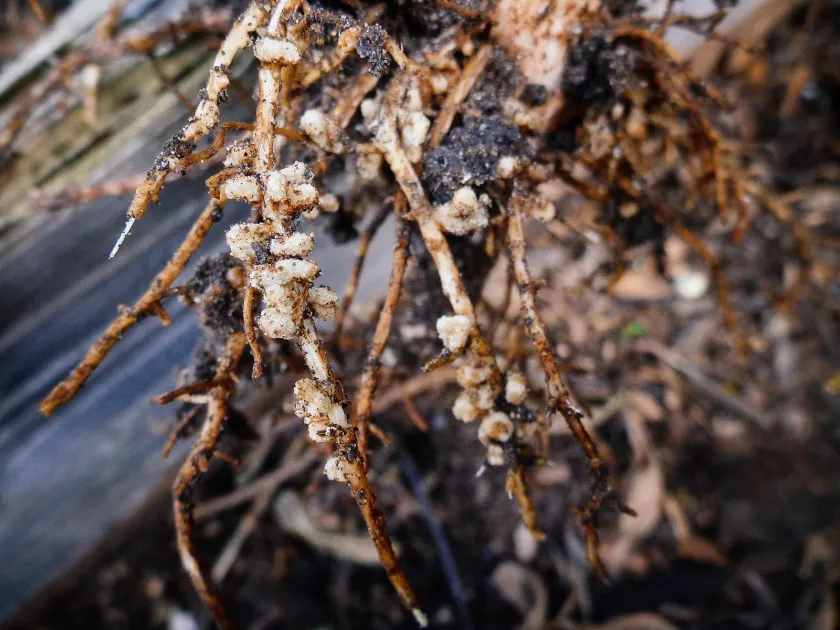
The primary sign of a successful symbiotic interaction is the formation of nodules on the root system of legume crops.
A cross-section of a healthy, actively fixing nodule typically reveals a pink or reddish interior caused by the presence of leghaemoglobin.
If nodules lack this pigmentation or are small and sparse, the symbiotic process might be ineffective or hindered by environmental factors.
Plants engaged in active symbiosis exhibit vigorous growth, lush foliage, and deep green color, indicating no nitrogen deficiency.
A well-developed root system with numerous healthy nodules is a positive indicator of soil biological activity and nutritional self-sufficiency.
Pathogen
Rhizobium leguminosarum is not a plant pathogen, but a genus of beneficial soil bacteria that form a symbiotic relationship with legumes.
These microorganisms infect the root system of plants, triggering the development of specialized structures known as nodules.
The bacteria possess the unique biological ability to fix atmospheric nitrogen and convert it into a usable form for plant nutrition.
Inside the nodules, the bacteria differentiate into bacteroids and supply the host plant with essential nitrogen compounds.
In exchange, the host plant provides the bacteria with carbohydrates derived from photosynthesis, establishing a mutualistic partnership.
Conditions for development
Successful colonization of roots by these bacteria requires a soil pH level near neutral to ensure optimal microbial survival and activity.
High levels of synthetic nitrogen fertilizers in the soil can suppress the nodulation process, as plants stop investing in the symbiosis.
Proper soil aeration is essential because the nitrogen fixation process is energy-intensive and requires adequate oxygen supply.
Soil temperature plays a significant role, as extreme cold or heat can inhibit bacterial growth and the fixation of atmospheric nitrogen.
The presence of specific, high-efficiency bacterial strains suited to the target legume crop is a prerequisite for successful inoculation.
Why it matters
Rhizobium leguminosarum does not cause any plant diseases; instead, it is highly beneficial for crop production and soil health.
Treating these bacteria as harmful pathogens is a misconception that can lead to the overuse of antimicrobial agents, damaging soil health.
In some cases, competition between native, inefficient bacterial strains and introduced inoculants can impact overall nitrogen fixation rates.
Intensive chemical farming practices can disturb the natural bacterial population, reducing the overall fertility benefit provided by legumes.
These bacteria essentially act as natural bio-fertilizers, leaving the soil enriched with nitrogen for subsequent seasons.
Protection
The primary management practice to enhance this symbiosis is the use of seed inoculants before planting to ensure proper colonization.
Limiting the use of nitrogenous fertilizers during the early stages of growth encourages the plant to rely on bacterial fixation.
Correcting soil acidity through liming significantly improves the conditions for bacterial proliferation in the root zone.
Selecting compatible seed treatments is crucial, as some fungicides may inhibit the viability of bacterial inoculants applied to seeds.
Maintaining healthy soil structure through organic amendments supports long-term biodiversity and the efficiency of the nitrogen-fixing process.
Discussion
No discussions yet — be the first.