
Nostocales cyanobacteria
Nostocales
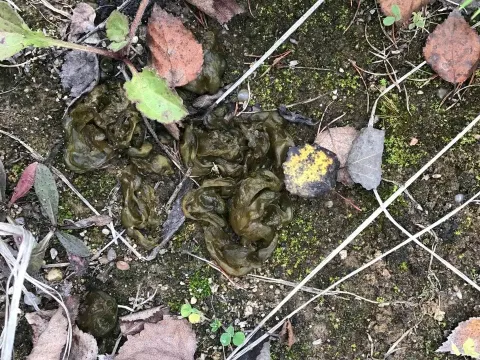
A primary visual symptom of Nostocales cyanobacteria presence is the formation of distinct mucilaginous colonies or crusts on the soil surface.
What the section contains
Nostocales cyanobacteria
In dry conditions, these structures appear as dark, almost black or brownish patches that become brittle and easily break upon mechanical pressure.
When hydrated, these colonies absorb water rapidly, swell, and take on a gelatinous or slimy consistency covering the ground.
The color palette of these growths ranges from deep olive-green to blue-green, reflecting the activity of their photosynthetic pigments.
In greenhouse settings or saturated fields, they can form a dense mat that completely seals the soil surface and restricts gas exchange.
The pathogens are cyanobacteria of the order Nostocales, which are photosynthetic prokaryotes capable of atmospheric nitrogen fixation.
These organisms exist as multicellular filaments comprising vegetative cells, heterocysts, and akinetes, which enable survival in adverse environments.
In agronomy, they are not classified as classic primary pathogens, but they act as strong ecological competitors to vegetable and nursery crops.
They proliferate in the upper horizons of the soil, often forming complex bio-communities that alter the local micro-environment.
The biological success of Nostocales is attributed to their high adaptability to fluctuating light levels, temperature, and moisture content.
The main driver for their development is excessive soil moisture resulting from over-irrigation or inadequate drainage in cultivation beds.
High light intensity, especially under greenhouse conditions, significantly accelerates the growth rate of cyanobacterial mats on the soil.
A neutral to slightly alkaline soil reaction (pH 7.0 and above) provides the most favorable chemical environment for their reproduction.
High concentrations of available phosphorus, often stemming from heavy mineral fertilizer application, triggers rapid population explosions.
Compaction of the soil and lack of regular cultivation create stagnant zones where cyanobacteria can quickly colonize the available surface.
The primary damage involves the formation of a hard soil crust that blocks essential oxygen from reaching the roots of seedlings.
Upon drying, the crust can cause mechanical abrasion to the epidermis of young plants, creating entry points for secondary fungal pathogens.
The mucilage secreted by these cyanobacteria can harbor various microorganisms that eventually become harmful to the vegetable crops.
They compete aggressively for nutrients, sequestering accessible nitrogen and minerals that would otherwise be used by the crops.
Massive cyanobacterial growth degrades the physical and chemical properties of the substrate, disrupting the water-holding capacity.
Systematic surface cultivation and hoeing are the most effective cultural methods to disrupt the integrity of the cyanobacterial mats.
Optimizing irrigation schedules is crucial to prevent surface saturation and water stagnation, particularly in high-humidity environments.
The application of soil amendments like gypsum can help lower the soil pH, making conditions less favorable for Nostocales survival.
Utilizing mulching materials effectively blocks light from reaching the soil surface, thereby inhibiting the photosynthesis of the cyanobacteria.
In severe infestation cases, the use of targeted algicides or copper-based fungicides can be applied to suppress the algal growth.