
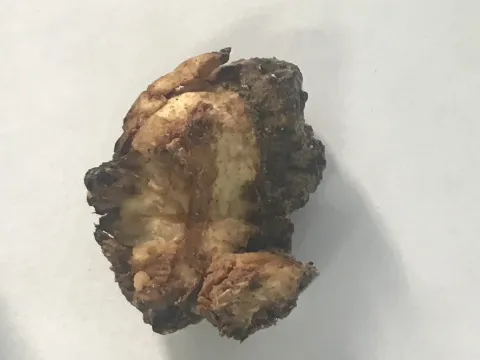
Crown gall of grapevine
Allorhizobium vitis
The causal agent of crown gall is the soil-borne bacterium Allorhizobium vitis (formerly Agrobacterium tumefaciens). This pathogen is highly specialized and infects a wide range of woody plants, including grapevines.
What the section contains
Crown gall of grapevine
The bacterium transfers a specific segment of its DNA, known as T-DNA, into the host plant's genome. This genetic modification forces the plant to produce hormones that cause abnormal and uncontrolled cell growth.
Allorhizobium vitis is highly persistent in soil, capable of surviving for several years in plant debris. Its ability to remain latent in apparently healthy nursery stock makes it difficult to detect.
The pathogen primarily enters the plant through fresh wounds. These can be caused by pruning, winter frost damage, or mechanical injuries during soil cultivation near the vine trunk.
Once inside the plant tissue, the bacteria colonize the intercellular spaces and can spread systemically through the vascular system, establishing chronic infections that are currently impossible to cure.
The most characteristic symptom of crown gall is the development of abnormal swellings or galls. These are most frequently found at the crown of the plant, near the soil line, or on the trunk.
Early-stage galls appear as soft, white, or light-colored masses. As they mature, they become dark brown or black, hard, and woody in texture, with a cracked and irregular, tumor-like surface.
In cases of severe infection, galls can grow to large sizes, completely encircling the trunk. This often leads to the death of the tissues above the site of the gall due to girdling.
Plants affected by crown gall often exhibit reduced vigor, yellowing leaves (chlorosis), and stunted shoot growth. These symptoms occur because the galls disrupt the normal flow of water and nutrients.
- Appearance of spongy, white tumor-like growths on the trunk.
- Darkening and hardening of galls as they age over time.
- Cracking of the bark and necrosis in the area of infection.
- Reduced vigor and delayed growth of young shoots.
- Wilting of entire branches as the plant’s internal transport system fails.
Winter injury is the most critical factor for the spread of the disease. Freezing temperatures cause longitudinal cracks in the vine trunk, which provide perfect entry points for the bacteria when the sap begins to flow in spring.
Warm, moist soil conditions favor the survival of the bacteria. High humidity throughout the growing season can also facilitate the infection process if wounds are present.
A high nitrogen supply can exacerbate the disease by encouraging the development of succulent, rapidly growing tissues. Such tissues are more prone to mechanical injuries and subsequent infection.
The presence of root-feeding pests, such as nematodes, creates additional wounds on the root system. These pests act as vectors or open pathways for the bacteria to enter the vine.
Cultural practices, especially those that involve heavy pruning or deep cultivation, significantly increase the risk of disease spread if proper sanitation protocols are not followed.
Crown gall causes severe economic damage to vineyards by reducing the lifespan of the vines. Because the disease is systemic, affected plants cannot be saved and must eventually be removed.
The galls interfere with the movement of water and essential minerals, leading to physiological stress. This results in significantly lower yields and poor fruit quality, which is detrimental to commercial vineyards.
In nursery settings, crown gall can lead to the condemnation of entire batches of vines. The unintentional spread of infected nursery stock is the primary way the disease moves between different geographical regions.
Infected vines become increasingly susceptible to secondary pathogens and environmental stresses. They lose their ability to withstand winter frosts, further reducing the overall health of the planting.
The removal of infected vines is a costly and laborious process that disrupts vineyard productivity. This often necessitates replanting, which delays the return on investment for the grower.
Prevention is the only effective management strategy for crown gall. Growers should source planting material only from certified nurseries that practice strict pathogen-free indexing.
Strict sanitation of pruning tools is essential. Tools should be disinfected between each vine using effective disinfectants like alcohol or bleach to prevent the mechanical transmission of the bacterium.
Proper vineyard site selection and the use of hardy rootstocks that are less prone to winter trunk cracking can help reduce the incidence of the disease.
If galls are detected on a vine, the infected plants should be removed and destroyed completely. This includes removing as much of the root system as possible to eliminate the source of inoculum from the soil.
Minimizing mechanical damage to the vine trunk and roots during cultivation is vital. Avoiding overly aggressive soil practices near the base of the vine keeps the bark intact and healthy.