
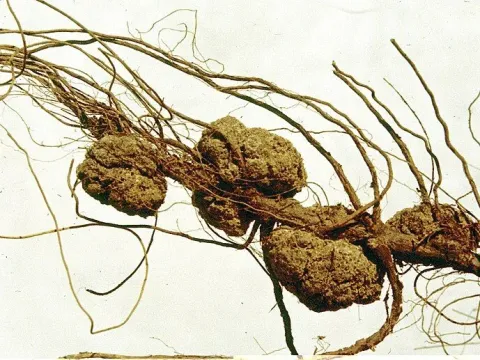
Crown gall
Rhizobiales
The causal agent of significant tumor-like plant diseases, particularly crown gall, is the Rhizobiales order, specifically the pathogenic strains of Agrobacterium tumefaciens. These soil-borne bacteria possess the unique ability to transfer a portion of their DNA into the host plant's genome.
What the section contains
Crown gall
The pathogenesis mechanism involves the genetic transformation of plant cells, which are induced to undergo uncontrolled division. This results in the formation of pathological galls or tumors that disrupt the plant's structural integrity and physiological processes.
These microorganisms can survive in the soil for extended periods, maintaining viability even in the absence of a host plant. They impact a wide range of agricultural crops, including fruit trees, berry bushes, and various ornamental species.
The bacteria thrive in the rhizosphere, utilizing plant root exudates for nutrition and chemotactic movement. Infection occurs primarily through entry points created by mechanical damage during planting, cultivation, or the activity of soil-dwelling pests.
Crown gall is classified as a systemic bacterial infection. Once the genetic transformation of the plant cells is complete, the tumor formation becomes an irreversible process, presenting a continuous threat to the health and productivity of the plant.
The primary symptom of the disease is the development of tumorous growths, which vary in size and density. These galls are most commonly found on the root crown, the root system, or the lower portion of the trunk.
In the early stages, galls appear as light-colored, soft, and somewhat spongy structures. Over time, as the infection progresses, they darken, become hard, woody, and develop a rough, convoluted surface that is prone to cracking.
Affected plants typically exhibit stunted growth and reduced vigor compared to healthy counterparts. Leaves may become chlorotic, indicating a significant impairment in the plant's ability to transport water and essential nutrients from the roots to the canopy.
In nurseries, infected seedlings often suffer high mortality rates within the first or second year of growth. Mature trees may survive but often show decreased fruit yield and increased sensitivity to environmental stresses like drought or extreme cold.
Additional signs include the potential deformation of branches or specific growth anomalies if the infection spreads. The presence of these distinct galls is a critical diagnostic sign that necessitates the immediate removal and destruction of the infected plant.
The development of crown gall is favored by high soil moisture and moderate temperatures, typically between 20°C and 30°C. These conditions make the spring and summer seasons the peak periods for bacterial activity and infection spread.
Mechanical injuries to the root system act as the primary gateway for infection. Agricultural practices that involve heavy soil disturbance or frequent transplanting without root protection significantly increase the risk of disease transmission in contaminated fields.
Soil pH plays a notable role in bacterial activity, with neutral to slightly alkaline soils providing the most conducive environment for Agrobacterium. While acidic soils may inhibit growth, they do not provide total protection against infection.
Continuous cultivation of highly susceptible crops in the same area leads to a buildup of high pathogen pressure in the soil. Crop rotation is essential to mitigate this risk, as the pathogen's concentration can become detrimental over time.
Spread between sites frequently occurs through contaminated nursery stock, shared agricultural tools, irrigation water, or soil particles transported on machinery and footwear, making strict hygiene a necessary component of farm management.
The main economic harm is the total loss of nursery stock quality, as infected seedlings are deemed unfit for sale and must be destroyed. This can lead to substantial financial losses for propagators and orchardists.
In established fruit orchards, crown gall causes a slow decline in tree performance. The physiological stress caused by the galls makes trees more susceptible to secondary infections and winter damage, ultimately leading to premature tree mortality.
The disruption of normal metabolic and transport processes leads to reduced crop quality and diminished yields. Fruits from severely infected trees often fail to reach standard market sizes or taste profiles, impacting the grower's profitability.
Treatment of infected plants is rarely effective because the bacteria are deeply embedded within the tumor tissues, protecting them from most systemic chemicals. Therefore, prevention is the only reliable way to ensure the long-term viability of an orchard.
Contamination of the soil represents a long-term setback, often rendering the land unsuitable for susceptible species for several years. This necessitates costly soil sterilization procedures or a change in land use to avoid ongoing infection cycles.
Rigorous phytosanitary inspection of all nursery stock prior to planting is the most important defense strategy. Any plant material showing even minor signs of root galls must be discarded and incinerated to prevent soil contamination.
Utilizing resistant rootstocks and cultivars is the most sustainable approach to long-term management. Breeding programs continue to prioritize traits that provide natural resistance to the genetic transformation induced by the bacteria.
Good agricultural practices that minimize root damage are essential. Disinfecting pruning tools and machinery between different sections of the orchard is a mandatory step to prevent the accidental transmission of the pathogen.
Biological control methods involve the use of antagonist bacteria, such as Agrobacterium radiobacter strain K84. This biological agent is applied to roots to colonize the area and outcompete the pathogenic strains, providing a protective effect.
If the disease is identified in a localized area, removing the entire plant along with the surrounding root zone is recommended. Careful soil management and sanitization are then required before replanting can be considered in the affected area.