
Crown gall
Agrobacterium tumefaciens
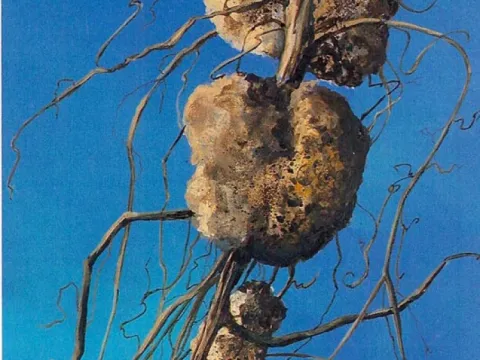
The primary symptom of crown gall is the development of abnormal swellings or galls on the crown, roots, or lower stems of the infected host plants.
What the section contains
Crown gall
When first appearing, these galls are typically light-colored, soft, and somewhat spongy, resembling callus tissue, but they are not easily separated from the host.
As the galls mature, they darken to a brown or woody consistency, their surface becomes rough and deeply cracked, and they can reach significant sizes.
The internal tissue of these tumors is highly disorganized, which interferes with the vascular system and restricts the transport of water and nutrients.
Affected plants, including species such as hazelnut, dahlias, hemp, or various brassicas like rapeseed and turnip, exhibit reduced vigor and stunted growth.
Crown gall is caused by the soil-borne bacterium Agrobacterium tumefaciens, a pathogen known for its ability to perform natural genetic engineering.
The bacterium transfers a segment of its DNA into the plant's genome, triggering uncontrolled cell division and the subsequent formation of plant tumors.
It can persist in the soil for extended periods as a saprophyte, surviving by utilizing root exudates even in the absence of a susceptible host plant.
Infection is opportunistic and generally occurs through wounds or natural openings in the plant tissue caused by environmental factors or human activity.
This pathogen has an exceptionally wide host range, affecting hundreds of dicotyledonous plants, including ornamentals like the Carpathian bellflower or Anemone coronaria.
The development of the disease is highly dependent on environmental conditions, with soil temperatures between 20 and 30 degrees Celsius being most favorable.
High soil moisture levels facilitate the motility of the bacteria, allowing them to reach and infect wounded plant tissues in the root zone more efficiently.
Wounds are the primary gateway for infection; therefore, damage caused by root-feeding insects, nematodes, or improper pruning practices significantly increases risks.
Soil pH plays a role, with neutral to slightly alkaline conditions often promoting greater bacterial activity compared to more acidic soil environments.
Dense planting regimes, particularly in nurseries, create an ideal environment for the spread of Agrobacterium tumefaciens via contaminated tools and water.
The disease causes systemic damage by disrupting the flow of water and essential nutrients from the roots to the upper portions of the plant.
Heavily infected plants often struggle to survive environmental stresses, such as drought or frost, and may show severe stunting or reduced crop yields.
In nursery settings, crown gall can lead to the rejection and destruction of entire batches of nursery stock, resulting in major financial losses.
For edible root crops like fodder beet or turnip, the presence of galls affects the marketability and physical quality of the produce, often leading to rot.
Once a field is infested with the pathogen, it may be unsuitable for the cultivation of susceptible crops for several years due to the bacterium's longevity.
The most effective management strategy is strict sanitation, including the immediate removal and destruction of any infected plants showing signs of galls.
Pruning tools and agricultural equipment should be thoroughly disinfected with appropriate antimicrobial solutions to prevent the spread of bacteria between fields.
Minimizing mechanical damage to the root system during planting and cultivation is crucial to prevent creating infection entry points for the pathogen.
Implementing long-term crop rotation cycles with non-host plants is essential to naturally reduce the population density of the pathogen in the soil.
Biological control using antagonistic strains of Agrobacterium radiobacter can be applied as a preventive measure to protect nursery plants from infection.