
Curtobacterium wilt
Curtobacterium
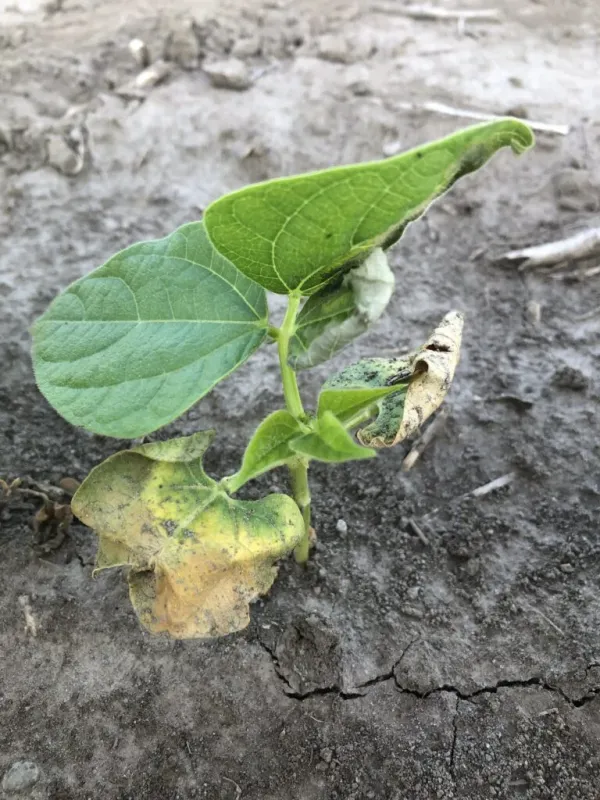
Description
Symptoms
Initial symptoms often appear as marginal chlorosis on the leaves, which gradually advances to tissue necrosis and leaf drying, starting from the leaf edges.
A classic sign is the wilting of the plant, typically beginning with the upper leaves during the hottest part of the day and potentially recovering at night, until the damage becomes severe and permanent.
Internal examination of stems or petioles often reveals vascular discoloration, ranging from light brown to reddish-brown, indicating a compromised transport system.
On legume crops, leaves may become curled and stunted, leading to significant foliage loss and inhibited development of pods and seeds.
Infected seeds may appear shriveled, discolored, or covered with a bacterial film, rendering them unfit for planting and contributing to poor germination rates.
Pathogen
The disease is caused by the Gram-positive bacterium Curtobacterium flaccumfaciens. It is a systemic vascular pathogen that colonizes the plant's xylem, obstructing water and nutrient transport.
This bacterium is remarkably persistent in the environment and can survive for long periods in infested soil, plant debris, and infected seeds, which serve as the primary inoculum.
Infection primarily occurs through seeds, followed by mechanical transmission via tools or insect activity that creates entry wounds in the plant tissue.
Once inside the plant, the bacteria multiply rapidly and produce exopolysaccharides, leading to vascular occlusion and the subsequent wilting of the plant organs.
Scientific classification identifies several pathovars of the bacterium, each showing host specificity for different legumes, vegetables, and other economically important crops.
Conditions for development
The spread of Curtobacterium is favored by warm and humid conditions, with optimal temperatures for bacterial proliferation ranging from 25°C to 30°C.
Rainy weather and overhead irrigation systems facilitate the transmission of the bacteria by splashing infested soil or inoculum onto healthy plant tissues.
Monocropping and the failure to practice proper crop rotation significantly increase the accumulation of the pathogen in the soil over successive seasons.
Mechanical damage to the plant's root or stem tissues during routine agricultural practices provides the essential entry points for the bacteria.
High nitrogen levels in the soil can make plants more susceptible to infection by promoting the growth of soft, succulent tissues that are easily invaded by the pathogen.
Why it matters
Curtobacterium wilt can lead to substantial yield losses, sometimes resulting in total crop failure if the environmental conditions are conducive to disease spread.
The disease significantly degrades the quality of harvested products, reducing market value and rendering the produce unsuitable for export or long-term storage.
By disrupting the vascular system, the bacteria impair the plant's physiological functions, leading to severe stunting and reproductive failure.
The long-term presence of the bacterium in the soil restricts the choice of future crops, requiring extended periods of rest or decontamination for the affected fields.
Increased operational costs for disease monitoring, sanitation, and potential loss of investment in seeds and fertilizers negatively impact farm profitability.
Protection
The use of high-quality, disease-free certified seeds is the most critical step in preventing the introduction of the pathogen into new fields.
Implementation of a rigorous crop rotation program, avoiding susceptible plant species for at least 3-4 years, helps reduce soil-borne inoculum levels.
Effective sanitation, including the destruction of infected plant debris and the management of weeds that can host the bacteria, is vital for disease control.
Managing insect pests that cause physical injury to the plant is an essential indirect method to prevent the bacterial entry into the vascular system.
Regular field scouting during the growing season allows for early detection and the removal of infected plants, which can prevent the disease from spreading to the rest of the crop.
Discussion
No discussions yet — be the first.