

Disease · fungal · affects Common bean, Maize, Mango
Especially harmful
Gray leaf spot
Passalora castellanii
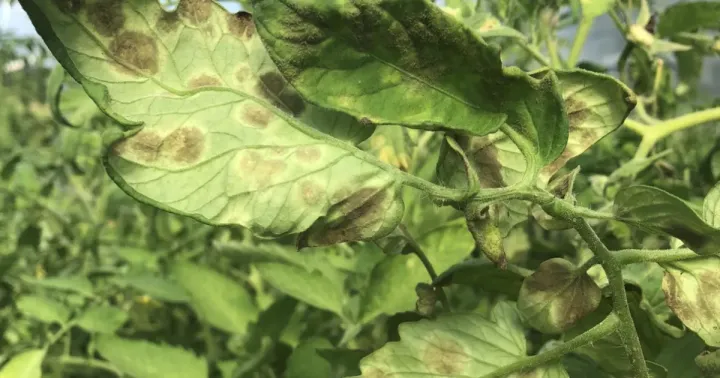
Description
Symptoms
Initial symptoms include small, chlorotic spots appearing on the leaves. Over time, these spots transition into a distinct gray or grayish-brown color, which characterizes the infection.
A darker, often purplish or brown halo is commonly observed around the lesions. This reaction is the plant's attempt to isolate the fungal infection from spreading further into healthy tissues.
As the disease advances, the spots often merge, leading to the necrosis of large sections of the leaf. This results in premature yellowing and eventual death of the affected foliage.
On plants like beans and peppers, the lesions may also appear on stems and petioles. This interrupts the vascular flow, severely limiting the transport of water and nutrients to the plant's upper parts.
Early identification is crucial, as the symptoms can sometimes be confused with other leaf spot diseases. Laboratory analysis may be required for precise confirmation in professional agricultural settings.
Pathogen
The causal agent of this disease is the fungus Passalora castellanii, which belongs to the group of imperfect fungi. It is a specialized pathogen that primarily targets the vegetative parts of host plants.
The fungus survives the winter on infected plant debris left in the field. During the growing season, it spreads through conidia, which are easily dispersed by wind and rain splashes to new host tissues.
This pathogen is well-adapted to various environmental conditions, making it a persistent threat in regions with favorable climate patterns. It penetrates the plant through stomata or mechanical injuries.
It affects a diverse range of crops, including peppers, Indian mango, common beans, sorghum, and corn. Each of these crops presents a specific physiological environment for the fungus to develop.
Understanding the biology of Passalora castellanii is essential for effective farm management. Its life cycle is heavily dependent on the presence of moisture and suitable host availability throughout the season.
Conditions for development
The development of Gray leaf spot is strongly favored by high humidity and warm temperatures. Extended periods of rainfall or heavy dew create the necessary conditions for spore germination.
Temperatures ranging from 20°C to 28°C provide an optimal environment for the fungus to multiply. In these conditions, the incubation period is reduced, leading to rapid disease progression.
Poor field management, such as planting crops too close together, restricts air circulation. This creates a humid microclimate within the canopy, which encourages the fungus to thrive.
Free water on the surface of the leaves is a prerequisite for the infection to occur. Without the presence of moisture films, the conidia are unable to penetrate the plant tissues effectively.
Furthermore, continuous cropping of the same species on the same field allows the pathogen population to build up over several seasons, increasing the risk of severe disease outbreaks.
Why it matters
The primary impact of the disease is the substantial reduction of the photosynthetic leaf area. This leads to a decline in plant vigor and a significant decrease in the final crop yield.
For crops like beans, the reduction in yield can be devastating. Besides quantity, the quality of the fruits or pods is often compromised, leading to lower market prices and loss of profit.
Defoliation caused by the disease exposes the plants to direct sunlight, which may cause secondary physiological stresses or even sunscald on the fruits.
Plants weakened by Passalora castellanii are significantly more susceptible to secondary infections, including various rots and opportunistic pathogens that further damage the plant health.
The financial cost of managing this disease is high, as it requires frequent applications of fungicides and additional labor, which increases the overall cost of agricultural production.
Protection
The most effective strategy is the use of resistant crop varieties. Breeding programs focus on creating cultivars that can withstand the pressure of this specific fungal pathogen.
Crop rotation remains a fundamental practice. By alternating with non-host crops, farmers can starve the fungus of its primary nutrient source and break its life cycle in the field.
Sanitation is critical; all infected plant residues should be removed and destroyed or deeply plowed into the soil to prevent the survival of fungal spores during the winter.
When necessary, systemic fungicides should be applied at the first sign of infection. Proactive monitoring and timely application can prevent the spread of the disease to adjacent healthy fields.
- Maintain proper plant spacing to improve air flow.
- Use certified disease-free seeds for planting.
- Ensure balanced nutrient management to keep plants strong and resilient.
In brief
5
Affects crops
Biology
Pathogens and affected parts
Pathogens
Passalora castellanii· fungus
Passalora vanderystii· fungus
Cercospora· fungus
Cercospora zeae-maydis· fungus
Cercospora zeina· fungus
Pestalotiopsis mangiferae· fungus
Pestalotia mangiferae· fungus
Stemphylium lycopersici· fungus
Stemphylium floridanum· fungus
Stemphylium solani· fungus
Cercospora sorghi· fungus
Affected plant parts
leaf
Content graph
Affects crops · 5
Reference
Connections · Gray leaf spot
Most often together:
Marketplace
Products · 105
Community
Discussion
No discussions yet — be the first.