
Description
Symptoms
The primary symptom is the rapid wilting of foliage, which often begins on individual branches before spreading to the entire plant. Leaves initially lose their color, turn yellow, and eventually wither and die.
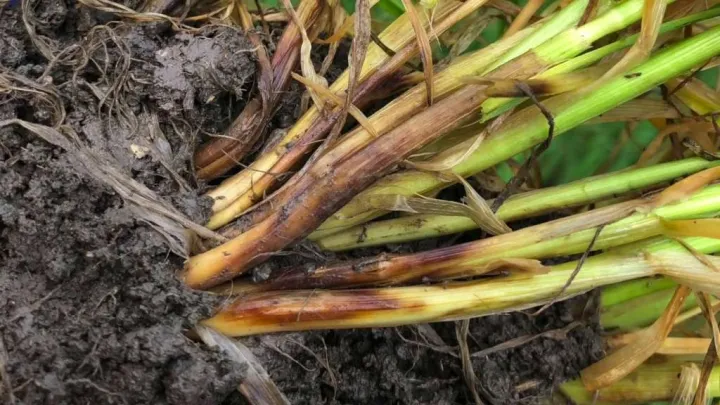
A diagnostic sign can be found by cutting into the infected branch or stem. The vascular tissue will show a distinct browning or reddish-brown discoloration, which indicates the presence of the fungal infection within the plant's water-conducting system.
In cases of severe infection, especially near the root collar, the bark may show signs of decay or cracking. Under high humidity, a characteristic mycelial growth, often white or pinkish in color, may appear on the surface of the affected bark.
In stone fruit trees like peaches, the infection often triggers gummosis, where the tree exudes a sticky sap in an attempt to combat the pathogen. However, this is usually an indicator of stress rather than a successful defense.
As the disease progresses, the roots become necrotic and brittle. Eventually, the entire plant collapses and dies as the supply of nutrients is completely cut off by the extensive colonization of the vascular system.
Pathogen
The causal agent of Fusarium rot is the fungus Gibberella avenacea (anamorph: Fusarium avenaceum). This soil-borne pathogen is a well-known member of the Ascomycota phylum, capable of surviving for long periods in debris and soil.
This fungus demonstrates a wide host range, attacking various field crops, vegetables, and ornamental plants. In orchard management, it is particularly noted for causing significant damage to stone fruits, including peach trees.
The pathogen enters the plant mainly through root wounds or the root collar area. Once inside, it colonizes the xylem, producing fungal mycelia that obstruct the movement of water and vital nutrients to the upper parts of the plant.
Gibberella avenacea produces a variety of mycotoxins that are harmful to plant tissue. These toxins are responsible for the systemic wilting symptoms observed in infected plants, as they cause physiological stress and cell death.
The life cycle involves the production of conidia and ascospores. These spores are highly mobile and can be spread by irrigation water, splashing rain, contaminated farm tools, and infested soil particles.
Conditions for development
The development of Gibberella avenacea is heavily favored by cool to moderate temperatures (around 20–25°C) and high moisture content in the soil. Poorly drained sites are high-risk areas for this pathogen.
High humidity and poor air circulation within the orchard canopy encourage spore germination and spread. Dense planting schemes can significantly exacerbate the impact of the disease by creating microclimates that favor fungal growth.
Mechanical injuries to the root system, often caused by improper cultivation practices or soil-dwelling pests, provide easy entry points for the fungus. Furthermore, acidic soil conditions often result in increased pathogen activity.
Plants under physiological stress, whether from drought, nutrient deficiency, or over-fertilization with nitrogen, are significantly more susceptible to infection. These plants lack the vigor required to resist fungal invasion.
The accumulation of crop residues in the orchard provides a perfect reservoir for the fungus. If not managed properly, these residues allow the pathogen to survive from one growing season to the next, increasing the infection pressure.
Why it matters
Fusarium rot poses a severe threat to agricultural productivity, often leading to total crop loss or the death of entire orchard blocks. The economic impact includes the loss of potential harvest and the high cost of replacement planting.
Infected fruits or plant tissues can contain mycotoxins, which pose significant health risks to both humans and livestock. This renders the produce unsuitable for market, adding to the total financial loss.
The disease spreads quickly within the planting site. One infected tree can become a focal point, shedding spores that quickly colonize neighboring healthy plants, which makes containment a high-priority task.
Long-term soil infestation is a major problem, as the fungus can persist for years. This severely limits the grower's ability to replant the same species in the contaminated area without extensive soil sterilization or extended fallowing.
Overall tree health and longevity are drastically reduced even in trees that are not immediately killed. The infection forces a significant diversion of resources toward chemical control and intensive management efforts.
Protection
Preventative management is the most effective approach. Growers should always utilize certified, disease-free nursery stock to avoid introducing the pathogen into the orchard in the first place.
Sanitation is crucial: all dead or dying branches, as well as fallen leaf litter, must be removed and destroyed to prevent the buildup of spores. Disinfecting all pruning tools between trees is a mandatory practice.
Improving soil drainage and ensuring a balanced nutrient program, particularly with adequate potassium and phosphorus, helps plants build stronger cell walls and better resistance to invasion.
Chemical control can be achieved through the use of systemic fungicides applied at the root zone or as a foliar spray in the early stages of infection. Always follow label directions and rotate chemical classes to avoid resistance.
- Monitor the orchard regularly for wilting symptoms.
- Improve soil aeration through regular shallow cultivation.
- Control soil-dwelling pests that damage root systems.
- Manage weed populations that may harbor the fungus.
- Use lime to adjust soil pH to non-acidic levels.
In brief
1
Affects crops
Biology
Pathogens and affected parts
Affected plant parts
whole plant
Content graph
Affects crops · 1
Content graph
Connections · Fusarium rot
Most often together:
Marketplace
Products · 66


Community
Discussion
No discussions yet — be the first.