

Disease
Especially harmful
Dry rot of root crops
Dry rot of root crops
Description
Symptoms
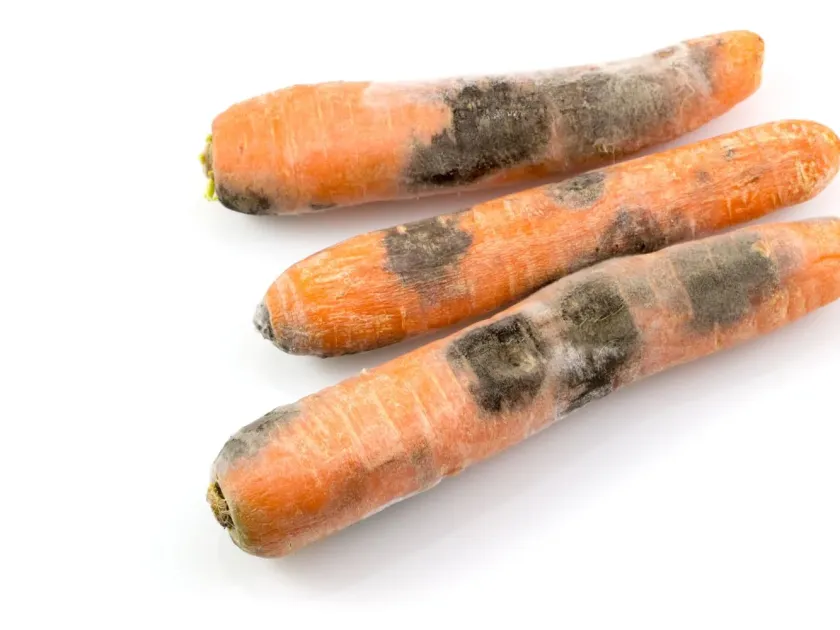
Initial symptoms include the appearance of small, slightly sunken, dark spots on the skin of the root crop. As the infection progresses, these lesions expand and the tissue beneath becomes dry, firm, and brown.
The surface of the infected area often wrinkles due to the collapse of the underlying tissue. When a severely affected root is cut, internal cavities are often visible, filled with white, grey, or pinkish fungal mycelium.
Unlike soft rot caused by bacteria, dry rot tissue remains relatively firm, though it can become hollow over time. A distinct margin usually separates the healthy tissue from the infected zone.
In potato tubers, the affected area becomes light and powdery, and in advanced stages, the entire internal structure may be destroyed, leaving only a shell of skin.
In storage environments with high humidity, fungal growth may occasionally become more fluffy on the surface, but the characteristic firmness is a key diagnostic feature for identification.
Pathogen
Dry rot of root crops is primarily caused by fungi of the genus Fusarium, most notably Fusarium solani and Fusarium oxysporum. These pathogens are ubiquitous soil-borne fungi capable of surviving in the soil for years.
The fungi typically enter the host tissue through mechanical wounds, cracks caused by rapid growth, or injuries inflicted by insect pests or nematodes. Once inside, they secrete toxins and enzymes that degrade plant cells.
This disease affects a wide range of root crops, including potatoes, carrots, beets, and sweet potatoes. While field infection occurs, the disease is most destructive during post-harvest storage.
Fusarium species are highly adaptable and can survive on decaying plant material in the field, making them persistent threats in vegetable production systems.
The ability of these pathogens to produce resilient spores (chlamydospores) ensures their survival under adverse environmental conditions, complicating disease eradication efforts.
Conditions for development
High relative humidity (above 85%) and poor ventilation in storage facilities are the primary drivers of dry rot outbreaks. Condensation on tubers provides the moisture required for spores to germinate.
Temperature plays a significant role in disease progression, with Fusarium growth being most aggressive between 15°C and 25°C. Proper temperature management is essential to slow the fungal spread.
Mechanical damage during harvesting, grading, and transport is the most significant predisposing factor. Wounds provide an easy entry point for fungal spores present on the surface of the roots or in the soil dust.
Wet soil conditions prior to harvest can lead to higher inoculum levels on the roots, as fungal spores are easily splashed from the soil onto the root skin during rainfall or irrigation.
Storing produce with excess soil attached or without a proper curing period (healing phase) allows pathogens to colonize the surface before natural defense mechanisms can seal the wounds.
Why it matters
Dry rot is a major economic threat to the vegetable industry, often resulting in significant losses during storage. A large percentage of the harvest can be rendered unmarketable within a few weeks if conditions are ideal for the fungus.
The disease reduces the nutritional value and market quality of the produce. Furthermore, some Fusarium species produce mycotoxins that can be harmful if consumed by humans or livestock.
Infection often spreads from the initial point of entry to adjacent healthy roots in a storage bin, leading to large-scale rot pockets that can decimate an entire batch of stored vegetables.
Using infected roots as seeds for the next growing season leads to reduced plant emergence, stunted growth, and the introduction of the pathogen into new fields.
The costs associated with labor for sorting out rotten produce, combined with the loss of the product itself, significantly impact the profitability of agricultural enterprises.
Protection
The primary control strategy involves cultural practices: practicing a long crop rotation (3-4 years) helps reduce the population of Fusarium spores in the soil over time.
Careful handling during harvest is crucial to minimize cuts and bruises. Ensuring that roots are handled gently can drastically reduce the number of infection sites.
Curing harvested vegetables in a controlled environment (at moderate temperatures and high humidity for 10-14 days) allows for the natural suberization of wounds, which acts as a barrier against pathogens.
Sanitation of storage facilities, including the cleaning and disinfection of bins and crates, is vital to eliminate dormant spores before new produce is loaded.
Chemical control, such as applying fungicides to seed tubers before planting, can protect the plant during its most vulnerable growth stages and decrease the overall disease burden in the field.
Content graph
Connections · Dry rot of root crops
Most often together:
Marketplace
Products · 1
Community
Discussion
No discussions yet — be the first.