
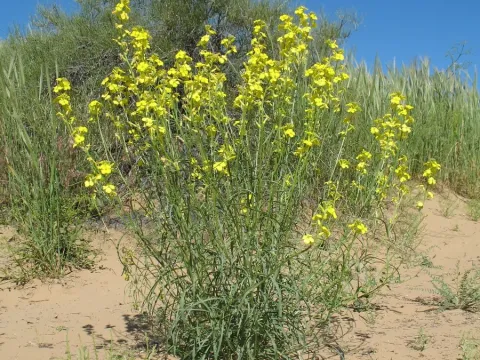
Syrenia montana
Syrenia montana
Syrenia montana is a hardy, biennial or winter-type plant, necessitating sowing during late summer or early autumn. Establishing a proper seedbed is crucial to ensure that seeds have adequate contact with the soil for uniform germination.
What the section contains
Syrenia montana
The optimal seeding depth is shallow, typically ranging from 1 to 2 centimeters. Because the seeds are quite small, precision sowing is required to prevent burial at depths that would hinder emergence.
Maintaining the correct plant density is essential. Overcrowding can lead to excessive competition for nutrients, while sparse seeding might result in weed proliferation and inefficient use of the land.
Sowing should be timed to allow the plant to establish a robust rosette before the first frosts of winter. This developmental phase is critical for the plant to successfully complete its vernalization requirements.
Crop rotation protocols should be strictly followed. Syrenia montana performs best when planted after small grain cereals, which helps break pest cycles and improves soil conditions for this specific crop.
Belonging to the Brassicaceae family, Syrenia montana is noted for its exceptional ecological flexibility. It is particularly valued for its ability to thrive on light, sandy, and nutrient-poor soils where other oilseeds fail.
The crop is highly photophilic and requires full sun exposure for optimal growth and oil content development. Shade or dense canopy environments will negatively impact the quality of the harvest.
One of the primary agronomic advantages of Syrenia montana is its remarkable drought resistance. Its deep-reaching root system allows it to efficiently extract water from lower soil profiles during dry periods.
While not overly demanding regarding soil fertility, supplemental fertilization—particularly potassium and phosphorus—promotes better seed filling. Nitrogen application should be moderated to prevent excessive vegetative growth.
The plant prefers neutral to slightly alkaline soil conditions. If the soil pH is acidic, liming is recommended as it helps the plant better utilize available minerals and improves root health.
The main objective of cultivating Syrenia montana is the production of oil, which is utilized for various technical purposes. The seeds contain high levels of specific fatty acids that make them valuable industrial feedstocks.
Yield stability is a hallmark of this crop, especially in arid or semi-arid regions. While production levels per hectare may differ from intensive crops like rapeseed, Syrenia montana offers higher reliability in adverse conditions.
The plant's genetic adaptation to harsh environments allows for consistent yields even when water availability is low. This trait makes it an ideal candidate for cultivation in drought-prone areas.
To maximize yields, agronomists recommend monitoring the crop during its flowering phase. Adequate nutrient availability during this time ensures that the plant has the energy required for seed set and maturation.
Storage management is vital to maintaining oil quality. Seeds should be dried to a moisture content below 10% immediately after harvest to prevent enzymatic degradation or microbial growth during storage.
As a member of the cruciferous family, Syrenia montana is susceptible to common pests like flea beetles. Seedlings are most vulnerable, and early-stage protection is often necessary to prevent stand loss.
Pollen beetles (Brassicogethes aeneus) can pose a significant threat during the budding stage. If infestation levels are high, damage to the flower buds can drastically reduce total seed production.
Fungal diseases, including Alternaria and Fusarium, can emerge if high humidity persists during the growing season. Proactive field monitoring is essential for timely intervention and disease control.
Integrated pest management (IPM) strategies, including the removal of cruciferous weeds, are effective at reducing pest pressure. Maintaining spatial isolation from larger rapeseed fields is also a recommended practice.
- Early insecticidal treatments for seedling protection.
- Regular field scouting for early disease detection.
- Proper weed management to reduce alternative host populations.
- Utilization of pheromone traps for monitoring pest flight activity.
Harvesting should be executed using a combine harvester once the crop reaches full maturity. Timing is critical, as pods can be prone to shattering if left standing too long after reaching physiological ripeness.
Indications that the crop is ready for harvest include a uniform browning of the pods and a transition of the seed coat color to a dark, mature state across all levels of the plant.
Setting the combine's drum speed and concave clearance is essential to minimize mechanical damage to the seeds. Gentle threshing ensures that seed oil quality remains high without oxidative damage.
In cases where the crop shows uneven maturity across the field, chemical desiccation is an effective management tool. It ensures uniform drying of the plant matter, facilitating a cleaner and faster harvest.
Post-harvest cleaning is mandatory to remove chaff, dust, and any remaining green plant material. Clean seed samples significantly reduce the risk of spoilage and heating in warehouse storage bins.