
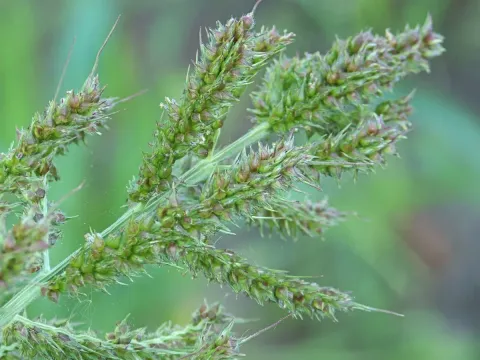
Spiral barnyard grass
Echinochloa spiralis
Spiral barnyard grass (Echinochloa spiralis) is an annual herbaceous plant belonging to the Poaceae family. It is known for its high adaptability to aquatic or semi-aquatic environments and is valued in specific agricultural systems for its resilience.
What the section contains
Spiral barnyard grass
The plant requires rich, moist, and well-structured soils to achieve its full yield potential. It thrives particularly well in alluvial soils that can maintain high nutrient levels throughout the growing season, which is critical for its rapid biomass accumulation.
Climatic requirements are centered on a warm, humid environment with consistent sunlight. The species requires temperatures ranging between +18°C and +30°C for optimal metabolic processes and structural growth.
Botanically, Echinochloa spiralis exhibits specialized stem morphology, which often features a distinct spiral pattern in growth, helping it withstand environmental stresses and optimizing leaf exposure to sunlight.
Agrotechnical management involves precise moisture control. In commercial settings, this involves managing water levels to ensure the roots receive adequate hydration without causing anaerobic stress, alongside proper nutrient management.
Typical threats include fungal pathogens such as blast and leaf spot, which are common in dense, humid grass stands and can significantly reduce both quality and biomass yield.
Insect pests, including aphids and various stalk borers, pose a significant risk to the plant's development. These pests target tender shoots and stems, directly impacting the nutrient transport system.
Effective management strategies incorporate integrated pest management (IPM) practices, including the use of resistant varieties, biological control agents, and selective chemical treatments when necessary.
Environmental conditions that favor high humidity and slow air movement often exacerbate disease outbreaks, necessitating thinning or canopy management strategies.
Ongoing research into this crop focuses on improving resistance to common cereal pests, ensuring that farmers can maintain stable yields despite the pressure from local pest populations.