
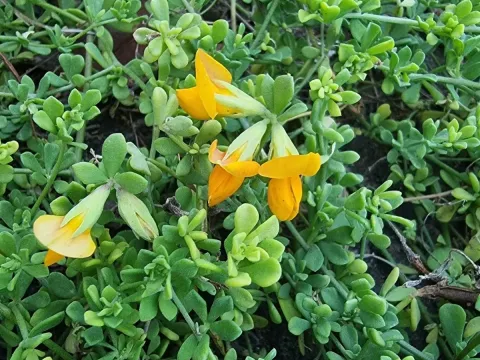
Lotus glaucus
Lotus glaucus
Lotus glaucus is a perennial legume that requires careful planning during the establishment phase. The optimal sowing time is typically during the early spring when soil moisture levels are adequate to support germination and the development of a robust root system.
What the section contains
Lotus glaucus
The recommended sowing depth for seeds is shallow, usually ranging between 1 and 2 centimeters. Because the seeds are relatively small, planting them too deeply can severely impede their emergence, leading to poor stands and wasted seed potential.
Seedbed preparation is crucial for success. The field should be clear of competitive weeds, as the seedlings grow slowly in their early stages and can easily be suppressed. Achieving a fine, firm tilth through pre-sowing rolling enhances soil contact and moisture retention.
In regions with harsh summers, sowing can be deferred to late summer or early autumn. This allows the plants to establish a firm root system before the onset of the most stressful environmental conditions in the following year, improving overall survivability.
The seeding rate must be calculated based on the intended use of the stand. For pure stands, higher densities are preferred to ensure rapid ground cover, while lower rates are used when introducing the legume into existing grass-dominated pastures.
This crop is known for its versatility and adaptability to diverse soil conditions. It thrives best in well-drained, light-textured soils such as sandy loams, where its root system can access nutrients without the risk of waterlogging, which it poorly tolerates.
Full sun exposure is a primary requirement for productive growth. Shaded areas significantly reduce the plant's photosynthetic capacity, resulting in weak stems and lower biomass production, making open-field cultivation the ideal choice for this species.
Soil pH should ideally be near neutral. While the plant can tolerate slight acidity, its ability to fix atmospheric nitrogen is highly dependent on the activity of symbiotic bacteria, which are most efficient when soil pH is managed and maintained in the optimal range.
One of the key agronomic advantages of Lotus glaucus is its notable drought tolerance. This resilience allows it to maintain forage quality even in dry conditions where other more water-demanding legumes would perish or enter early dormancy.
Thermal requirements for active growth are moderate. The plant begins vigorous vegetative development as temperatures rise in the spring and continues until the cooling period of late autumn, making it a reliable performer in temperate climates.
The agricultural value of Lotus glaucus lies in its consistent biomass production, which provides high-quality protein for livestock. Unlike some other legumes, the stalks remain relatively soft and digestible, which is beneficial for hay production and grazing.
Yield stability is a major benefit for farmers, as the stand can remain productive for several years without the need for constant reseeding. Proper harvest management, focusing on the timing of cuts, ensures that the plants store enough reserves for rapid regrowth.
As a legume, it performs a valuable role in soil improvement by fixing nitrogen. This natural process reduces the reliance on synthetic nitrogen fertilizers, contributing to more sustainable farm practices and lower input costs over the crop's lifecycle.
In pasture settings, the species demonstrates excellent resistance to grazing and trampling. Its ability to regenerate quickly from basal buds allows for frequent grazing cycles, provided that the stocking rate is managed to prevent overgrazing of the plant crowns.
Seed production is highly influenced by the presence of pollinators during the flowering phase. Optimizing the field environment to encourage bee activity can significantly increase the seed yield, which is essential for commercial propagation and future planting.
Disease prevention in Lotus glaucus starts with maintaining healthy stand conditions. Leaf spots and fungal infections are more likely to appear during periods of high humidity and poor air circulation, necessitating strategic spacing and proper soil drainage.
Root rot is perhaps the most significant threat, often induced by waterlogged soils. Ensuring that the site is well-drained before planting is the primary defense strategy, as correcting this issue once the crop is established can be extremely difficult.
Pests such as aphids and various weevils can feed on the foliage and developing buds. Monitoring programs are essential to detect early infestations. In many cases, promoting natural predators like ladybugs can keep pest populations below the economic injury level.
For seed production, specific insect pests may target the developing pods, reducing harvest quality. If necessary, selective biological or chemical controls can be implemented based on identified damage thresholds during the reproductive phase of the plant.
Proper storage is essential after harvesting forage. Hay must be dried to a safe moisture level to prevent the development of mold and heating, which not only ruins the nutritional value but can also pose safety risks due to potential spontaneous combustion.