
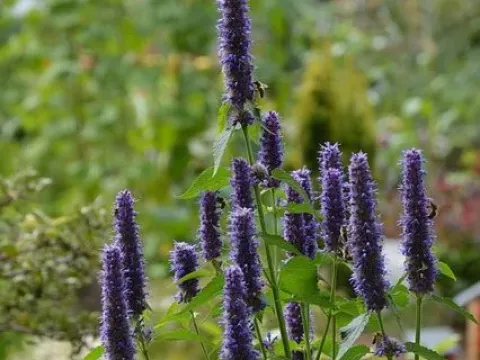
Lophanthus
Lophanthus
Lophanthus seeds are sown in open ground in the spring, once the soil warms up to 10-12 degrees Celsius. The optimal time is late April or early May, when the threat of night frosts, which can damage young seedlings, has passed.
What the section contains
Lophanthus
For early harvest, the transplant method is often used. Sowing in greenhouses is carried out in March, ensuring proper light and moderate humidity for the seeds. Seedlings are planted in their permanent location at the 4-5 true leaf stage.
The planting scheme depends on the purpose of the crop. For commercial production, a row-cropping method with 45-60 cm between rows is used. Seeds are planted at a depth of 0.5-1 cm, as Lophanthus seeds are small and require shallow burial.
Seedlings emerge within 12-18 days after sowing. During this period, it is crucial to keep the plot free of weeds, as they can quickly suppress the development of slow-growing Lophanthus sprouts.
Lophanthus is a light-loving crop, so open and well-lit areas should be chosen for sowing. Shading leads to stem elongation and a significant decrease in the concentration of essential oils in the leaves and flower spikes.
Lophanthus is a perennial herbaceous plant belonging to the Lamiaceae family, known for its high adaptability. It performs best in fertile, light-textured loamy or sandy loam soils with a neutral or slightly acidic pH.
The plant has moderate drought resistance; however, for maximum biomass production, it requires regular watering during the active growth phase. Excess soil moisture and waterlogging can lead to root rot.
Successful cultivation requires a warm spring and a long, hot summer. In regions with harsh winters, rhizomes need mulching for protection, as the winter hardiness of different Lophanthus species varies.
Soil nutrient status, particularly nitrogen and potassium, is a vital factor for development. Mineral fertilizers should be applied at the beginning of the growing season to stimulate vegetative growth and flower production.
Agricultural techniques also include regular cultivation of inter-row spaces. This ensures oxygen access to the roots and prevents the formation of a dense soil crust, which is especially important on heavy soils after rain or irrigation.
The yield of Lophanthus green mass reaches 20-30 tons per hectare in terms of fresh weight when proper technology is followed. The bulk of production is obtained in the first year after establishment and in subsequent seasons.
Productivity is directly related to plant density. An optimal density ranges from 80,000 to 120,000 plants per hectare, which allows for effective competition against weeds and maximizes field coverage.
Harvesting flower spikes, valued for high essential oil content, provides a lower total tonnage than harvesting green mass, yet the market value for such raw material is significantly higher.
Plantations can be used for 3-5 years, after which the productivity of the bushes begins to decline. This is due to the natural aging of rhizomes and the depletion of nutrient reserves in the soil layer.
When used as a honey plant, productivity is measured by nectar secretion rather than biomass. In favorable years, bees can collect 400-600 kilograms of medicinal honey from one hectare of Lophanthus.
The main threat to Lophanthus crops is fungal diseases, which develop under conditions of high air and soil humidity. Among these, powdery mildew is the most frequent, appearing as a white coating on the leaves.
Root rot is a serious issue that arises from improper agricultural management. Overwatering or heavy soils create ideal conditions for pathogens that cause wilting and plant death.
Pests that may attack Lophanthus include sucking insects such as aphids and spider mites. They feed on cell sap, causing leaf deformation and weakening the plant, which negatively affects the synthesis of essential oils.
Slugs and snails can harm young seedlings early in the season, especially if the plot is located in low-lying areas or near grassy zones. Their activity may require the use of barrier protection measures.
Disease prevention includes strict crop rotation; it is not recommended to return Lophanthus to the same site for at least 4 years. Timely removal of plant debris is also important to eliminate sources of infection.
Harvesting is performed during the peak flowering stage, when the concentration of essential oils in plant tissues reaches its maximum. At this time, the harvested mass possesses the highest therapeutic and aromatic value.
Mowing is carried out at a height of 10-15 cm from the soil surface. This promotes rapid regrowth of stems for a second harvest, which is possible under favorable weather conditions and sufficient moisture.
Harvested raw material must be dried immediately. The ideal method is using specialized drying equipment at temperatures not exceeding 40 degrees Celsius to preserve the volatile essential oil compounds.
For natural drying, the mass is spread in thin layers in a shaded, well-ventilated area. Direct sunlight is avoided, as it causes rapid evaporation of valuable aromatic components.
Dried raw material should be stored in paper bags or airtight containers in a cool, dark room. Proper packaging prevents the loss of essential oils and protects the product from moisture and pests.