
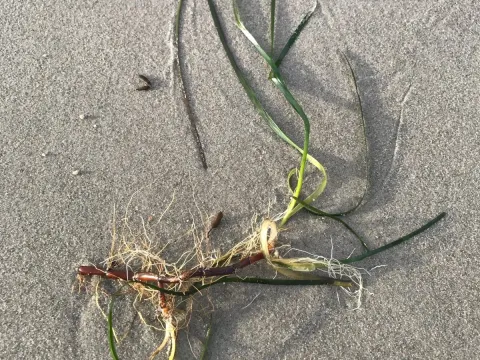
Eelgrass
Zostera
Eelgrass (Zostera) is a genus of perennial marine flowering plants belonging to the Zosteraceae family. Unlike true seaweeds, these plants have roots, stems, and leaves, and are classified as seagrasses.
What the section contains


Eelgrass
They are widely distributed in coastal waters throughout the Northern Hemisphere. Eelgrass meadows provide essential habitat, food, and nursery grounds for various marine species, playing a pivotal role in maintaining the balance of coastal ecosystems.
The plant requires shallow, sunlit environments with sandy or muddy substrates to thrive. Water clarity is a crucial factor, as excessive turbidity prevents the photosynthesis necessary for growth and survival.
Optimal environmental conditions for Zostera include stable salinity levels and moderate water temperatures. The plant utilizes its rhizome network to anchor itself securely to the seafloor while also facilitating vegetative expansion.
Historically, eelgrass has been harvested for use as insulation, thatch, and fodder. Currently, it is being extensively studied for its potential in carbon sequestration, as these seagrass meadows act as highly efficient carbon sinks in marine environments.
Coastal development and dredging activities are primary threats, as they physically destroy the beds and increase water turbidity, which blocks the sunlight required for the plants to grow.
Eutrophication from agricultural runoff creates algal blooms that cover the eelgrass blades, effectively suffocating the plant and preventing gas exchange and photosynthesis.
The infamous "wasting disease," caused by the pathogen Labyrinthula zosterae, has historically caused massive die-offs of eelgrass populations, leading to severe ecological consequences.
Climate change, manifesting as rising sea temperatures and altered ocean chemistry, puts significant physiological stress on the plants, reducing their ability to recover from other environmental stressors.
Boating traffic and anchoring practices cause significant mechanical disturbance to the seabed, fragmenting the continuous meadows and making the remaining patches more susceptible to environmental degradation.