
Zostera asiatica
Zostera asiatica
Description
Growing requirements
Zostera asiatica is a perennial seagrass belonging to the Zosteraceae family. It is a specialized marine plant that has evolved to complete its entire life cycle submerged in saline water, forming extensive and dense underwater meadows that play a vital role in marine biodiversity.
The native habitat of this species is primarily located in the coastal zones of the North Pacific Ocean, including regions across the Russian Far East, Japan, and Korea. It prefers sheltered shallow waters with sandy or silty substrates where wave energy is moderate and nutrient levels are balanced.
Environmental requirements for growth are strict, focusing on water clarity and salinity stability. As a photosynthetic organism, Zostera asiatica requires high irradiance levels, meaning its depth distribution is strictly limited by the compensation point of photosynthesis in the local water column.
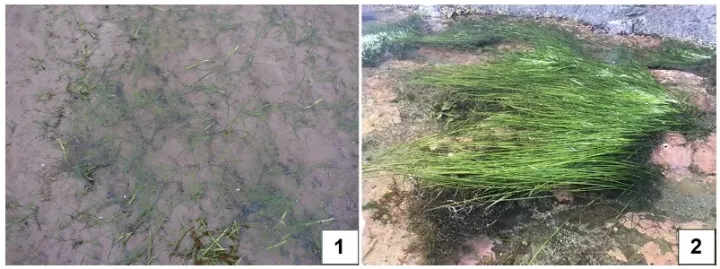
Botanically, the plant features elongated, ribbon-like leaves and a creeping rhizome system. This rhizome allows the plant to anchor securely into the seabed and spread vegetatively. The root system also interacts with sediments, aiding in the cycling of nutrients within the coastal benthic zone.
The economic and ecological importance of this species is significant in the field of mariculture. Zostera asiatica is widely recognized as a foundational species that provides critical nursing grounds for juvenile fish and invertebrates, making its conservation and cultivation essential for sustainable fisheries.
Main diseases and pests
The primary threats to Zostera asiatica populations involve human-induced physical destruction and water quality degradation. Excessive nitrogen loading leads to algal blooms that physically block sunlight, while sedimentation from coastal development smothers the rhizomes and inhibits necessary gas exchange.