
Narrow-leaved eelgrass
Zostera angustifolia
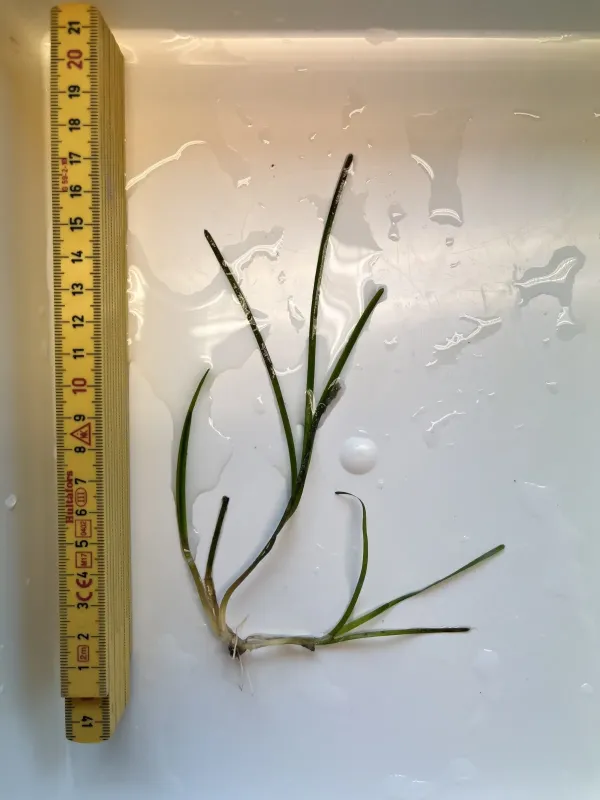
Description
Growing requirements
Narrow-leaved eelgrass, scientifically known as Zostera angustifolia, belongs to the Zosteraceae family. It is a perennial marine plant adapted to coastal saline and brackish environments.
The culture thrives in shallow waters with sandy or silty substrates, requiring adequate sunlight penetration for efficient photosynthetic activity.
Successful growth depends on stable salinity levels and minimal turbulence, as strong wave action can uproot the rhizome system essential for plant survival.
The optimal temperature range for vegetation is between 10 and 20 degrees Celsius, which characterizes the plant as an essential part of temperate and boreal marine ecosystems.
These plants form dense underwater meadows that serve as vital habitats, providing biological water filtration and preventing erosion of the seafloor.
Yield
Agricultural use focuses on harvesting biomass, which serves as a valuable raw material for the production of alginates and organic fertilizers.
The yield of this crop is determined by the density of the seagrass meadows and the depth of the plantation sites in the marine environment.
Sustainable harvesting is crucial; it involves collecting only a portion of the total biomass to ensure the population remains resilient and capable of regeneration.
Processed eelgrass is utilized as a nutritional additive in animal feed due to its high concentration of iodine and essential minerals.
The crop is increasingly used in mariculture as a biological filter to reduce nitrogen and phosphorus loads in aquaculture systems.
Main diseases and pests
The primary threat to eelgrass populations is the wasting disease, triggered by microscopic parasitic fungi that rapidly deteriorate the plant tissue.
Water pollution, including heavy metals and excessive phytoplankton blooms, significantly reduces light availability, leading to habitat degradation.
Physical disturbances, such as boat anchoring, dredging, or bottom trawling, cause direct mechanical damage to the rhizomes and plant shoots.
Climate change and rising sea temperatures impose thermal stress on the plants, weakening their immune systems and lowering resistance to environmental hazards.
Invasive species often compete with Zostera for space and light, effectively displacing native populations and disrupting local aquatic balance.