
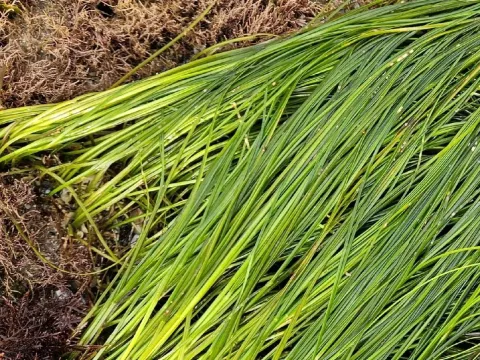
Phyllospadix
Phyllospadix
Phyllospadix, commonly known as surfgrass, is a genus of marine plants belonging to the Zosteraceae family. Unlike most seagrasses, it is adapted to thrive in high-energy rocky coastal environments, anchoring itself to rock substrates with tough, resilient rhizomes.
What the section contains


Phyllospadix
The genus is primarily distributed along the temperate coasts of the North Pacific Ocean, ranging from the Russian Far East and Japan to the western coast of North America. It is uniquely evolved to withstand the mechanical stress of constant wave action and tidal currents.
Botanically, surfgrass features long, ribbon-like leaves that are highly flexible, allowing them to bend with water currents. These plants play a vital role in coastal stabilization and providing nursery habitats for various marine species, including commercially important fish and crustaceans.
The environmental requirements for Phyllospadix are strictly defined by high water aeration and stable salinity levels. It is an obligate marine species that cannot survive in stagnant or low-oxygen environments, making its cultivation complex and energy-intensive.
While not a traditional agricultural crop, Phyllospadix is gaining interest in ecological restoration projects. Its ability to act as a natural biofilter and prevent coastal erosion makes it a key candidate for initiatives focused on restoring damaged marine ecosystems.
Anthropogenic impacts, particularly water pollution and sedimentation, pose the most significant threat to Phyllospadix meadows. Increased turbidity blocks the sunlight required for photosynthesis, leading to rapid declines in plant health.
Climate change and rising sea temperatures represent emerging risks, potentially forcing the migration of native populations to cooler waters. Increased stress levels often lead to reduced resilience against pathogens and opportunistic algal blooms.
Overgrowth of epiphytic algae on the leaves is a common biological stressor for surfgrass. When environmental conditions are imbalanced, these epiphytes compete for space and nutrients, effectively choking the plant and reducing its photosynthetic capacity.
Destructive coastal activities, such as harbor dredging and large-scale construction, directly remove the rock substrate necessary for attachment. Once established beds are destroyed, the recolonization process is exceptionally slow due to the plant's low reproductive rate.
Pathogenic outbreaks, though rare in healthy wild colonies, can occur in controlled or aquaculture environments. Bacterial necrosis of the rhizomes is a particular concern, requiring precise management of water quality and flow to maintain colony viability.