
Japanese eelgrass
Zostera japonica
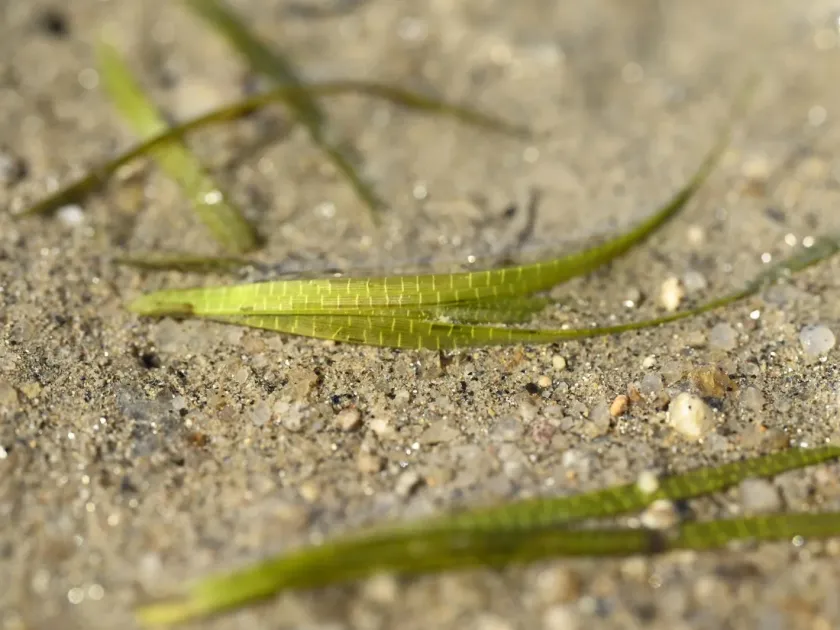
Description
Growing requirements
Japanese eelgrass (Zostera japonica) is a perennial marine plant species within the Zosteraceae family. It is recognized for its ability to form dense underwater meadows in coastal intertidal and subtidal zones.
Native to the North Pacific, it thrives in sandy or muddy substrates where water depth is relatively shallow. This species is highly adapted to the tidal regime, surviving regular exposure to air during low tide cycles.
Optimal environmental requirements include clear, light-penetrating water and stable salinity levels. It prefers protected bays and lagoons where it can establish a strong root network without the risk of being washed away by strong currents.
Cultivation practices involve selecting appropriate muddy-sand sites and carefully planting rhizome fragments. Ensuring minimal water turbidity is essential for the healthy growth and photosynthetic efficiency of the seagrass.
Agrotechnical maintenance focuses on preventing siltation and monitoring water quality to ensure that nutrient levels do not exceed the capacity of the local ecosystem to process them.
Yield
The yield of Zostera japonica is primarily measured by its organic biomass production, which serves as a vital component of the coastal food web and nutrient cycling process.
Historically, the harvested material has been used as a soil amendment, effectively acting as an organic fertilizer due to its high concentration of minerals absorbed from the seawater.
Modern applications explore the potential of using processed seagrass biomass as a supplementary feed additive for livestock, providing essential nutrients and trace elements to the diet.
The plant has also been historically significant in material science, used for stuffing insulation and creating durable natural packaging materials, owing to its fibrous composition.
Harvest cycles are carefully timed to coincide with the peak growing season to ensure the long-term sustainability of the meadows and to prevent over-extraction of the resource.
Main diseases and pests
The greatest threat to Zostera japonica populations is eutrophication caused by agricultural and industrial runoff, which leads to algal blooms and blocks necessary sunlight from reaching the plants.
Coastal development projects, including land reclamation and harbor construction, pose significant risks by physically destroying established habitats and disrupting sediment transport.
Wasting disease, often associated with elevated water temperatures, can decimate large areas of seagrass by causing rapid necrosis of the plant tissues and weakening the entire root system.
Biological pests and herbivores, such as certain species of snails or crustaceans, can exert grazing pressure that exceeds the plant's ability to regenerate under stressed environmental conditions.
Pollution from heavy metals and industrial toxins represents a critical hazard, as the plant acts as a biological sink, accumulating these substances and rendering the biomass unfit for agricultural use.