
Graybark grape
Vitis cinerea (Engelm.) Engelm. ex Millardet
Description
Growing requirements
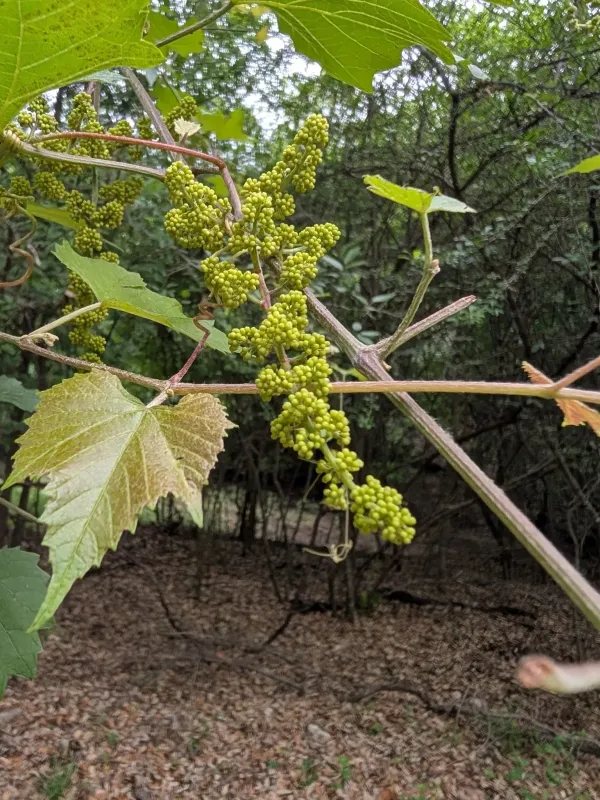
The graybark grape (Vitis cinerea) is a vigorous woody vine belonging to the Vitaceae family. Native to the southeastern United States, this species thrives in riverbanks, floodplains, and moist forest edges, demonstrating a remarkable ability to adapt to varying soil moisture levels.
Botanically, it is defined by its robust growth habit and the dense, gray-colored pubescence on the undersides of its leaves and young shoots. These hairs are a key identification feature, providing protective insulation and helping the plant manage environmental stressors.
Regarding soil requirements, the species performs best in deep, well-draining, and nutrient-rich soils. While it is known for its moderate drought tolerance once established, it responds significantly to consistent moisture during the peak growing season, resulting in more vigorous cane development.
Agronomic management involves providing sturdy trellising systems to accommodate its climbing nature. Proper training and pruning are essential to manage its aggressive expansion and to ensure that air circulates effectively throughout the canopy, preventing the development of localized humidity pockets.
The primary agricultural use of Vitis cinerea is not fruit production but its immense value as a rootstock and breeding stock. Its resistance to various soil-borne pests and environmental adaptability makes it a cornerstone in developing climate-resilient vineyard cultivars.
Main diseases and pests
One of the defining characteristics of the graybark grape is its inherent resistance to many common viticultural diseases. It exhibits high tolerance levels to powdery mildew and downy mildew, which are historically devastating to more sensitive European grape varieties.
Although highly resilient, the plant can still be susceptible to phylloxera, a microscopic insect that attacks roots. However, compared to other species, Vitis cinerea shows a higher tolerance to infestation, making it a focus of study for pest-resistant grape rootstock research.
Environmental conditions such as poor drainage or standing water can lead to root system decay. To mitigate these risks, cultivators should ensure that planting sites have adequate slope or drainage layers, especially in areas prone to heavy seasonal rainfall.
Insect pests, such as leafhoppers or grape berry moths, may periodically affect the foliage. Routine vineyard sanitation, including the removal of dead wood and leaf litter during the dormant season, is an effective strategy to break the life cycle of these pests.
Maintaining a healthy, balanced nutritional profile for the vine is a critical preventive measure. Over-fertilization, especially with nitrogen, can lead to excessively succulent growth that attracts pests, whereas balanced fertilization promotes stronger cuticle development on the leaves.