
Debregeasia longifolia
Debregeasia longifolia
Description
Growing requirements
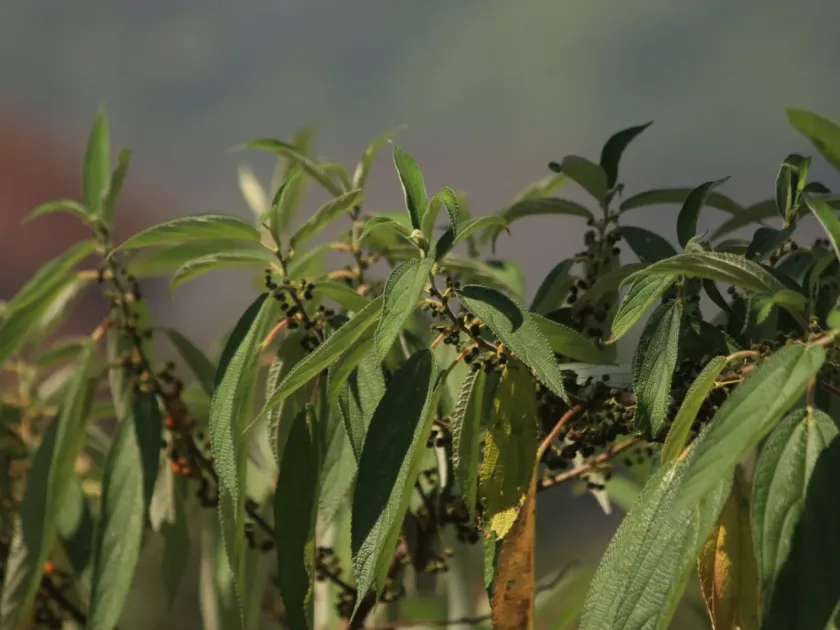
Debregeasia longifolia is a resilient perennial shrub or small tree belonging to the Urticaceae family. It is native to the diverse regions of the Himalayas and Southeast Asia, where it thrives in humid, montane environments.
The plant performs best in well-drained, fertile soil types that maintain consistent moisture levels. It is highly valued for its ability to stabilize soil on slopes due to its extensive and deep root system, making it useful for agroforestry projects.
Regarding climate, this species prefers tropical and subtropical conditions with moderate temperatures. It is notably adaptable and can withstand various light intensities, though it favors partial to full sunlight for vigorous shoot development.
Agricultural management requires periodic pruning to encourage the growth of new, high-quality shoots. This is essential for fiber production, as the bast fibers extracted from the bark of younger stems are superior in length and durability.
In terms of ecological requirements, the plant shows good resistance to most pests that affect other members of the nettle family. Maintaining a healthy soil structure through organic mulching is recommended to ensure long-term vitality of the shrub.
Harvesting
The harvesting of stems for bast fiber is performed when the shoots reach peak maturity. This timing is critical to ensure that the fiber extracted possesses the desired tensile strength and flexibility for textile or rope-making purposes.
Harvesting is traditionally done by hand, using sharp tools to cut the branches at the base. This method minimizes damage to the root crown, allowing the plant to regenerate successfully for the following growing season.
The edible fruits, often referred to as orange berries, are harvested when fully ripe. They are delicate and require careful handling to prevent bruising, as they are commonly used in local culinary applications or for their sweet, pulpy texture.
Post-harvest processing involves peeling the bark from the stems and then subjecting it to retting or manual stripping. This allows for the separation of the tough, white fibers from the surrounding woody biomass.
After extraction, the fibers are washed and dried in the shade. Rapid, direct sun drying is generally avoided to prevent the fibers from becoming overly brittle, which would degrade their quality for industrial or artisanal manufacturing.