
Morinda citrifolia
Morinda citrifolia L.
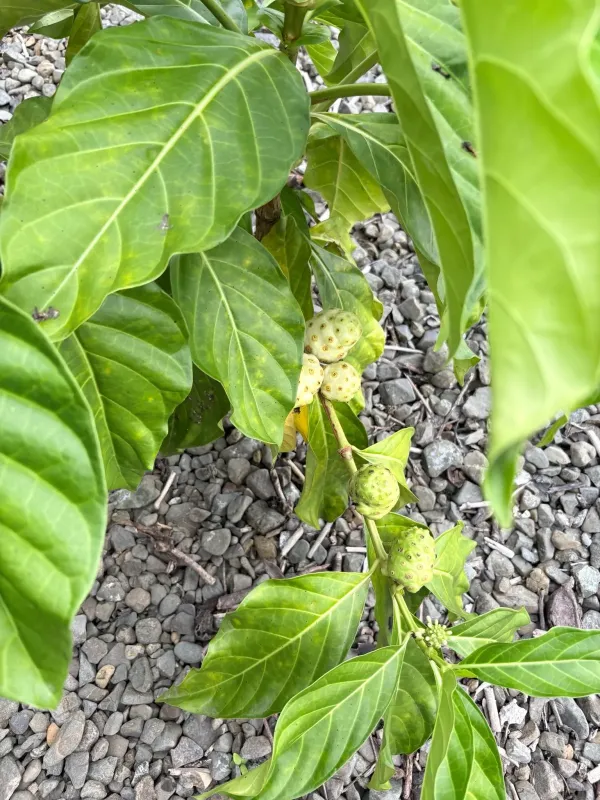
Description
Sowing dates
Morinda citrifolia, commonly known as noni, is a robust evergreen shrub or small tree belonging to the Rubiaceae family. The plant is typically propagated by seeds or stem cuttings in controlled nurseries.
Seeds are sown in well-drained, sandy loam soil. It is recommended to remove the fleshy pulp before sowing to improve germination rates, which can be slow and sporadic, often taking several months.
Seedlings should be nurtured in pots until they are at least 30-40 cm tall. Acclimatizing the young plants to outdoor conditions is necessary before final field transplantation to ensure survival.
Planting in the field requires a spacing of approximately 3x3 meters. This allows sufficient light penetration and airflow, which are critical for the long-term health of the plantation.
In regions with distinct seasons, the best time for transplanting is the start of the wet season, providing the roots enough time to establish before a potential dry spell.
Growing requirements
Noni thrives in tropical environments with consistent temperatures between 20°C and 35°C. It is highly sensitive to frost, which can kill young plants or severely damage mature trees.
The crop is highly adaptable to various soil types, ranging from nutrient-rich volcanic soils to alkaline coral sands. However, high organic matter content significantly boosts fruit production.
Adequate water availability is essential throughout the year. While established trees exhibit some drought tolerance, consistent moisture is required to produce high-quality, large-sized fruits.
Full sun exposure is preferred for optimal growth. Trees planted in shaded areas tend to grow slower and exhibit lower fruit yields compared to those in open, sunlit plantations.
Wind protection is vital in exposed coastal areas, as the branches of Morinda citrifolia are relatively brittle and prone to breaking during high-wind events or tropical storms.
Yield
Morinda citrifolia is characterized by continuous year-round fruiting. Commercial harvesting can typically commence as early as 18 to 24 months after field transplantation.
A mature tree can yield several kilograms of fruit every month. Yield is directly correlated with tree health, pruning practices, and the availability of soil nutrients.
Regular maintenance pruning is necessary to control tree height and remove unproductive branches, ensuring that energy is focused on fruit-bearing twigs.
The application of compost and green manure is highly beneficial for maintaining soil fertility. Intensive farms often use drip irrigation systems to optimize water and nutrient delivery.
Post-harvest volume and quality are the primary metrics for commercial success. Strategic fertilization schedules are used to ensure the tree has sufficient reserves to support constant fruit development.
Main diseases and pests
Root rot, caused by Phytophthora species, is the most serious threat, especially in poorly drained soils. Preventing waterlogging is the best way to manage this fungal pathogen.
Leaf-eating insects and sucking pests, such as aphids, mealybugs, and scale insects, frequently infest young foliage and branches, often requiring targeted biological control.
Nematodes can pose a significant challenge to the root system, particularly in sandy soil types. Integrating cover crops can help mitigate nematode populations in the plantation.
Sooty mold can develop on leaves as a secondary symptom of mealybug infestations. Keeping the plant canopy thin through pruning helps reduce humidity and mold development.
Integrated pest management (IPM) is strongly encouraged, utilizing beneficial insects to keep pest populations at manageable levels without heavy reliance on chemical pesticides.
Harvesting
Harvesting is a continuous daily or weekly task. Fruits are harvested when they turn from dark green to a translucent yellowish-white, which signifies optimal maturity.
The fruits are extremely delicate and soften rapidly after reaching maturity. They should be handled with care to prevent bruising, which can lead to premature fermentation.
For processing, fruit is collected and transported to facilities immediately. Because noni has a strong, pungent odor, efficient logistics are essential to maintain fruit quality.
Post-harvest processing often involves washing and drying or fermenting the fruit to extract juice. Sorting the fruit by maturity level is a critical step in the quality control process.
Field workers are trained to identify the exact stage of ripeness by color and texture, as harvesting too early results in a bitter, lower-quality product.