
Mitragyna ciliata
Mitragyna ciliata Aubrév. & Pellegr.
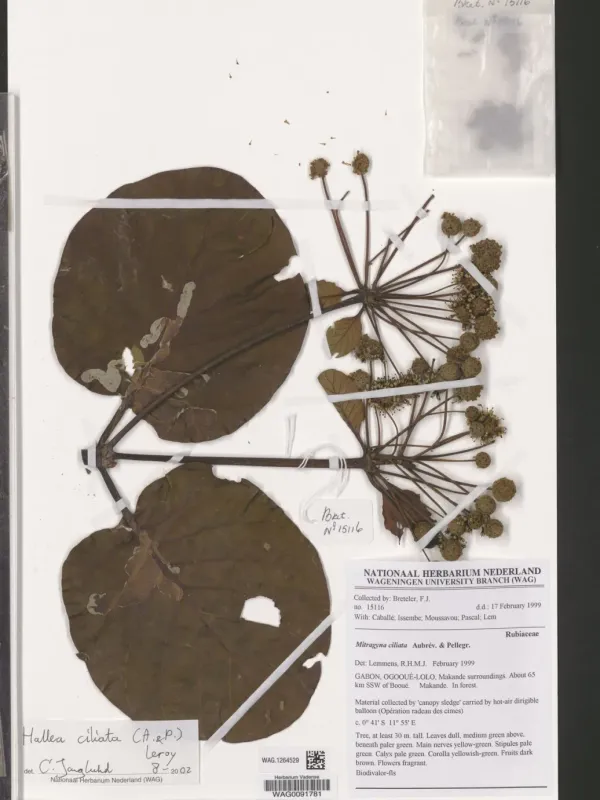
Description
Sowing dates
Mitragyna ciliata belongs to the Rubiaceae family and is propagated through seeds, which require specific conditions for optimal germination success.
Sowing is typically performed in nursery beds using a rich, organic substrate that must maintain a consistent level of moisture to ensure viability.
Since the seeds are sensitive to desiccation, irrigation management is critical during the initial weeks of the propagation process in the nursery.
Transplanting seedlings to the field is ideally timed at the onset of the rainy season to facilitate root establishment and environmental adaptation.
Effective weed control during the first two to three years of growth is essential to minimize competition and ensure the survival of young saplings.
Growing requirements
As a native species of West and Central African tropical forests, Mitragyna ciliata thrives in hot, humid climates with stable rainfall patterns.
The tree prefers deep, fertile, and well-drained soils, although it is well-adapted to flood-prone areas, showing high tolerance to waterlogged roots.
Temperatures should consistently remain between 22 and 30 degrees Celsius, as the plant is highly susceptible to chilling injury and cannot withstand frost.
Ample sunlight is required for robust growth, though young plants may benefit from slight shading during the initial establishment phase under a canopy.
Maintaining high organic matter content in the soil is vital for supporting the rapid development of the trunk and the overall structural integrity of the tree.
Yield
The primary economic value of this crop is its timber, marketed internationally under names such as Abura or Bahia, prized for its excellent wood properties.
The wood is highly valued in the furniture and joinery industries for its uniform texture, stability, and ease of machining during manufacturing processes.
Yields are dictated by site quality and management intensity; under proper silvicultural conditions, trees can reach harvestable size within a few decades.
Additionally, the plant is harvested for its phytochemical properties, as its bark and leaves are utilized in traditional medicine for specific therapeutic applications.
Sustainable forest management practices are essential to maximize timber yield while preserving the long-term productivity of the planting site.
Main diseases and pests
Young plantations are particularly susceptible to fungal pathogens that thrive in dense, humid environments with poor air circulation.
Various insect pests can cause significant damage to foliage, which reduces photosynthetic capacity and slows the growth rate of the saplings.
Wild animals, especially in natural forest habitats, often damage the bark of younger trees, creating entry points for opportunistic infections.
Poor silvicultural practices, including the lack of sanitary thinning, often lead to the rapid spread of diseases across an entire plantation area.
Integrated pest management, including regular monitoring and the removal of infected plant materials, is the most effective approach for disease control.
Harvesting
Timber harvesting occurs once trees reach a predetermined diameter at breast height, as defined by professional forest management plans.
It is recommended to harvest during the dry season to ensure the quality of the logs and facilitate easier transportation from remote forest sites.
When harvesting medicinal biomass like bark, sustainable techniques must be applied to prevent ring-barking, which would inevitably kill the tree.
Efficient harvesting utilizes both manual and mechanized tools to optimize the volume of extracted timber while minimizing damage to the surrounding ecosystem.
Post-harvest activities involve site preparation and immediate replanting to ensure the continuous cycle of production in the tropical forest environment.