
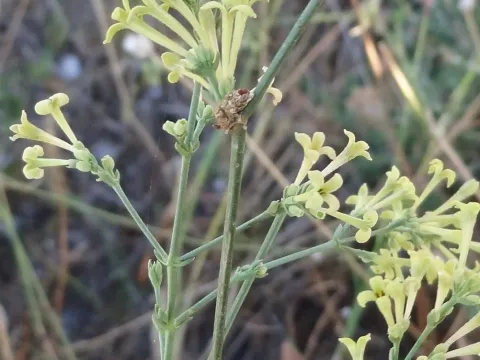
Crucianella graeca
Crucianella graeca
Crucianella graeca is a member of the Rubiaceae family, typically found in rocky and calcareous habitats within the Mediterranean region. Understanding its natural growth cycle is essential for successful agricultural management.
What the section contains
Crucianella graeca
Sowing should ideally occur in late autumn or early spring. Autumn sowing allows the seeds to undergo natural stratification through the winter months, which significantly enhances the germination rate upon the arrival of spring warmth.
The seedbed must be prepared with precision, ensuring the soil is finely crumbled and free of competitive weeds. Given the small size of the seeds, they should be sown shallowly and covered with a thin layer of soil or sand to ensure optimal light conditions for development.
Uniform spacing is critical for this crop. A row spacing of approximately 30–40 cm provides adequate air circulation, which is vital for maintaining the health of the dense foliage characteristic of the genus.
To support early development, irrigation should be applied gently to prevent soil capping. Once established, the seedlings exhibit robust growth, provided that the soil temperature remains stable and the surface is not waterlogged.
This species thrives in well-drained, calcareous, or stony soils. It is highly sensitive to waterlogging, making proper drainage the most important factor in site selection. Ideally, planting should be done on slightly sloping terrain to ensure natural water runoff.
Crucianella graeca requires full sun exposure to complete its life cycle and develop its full chemical profile. Low-light environments lead to etiolated, weak growth and significantly reduce the yield of useful secondary metabolites.
The climate requirements align with Mediterranean conditions, favoring warm, dry summers and mild, wet winters. While the plant is drought-tolerant, supplementary irrigation during extreme dry spells can improve biomass production significantly.
The pH preference is neutral to slightly alkaline. Acidic soils should be amended with lime to ensure the plant can efficiently absorb necessary micronutrients, particularly calcium, which is essential for its structural integrity.
Fertilization should be kept to a minimum. Excess nitrogen stimulates rapid, succulent growth that is more prone to disease and lower in quality, thus undermining the plant's natural hardiness.
Root rot, primarily caused by waterlogged soil and poor aeration, is the primary threat to Crucianella graeca. Once root infection begins, it is often irreversible, necessitating strict control over soil moisture content.
Powdery mildew is a common foliar disease, especially in dense plantings or areas with poor air circulation. Regular thinning and the removal of infected debris are essential cultural practices to prevent the spread of fungal spores.
Insect pests such as spider mites can be problematic during hot, dry weather. They feed on the sap, causing leaf chlorosis and general plant decline. Biological control agents or targeted horticultural soaps are recommended for management.
Slugs and snails can cause significant damage to young seedlings. In agricultural settings, it is often effective to establish a perimeter around the crop or use natural deterrents to protect the vulnerable early growth stages.
Proper crop rotation is strongly advised to prevent the buildup of soil-borne pathogens. A minimum of three years should elapse before returning this species to the same plot of land.